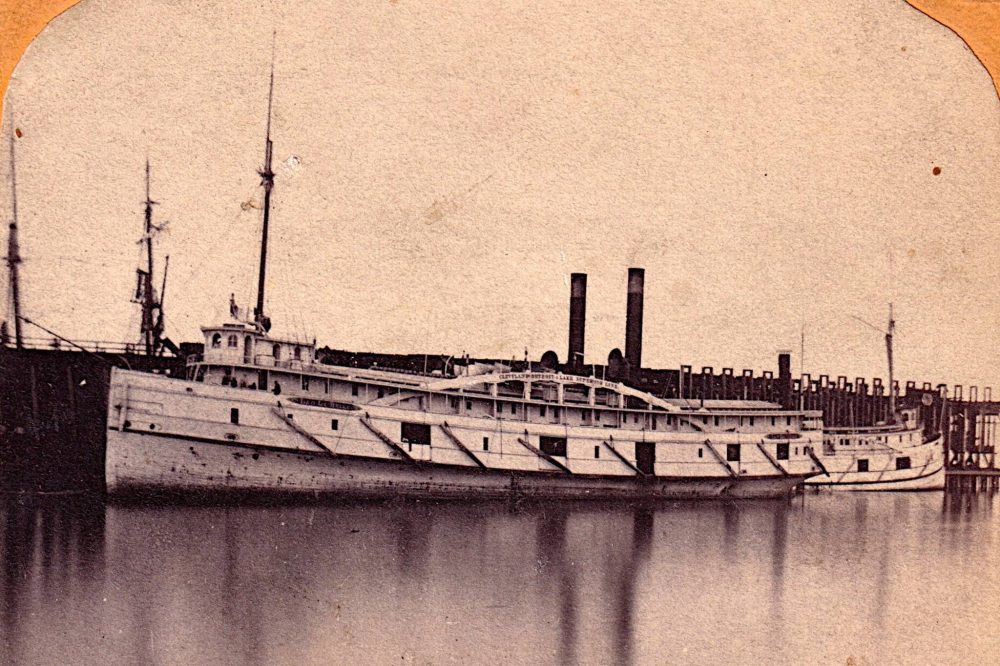

A decades-long underwater mystery has finally been solved after researchers located the remains of a passenger steamship that disappeared beneath Lake Michigan’s waters more than 150 years ago.
The international organization Shipwreck World revealed Friday that explorers discovered the Lac La Belle approximately 20 miles from shore between Racine and Kenosha, Wisconsin. The find was made in October 2022 by a team under the direction of Illinois underwater explorer Paul Ehorn.
During a Sunday telephone conversation with The Associated Press, Ehorn explained the delayed announcement occurred because his crew wanted to create a detailed three-dimensional video recording of the vessel. However, harsh weather conditions and scheduling conflicts prevented diving teams from returning to the site until this past summer.
The 80-year-old Ehorn, who has pursued shipwreck discoveries since age 15, revealed he had been hunting for the Lac La Belle’s resting place since 1965. A tip from fellow wreck researcher and writer Ross Richardson helped focus his 2022 search area, leading to the vessel’s detection through side-scan sonar technology within just two hours of searching.
“It’s kind of a game, like solve the puzzle. Sometimes you don’t have many pieces to put the puzzle together but this one worked out and we found it right away,” Ehorn explained. The discovery left him “super elated.”
While Ehorn chose not to reveal specifics about the breakthrough clue, Richardson shared in a brief Sunday phone call that a commercial fishing operator at an undisclosed location had caught something distinctive to 1800s steam vessels. Richardson withheld additional details, citing the competitive nature of shipwreck exploration and concerns about revealing research methods to other searchers.
Historical records from Shipwreck World indicate the Lac La Belle was constructed in 1864 in Cleveland, Ohio. The 217-foot vessel operated routes connecting Cleveland to Lake Superior until suffering damage in an 1866 St. Clair River collision. After being salvaged in 1869 and restored to service, the ship resumed passenger operations.
The steamer departed Milwaukee bound for Grand Haven, Michigan during stormy conditions on the evening of October 13, 1872, carrying 53 passengers and crew members along with cargo including barley, pork, flour and whiskey. Approximately two hours after departure, the vessel began flooding uncontrollably. The captain attempted to return to Milwaukee, but massive waves overwhelmed the ship, dousing the boilers. Storm currents pushed the disabled vessel southward until around 5 a.m., when the captain ordered evacuation and the ship sank stern-first.
During the rescue attempt, one lifeboat overturned while heading to shore, resulting in eight fatalities. The remaining lifeboats successfully reached the Wisconsin coastline in the Racine-Kenosha area.
According to Ehorn’s observations, invasive quagga mussels now coat the wreck’s exterior surfaces and the upper passenger cabins have deteriorated. However, the main hull structure appears sound and the oak interior components remain well-preserved.
The Great Lakes contain an estimated 6,000 to 10,000 shipwrecks according to the University of Wisconsin-Madison’s Wisconsin Water Library, with most still awaiting discovery. Recent years have seen increased urgency among wreck hunters due to concerns that invasive quagga mussels are gradually damaging these underwater archaeological sites.
This marks Ehorn’s 15th successful shipwreck location. “It was one more to put a check mark by,” he noted. “Now it’s on to the next one. It’s getting harder and harder. The easier ones have been found.”