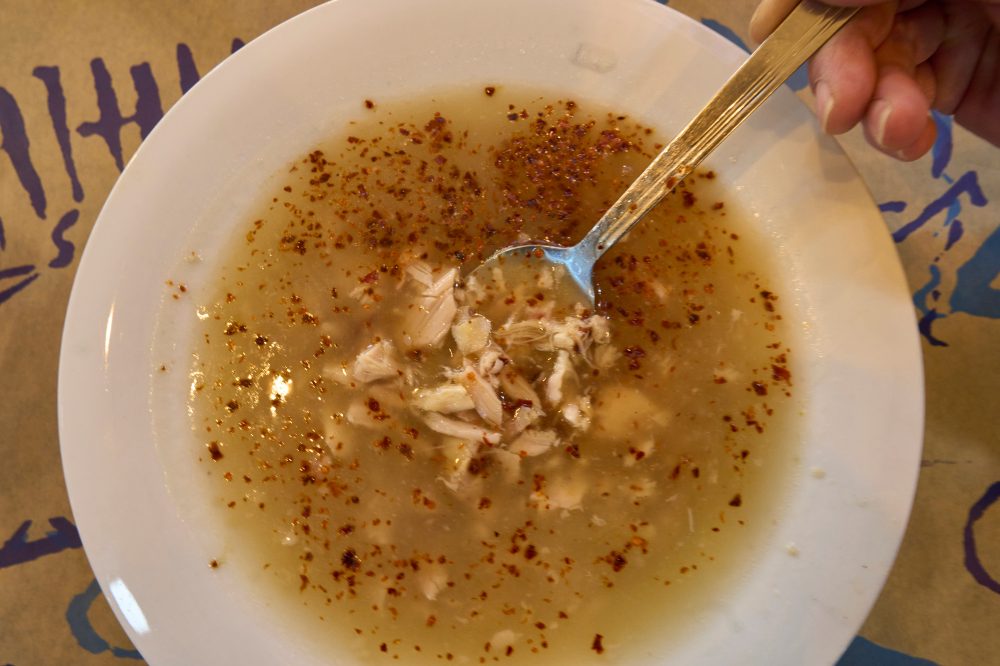

THESSALONIKI, Greece (AP) — A traditional soup crafted from cow stomach and legs is believed to remedy everything from stomach ulcers to morning-after misery — provided diners have the stomach for it.
Dimitris Tsarouhas, who runs a specialty restaurant in Thessaloniki, Greece, is working to have “patsa” officially recognized by UNESCO as an authentic Greek dish with roots stretching back to Homer’s ancient epic “The Odyssey.”
This effort has sparked fresh tensions with neighboring Turkey, which maintains the soup belongs to their culinary tradition. The two nations have long battled over food origins, from Turkish coffee and dolmas to the beloved pastry baklava — remnants of their shared Ottoman history. Turkish officials are now protesting Greek attempts to claim exclusive ownership of what they call “iskembe,” asserting it has been central to their culture for generations.
Speaking to The Associated Press, Tsarouhas explained he has assembled an extensive documentation file with assistance from a regional cultural group and Lena Oflidis, who authored the sole historical account of the soup’s origins, seeking to establish patsa as part of Greece’s official cultural legacy.
Customers flock to Tsarouhas’ establishment around the clock — especially in the early morning hours — drawn by patsa’s reputation for settling upset stomachs after excessive drinking. The dish typically comes topped with seeds and spicy peppers.
Each serving is customized to individual preferences, particularly regarding how finely the cow legs are diced — chunky pieces or fine cuts being the typical breakfast choice.
“Cow leg meat provides 33.4% pure, digestible collagen — medical professionals say this significantly aids joint surgery recovery,” explains the 53-year-old restaurant owner. “It also treats ulcers and digestive problems from alcohol.”
Within the restaurant kitchen, soup preparation resembles a ceremony as chef Pantazis Koukoumvris skillfully works his blade beside bubbling pots where legs and stomachs simmer in rich broth.
“The artistry starts each morning,” Koukoumvris explains, drawing on 22 years of patsa preparation experience.
“We start boiling the stomachs and legs to create the base broth in smaller vessels,” he describes, noting that Byzantines inherited this recipe from ancient Greeks before passing it to the Ottomans.
Tsarouhas points to “The Odyssey” as evidence, specifically referencing the banquet Penelope arranged for her suitors when Odysseus returned from his decade-long voyage.
According to Tsarouhas, the text describes cow stomachs stuffed with suet — cooking fat — and blood.
“What else could this describe besides patsa?” he questions.
Despite Turkish claims to the soup’s invention, Tsarouhas remains confident. He welcomes their challenge if they’re prepared to back up their assertions.
“Nothing prevents them from attempting it,” he states. “We’re confident we possess the necessary evidence to establish and validate patsa’s status. There’s nothing to split with our neighbors — flavor brings us together instead.”
Shared culinary appreciation isn’t on Ali Turkmen’s agenda. The 59-year-old Turkish restaurant owner insists the dish belongs historically and culturally to Turkey, though the soup serves the same late-night comfort food role after heavy drinking as it does in Greece.
“Like baklava and numerous other items, they seek to make it theirs,” Turkmen commented regarding Greece’s ownership claim. “However, they’ll likely struggle to appropriate something uniquely ours. It’s been embedded in our culture for centuries. Tripe soup is distinctly Turkish.”
Ali Ohtamis manages the kitchen at Turkmen’s Istanbul restaurant Alem Iskembe, which specializes in the soup in the Kiziltoprak district.
Ohtamis begins cooking cow stomachs — the tripe — at 4 a.m. daily after thorough cleaning and washing. The cooking process takes eight to nine hours, he notes, before the meat gets sliced according to customer specifications.
Though both Greek and Turkish versions feature rich, garlic-heavy broths, Turkish iskembe contains only tripe.
Turkish news outlets have condemned Greece for “stealing” a nationally cherished dish. The Onedio news website referenced 17th-century explorer Evliya Celebi’s “Book of Travels,” which documented tripe and trotters soup vendors in Istanbul, presenting this as proof of the soup’s 400-year Turkish history.
Alem Iskembe patron Murat Pajik firmly believes Turkey must resist the Greek initiative.
“I’m unsure who’s accountable, but action is required. Tripe soup represents one of our dishes deserving global recognition,” Pajik declared.
Engin Cakar argued that Greek ownership claims are futile.
“Greece’s approach seems wrong to me. This tripe recipe comes from our ancestors, our mothers,” he stated.
In Greece, Christos Mousoulis holds a different view. As a regular customer at Tsarouhas’ restaurant, he maintains that patsa has been prepared traditionally in Greek households across generations.
“I don’t question that patsa flavors, whether Greek or Turkish — which I haven’t sampled — might be comparable, but we were raised on Greek patsa,” he observes.