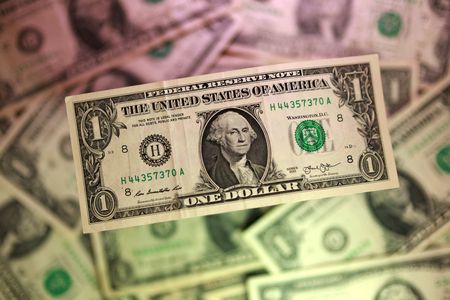

A meaningful rally in the U.S. dollar in 2026, fueled by a more aggressive Federal Reserve stance, is gaining additional momentum as major global pension funds unwind the currency protection strategies they put in place after last year’s “Liberation Day” market turmoil.
Climbing inflation figures and the arrival of Kevin Warsh as the new Fed chair have pushed U.S. real interest rates — that is, rates adjusted for inflation — higher in recent months, reshaping the calculus for international investors.
A Wells Fargo review of foreign exchange hedge ratios found that pension funds in Canada, the Netherlands, and Denmark have been pulling back from the dollar-hedging strategies they adopted last year. The pullback is relieving some of the downward pressure on the greenback and chipping away at the short-lived narrative that global investors were abandoning U.S. assets in a so-called “sell America” trade.
Karl Schamotta, chief market strategist at payments company Corpay in Toronto, said a similar trend appears to be unfolding among other large institutional investors, even though detailed hedging data are hard to come by. “Because long-duration hedging can be expensive and cut into returns, some of that increase is now being unwound — mostly passively, as firms let hedges roll off without replacement,” Schamotta said.
The numbers tell the story: hedge ratios — which measure how much of a fund’s dollar exposure is shielded from currency fluctuations — have dropped by 5 percentage points over the past year at some Danish funds and by about a percentage point at certain Canadian funds.
Erik Nelson, global head of FX strategy at Wells Fargo, acknowledged that the “sell America” movement had real substance behind it. “Sell America wasn’t all hype … there were some genuine flows behind it,” he said, pointing to the hedging activity among global pension funds. “But the hedging impulse has faded … those trends have since gone into reverse.”
A More Expensive Hedge
With the dollar hovering near a one-year high, expectations for a hawkish Fed are making hedging a harder sell. Foreign investors typically hedge currency risk by selling dollars forward, but that strategy becomes pricier when U.S. interest rates are elevated relative to those in other countries — because the cost of the hedge is tied directly to that rate gap.
Currently, U.S. short-term interest rates sit roughly 140 basis points above those in the euro zone, making dollar hedging a costly proposition for many overseas investors.
Garth Appelt, head of FX and emerging markets derivatives at Mizuho Americas, explained the dynamic: “Higher U.S. real interest rates make dollar investments more attractive, but also make currency hedging more expensive, so big investors have chosen to leave more of their U.S. stock holdings unhedged.”
Another factor reducing the urgency to hedge is a shift in how the dollar behaves relative to U.S. stocks. When President Donald Trump announced sweeping “Liberation Day” global tariffs in early 2025, the dollar broke from its usual pattern of strengthening during market stress — instead falling alongside U.S. equities. That left foreign investors with heavy U.S. exposure taking a hit on two fronts simultaneously.
Alex Moloney, head of macro discretionary currency solutions at Insight Investment, described the shock: “People were losing double the amount on a position that had previously worked for the prior decade as a perfect hedge.”
This year, however, the dollar has reasserted itself as a safe-haven currency, particularly during the risk-off period that followed the U.S.-Iran conflict.
Concerns about the Fed’s independence had also weighed on the dollar last year, as President Trump repeatedly criticized then-Chair Jerome Powell. Those worries have largely dissipated since Warsh stepped in to lead the central bank.
What It Means Going Forward
The retreat from hedging, even if modest, removes one obstacle to a stronger dollar. Just as those hedging flows had acted as a drag on the currency, their absence is likely to serve as “a marginal dollar support going forward,” Moloney said.
Analysts note that much of the dollar’s future path will hinge on whether the U.S. artificial intelligence investment story continues to attract international capital. If expectations around AI growth prove overly optimistic and the broader U.S. economy slows, funds may revisit their hedging strategies.
For now, though, the dollar remains in a position of strength. “You’re still in a situation where the dollar rates, dollar carry, and dollar equity returns are high,” Wells Fargo’s Nelson said. “So until that changes, we’re still in a generally strong dollar world.”