
Scientists have achieved a groundbreaking milestone by successfully measuring the extraordinary power and velocity of jets erupting from a black hole in real time.
An international team of researchers discovered that jets from the Cygnus X-1 black hole system generate energy equal to 10,000 suns, according to findings published Thursday. The team also clocked the jets traveling at approximately 355 million mph (540 million kph) — roughly half the velocity of light.
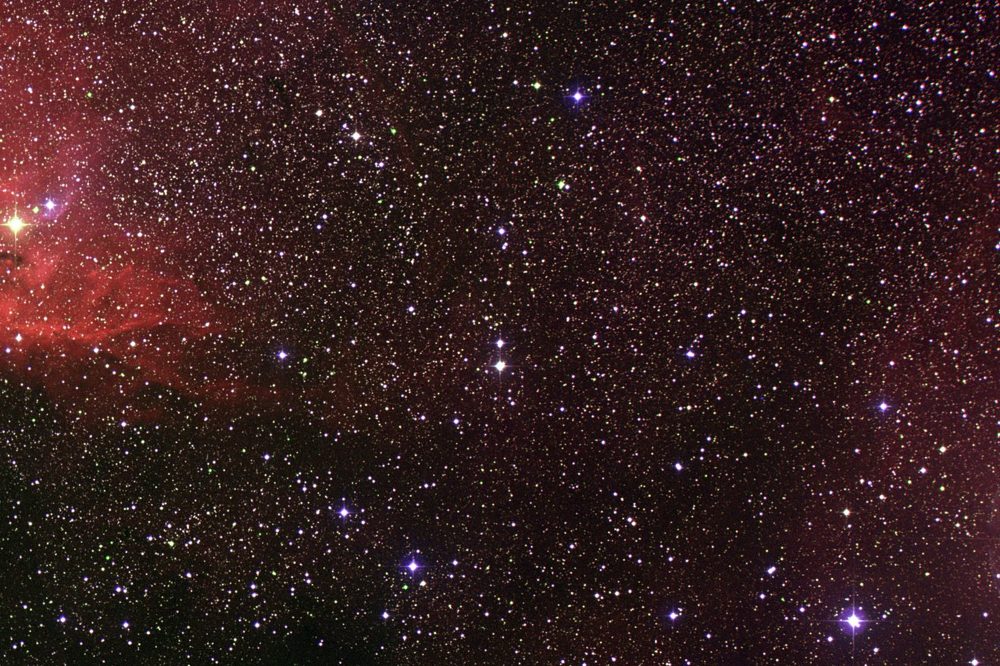
The Cygnus X-1 system sits 7,200 light-years from Earth and contains both a black hole — the first ever discovered more than 50 years ago — and a massive blue supergiant star that orbits alongside it. One light-year spans nearly 6 trillion miles (9.7 trillion kilometers).
University of Oxford researcher Steve Prabu led the team that analyzed 18 years of detailed radio telescope images captured by a worldwide network of observatories. Prabu completed this work while at Australia’s Curtin University, which spearheaded the study appearing in Nature Astronomy.
The research team successfully measured the rapid energy output of what Prabu describes as “dancing jets” that get deflected in opposing directions by stellar winds. Their calculations relied on observing how much the stellar wind bent these jets, combined with sophisticated computer simulations.
Previous attempts to measure black hole jet power required averaging data across tens of thousands of years, according to the research team.
A significant discovery showed that jets carry away 10% of all energy released when matter spirals toward the black hole, Prabu noted.
The Cygnus X-1 black hole, considered modest in size compared to others, continuously draws gas from its stellar partner as they circle each other. Scientists identified this binary system in the 1960s within our galaxy’s Cygnus constellation, also known as the swan.
The massive companion star provides material to the black hole, giving it “something to ‘eat’ and launch as jets,” Prabu explained in an email.
These powerful jets help researchers understand how black holes influence galaxy formation and other cosmic structures through massive shockwaves and turbulence.
Prabu intends to use comparable methods on other black holes. “It would be exciting to measure jet power in many more systems,” he stated.