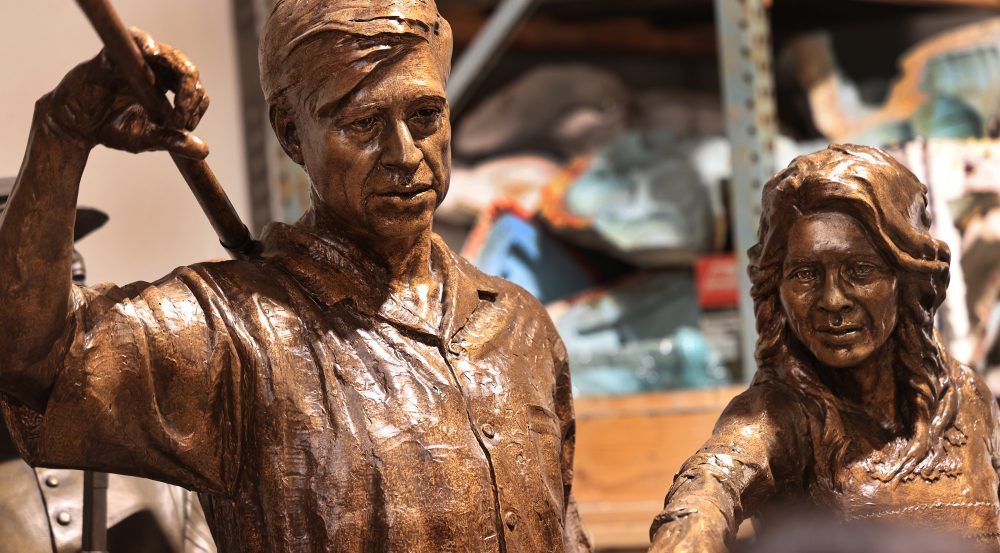

Two legendary figures in labor rights history, Dolores Huerta and the deceased César Chavez, spearheaded a transformative campaign that compelled agricultural employers to enter negotiations for improved compensation and workplace standards for farm laborers.
Their historic contributions are receiving renewed scrutiny following recent accusations that Chavez, who passed away in 1993, committed sexual abuse against Huerta and other women and girls. Multiple commemoration events scheduled nationwide for this month have been called off in response.
The pair established the National Farm Workers Association in 1962, which later evolved into the United Farm Workers of America through a merger with the Agricultural Workers Organizing Committee several years afterward.
According to Cornell University labor history professor Paul Ortiz, the emergence of this movement represents one of America’s most significant historical developments and stands as the most crucial event in U.S. Latino history. The United Farm Workers achieved the most meaningful and lasting improvements to agricultural working conditions in the country’s history, Ortiz explained.
Farm laborers “from Hawaii to Florida to New York to Southern California had tried to organize to improve their wages and working conditions, literally for centuries, going back to slavery times,” Ortiz said. “And almost every effort failed, some catastrophically.”
The duo’s activism led to California becoming the first state to enact legislation acknowledging farmworkers’ rights to engage in collective bargaining.
Numerous streets and educational institutions bear their names. Multiple states have established March 31, marking Chavez’s birth date, as an official day of remembrance, and former President Barack Obama designated it as a federal commemorative holiday in 2014.
The following examines their personal histories and lasting impact:
Chavez gained recognition for his grassroots field organizing, conducting a hunger strike, orchestrating a grape boycott, and ultimately succeeding in compelling growers to engage in negotiations with farmworkers for enhanced wages and working conditions.
A native of Yuma, Arizona, Chavez was raised in a Mexican American household that migrated throughout California harvesting lettuce, grapes, cotton and various seasonal produce.
Chavez challenged inadequate compensation and frequently deplorable working environments. Field workers lacked access to restroom facilities and were required to cultivate crops using short-handled tools that forced them into prolonged bending positions.
The farmworker campaign resulted in increased worker compensation, elimination of short-handled farming tools, and establishment of state-required clean water access and restroom facilities in agricultural areas, according to National Park Service documentation supporting the establishment of a national monument honoring Chavez.
In 1966, he organized a march beginning with a small group of advocates in Delano, California, that concluded in Sacramento with 10,000 participants, according to Obama’s 2014 proclamation. Approximately 17 million individuals participated in a grape boycott, compelling growers to agree to some of the first farmworker contracts in history, the proclamation stated.
Chavez initiated the first financial institution for farmworkers, medical facilities, childcare services and vocational training programs, the Cesar Chavez Foundation reported on its website.
“He was, for his own people, a Moses figure,” then-President Bill Clinton said in 1994 when posthumously awarding Chavez the Presidential Medal of Freedom.
Chavez had died the previous year in California at age 66.
The labor and civil rights advocate obtained increased compensation, healthcare benefits, retirement plans and pesticide safeguards for farmworkers throughout her decades of organizing and advocacy efforts.
Currently 95 years old, Huerta participated in organizing the 1965 Delano strike involving 5,000 grape workers and served as the primary negotiator for the resulting worker agreement, according to the National Women’s History Museum.
As a single parent, Huerta abandoned a secure teaching position to pursue organizing. She faced arrest more than 20 times for protest activities and sustained severe injuries in 1988 during a demonstration. She subsequently advocated for women’s rights, encouraged Latinas to seek elected office and established the Dolores Huerta Foundation to address discrimination, poverty and inequality.
She created the famous phrase “Sí, se puede” — translated as “Yes, we can” — in 1972 while mobilizing Arizona farmworkers against legislation prohibiting boycotts and strikes. She rejected assertions that organizing in that location was impossible.
Huerta was awarded the Presidential Medal of Freedom in 2012 and in 1993 became the first Latina member of the National Women’s Hall of Fame.