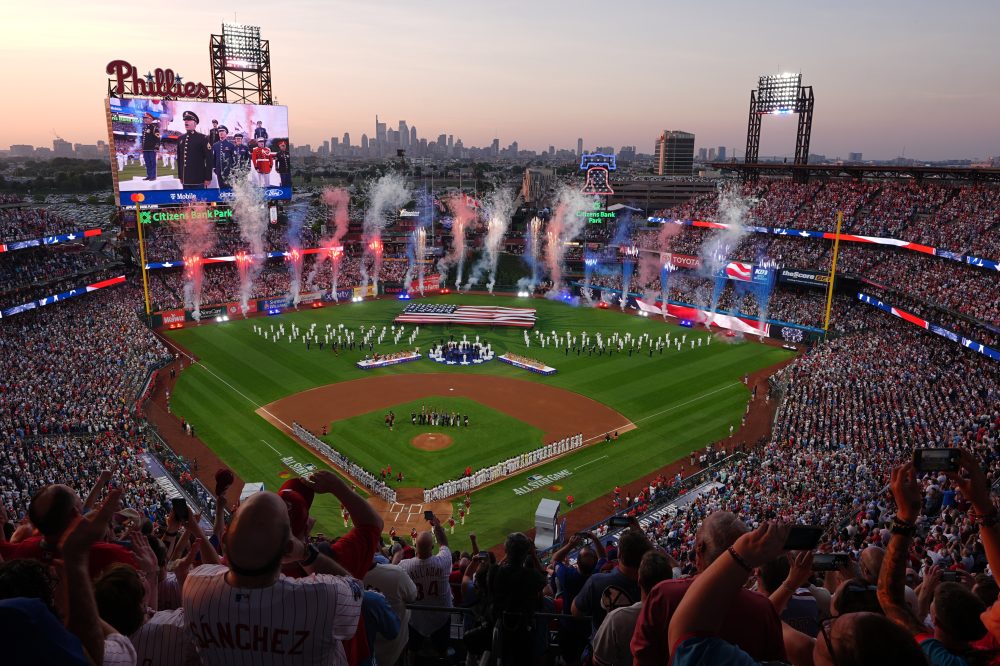

PHILADELPHIA (AP) — Growing up as a young Braves fan in suburban Atlanta, Jordan Walker used to beg his family to take him to games at Turner Field, where he cheered loudly for Chipper Jones. But everything changed in April 2010 when he and his father sat in the left field seats and watched a young Black slugger named Jason Heyward make his major league debut.
Walker’s parents — affectionately known as “Jordan’s Dad” and “Jordan’s Mom” based on the custom jerseys they wore at this week’s Home Run Derby — were there for many of those outings. And that Heyward debut left a lasting impression on the then-7-year-old Walker.
“As soon as Jayson Heyward debuted,” Walker recalled, “I was like, oh yeah, that’s the guy. That’s who I want to be like.”
The power of seeing someone who looked like him succeed on that stage was never something Walker took for granted. So when he delivered one of the most dramatic moments in Derby history — a six-swing, six-homer burst in the championship round to overtake Philadelphia’s own Kyle Schwarber — Walker made clear he hoped that moment would mean something far bigger than a trophy.
“For Black kids, I want to kind of be a role model for them,” Walker said, “like he was for me.”
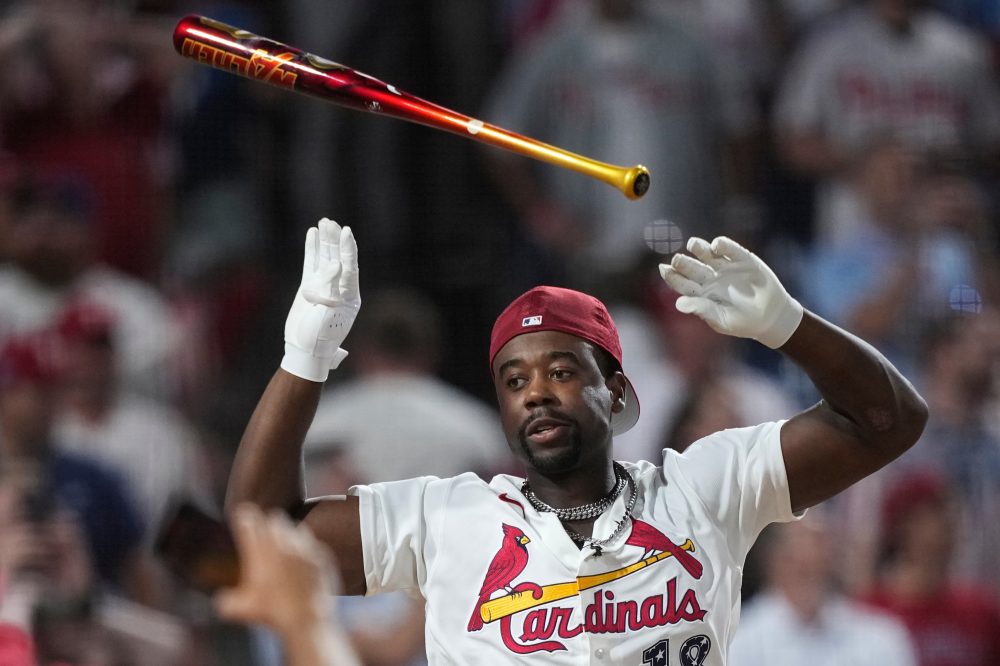
The 24-year-old Cardinals outfielder silenced the Philadelphia crowd that had been rooting loudly for a Schwarber victory. With every towering shot off his customized Iron Man bat, Walker announced himself to the entire baseball world. He wore his Cardinals cap backward, chomped on bubble gum, and basked in the celebration afterward — including receiving the champions’ chain from Ryan Howard and showing off his imitation Liberty Bell bling.
Walker’s performance even drew praise from career home run leader Barry Bonds, who told him, “you got my trophy, too,” calling it the greatest Derby he had ever witnessed.
“That means the world to me,” Walker said.
Walker’s breakout moment arrives as baseball sees a gradual increase in Black players at the major league level. When the Houston and Philadelphia clubs met in the 2022 World Series with no U.S.-born Black players on the field, Astros manager Dusty Baker acknowledged, “It looks bad. But there is help on the way.”
That help has arrived — with Walker front and center at All-Star weekend.
“I think once kids see more people to look up to,” said All-Star Nationals outfielder James Wood, “the more kids will get back into baseball.”
A look around the All-Star clubhouses confirmed a new wave of young Black talent is emerging, even if the growth isn’t as fast as MLB might hope. While Yankees slugger Aaron Judge sat out due to injury, Washington Nationals shortstop CJ Abrams and outfielder James Wood, Cincinnati Reds pitcher Chase Burns, and Braves catcher Drake Baldwin all represented the next generation. Minnesota Twins veteran Byron Buxton also participated in the game.
“I feel like there’s been like a little surge in getting more Black players in the game,” Wood said. “We’ve got four on our team right now. Last year at one point, we had five. I think you’re seeing it come back.”
MLB reported that 6.8% of players on opening day rosters, injured lists, and the restricted list were Black — up from 6.2% at the start of the 2025 season and 6.0% at the beginning of 2024. That 0.6% increase was the largest single-season jump since a 0.7% rise between 2017 and 2018.
Twenty of the 64 Black players in the league had come through MLB-sponsored development programs, including the MLB Youth Academy, Breakthrough Series, DREAM Series, Nike RBI, and the Hank Aaron Invitational. MLB also noted the group included 22 players aged 25 or younger, with an average age of 27.8 compared to the overall league average of 29.25.
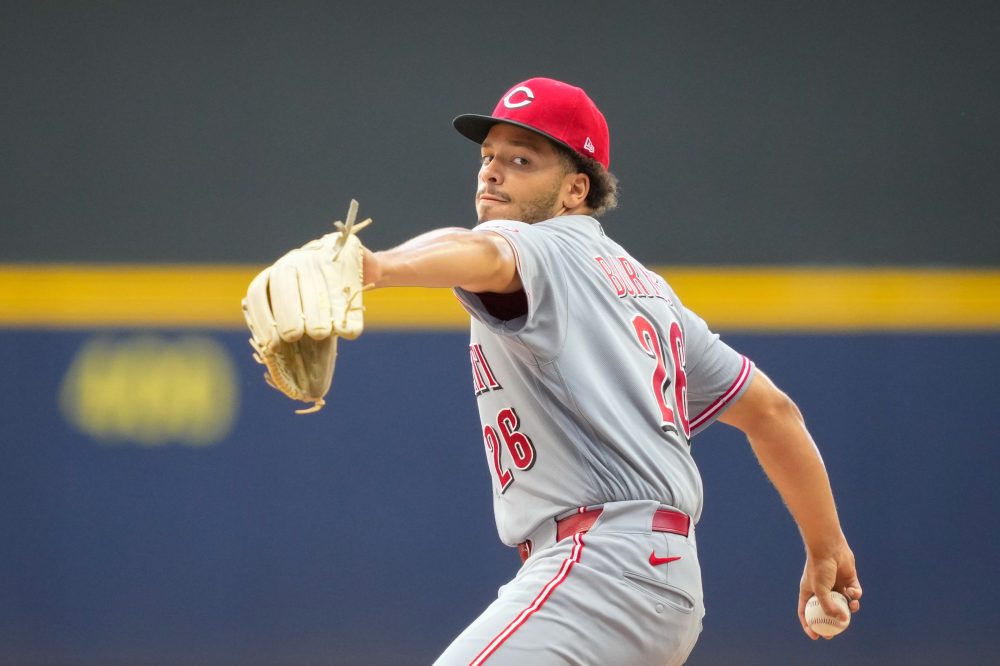
Reds pitcher Chase Burns, 23 years old and posting an 11-1 record with a 2.54 ERA this season, said he was proud to hear Walker speak up about the importance of growing Black participation in the sport.
“You don’t see a lot of Black athletes in baseball,” Burns said. “I don’t know why that is. I think it’s great for guys like me and him to strive to get Black athletes into the game of baseball, whether it’s talking about it or doing stuff in the community. I think it’s great he pointed it out.”
Of course, Walker’s ability to serve as a lasting role model depends on sustaining his success beyond one memorable Derby night. So far, the numbers suggest he’s on the right track. He has 22 home runs, leads all of baseball with 74 RBIs, and ranks 13th with an .886 OPS on a Cardinals team chasing an NL wild-card spot.
It has been a winding road to this moment. Walker signed with St. Louis out of high school after previously committing to Duke, bypassed Triple-A entirely, and joined the opening day roster in 2023 as the youngest player in baseball. He tied Eddie Murray’s under-21 rookie record with a 13-game hitting streak. But he was sent down later that season, demoted again in 2024 after hitting just .155, and then dealt with injuries in 2025 that limited him to 111 games and raised serious questions about his future with the club.
Through all of it, Walker said he never stopped believing he would eventually become the everyday player and All-Star the Cardinals envisioned when they drafted him in the first round in 2020. He reworked his swing during an extended rehab assignment last season, and the results were on full display in Philadelphia — 12 home runs in the Derby’s final round alone.
“When my swing’s fluid and easy, that’s when it’s at its best,” Walker said. “That’s really what it is.”
Walker struck out in his lone at-bat during the All-Star Game itself, but walked away with a $1 million Derby prize — more than his 2026 salary of $799,400. And as a fun footnote: Walker has hit 49 career home runs off 49 different pitchers.
As for the backward cap that became one of the night’s signature images? “I call it the Griffey,” Walker said, “because no one did it better than him.”
No one did it better than Walker at the Derby either. And he hopes that night in Philadelphia becomes the launching pad for a new generation of Black athletes finding their place in baseball.