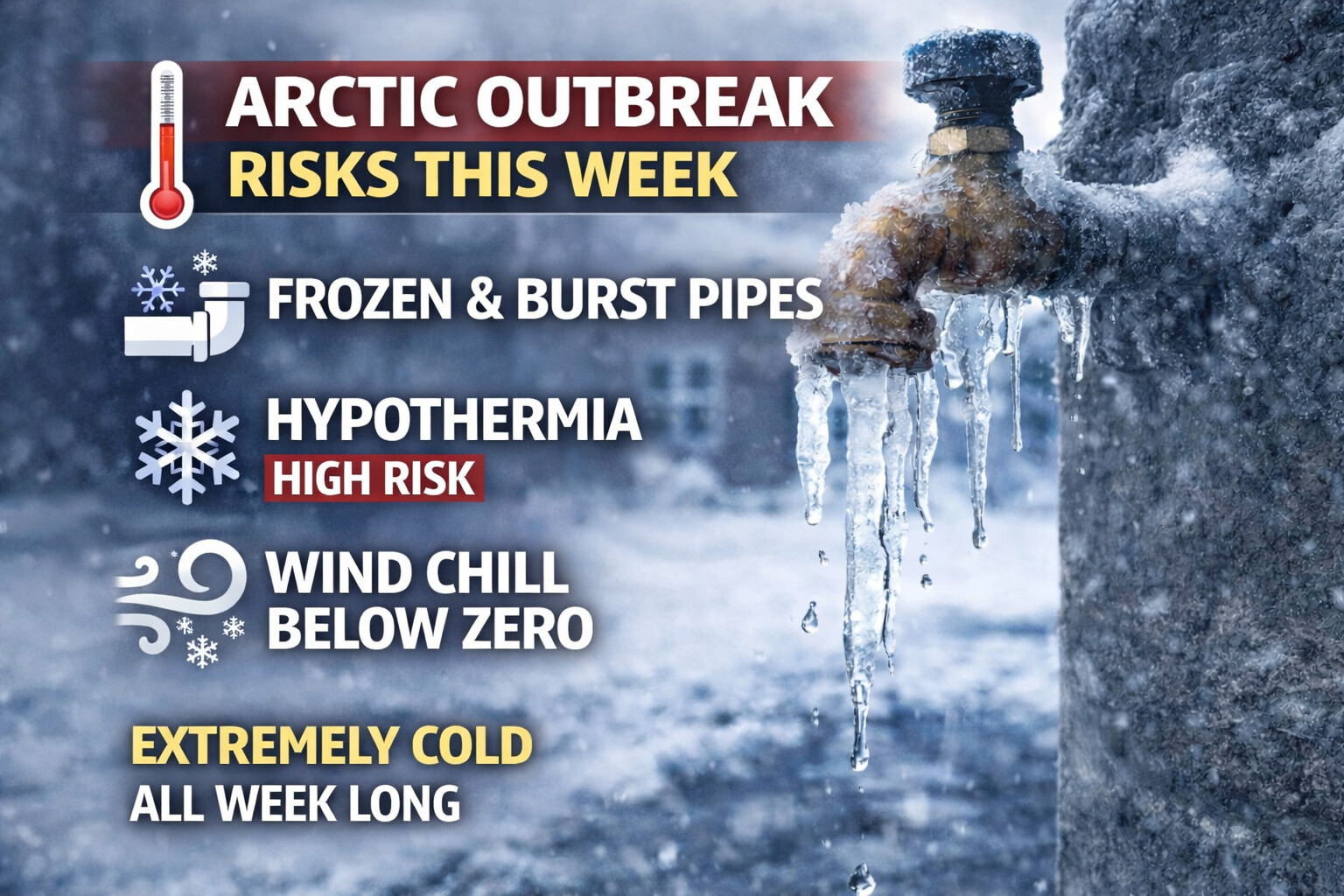

An extended period of dangerously cold weather is expected this week, with overnight low temperatures dropping into the single digits and wind chills falling below zero for several nights. These conditions increase the risk of frozen pipes, hypothermia, and other cold related hazards across the region.
Residents are urged to take precautions now, as the prolonged nature of the cold makes this event particularly concerning. When temperatures remain below freezing for extended periods, water inside pipes can freeze, expand, and cause pipes to crack or burst, leading to significant water damage.

To reduce the risk of frozen pipes, homeowners should allow faucets to drip slightly, especially those connected to exterior walls. Opening cabinet doors beneath sinks can help warmer air circulate around plumbing. Pipes in unheated areas such as basements, crawl spaces, garages, and exterior walls should be insulated if possible. If leaving home, indoor temperatures should be kept no lower than 55 degrees.
Knowing where your main water shutoff valve is located can help limit damage if a pipe bursts. If a frozen pipe is suspected, keep the faucet open and apply gentle heat using a hair dryer or warm towels. Open flames should never be used to thaw pipes.
The extreme cold also poses a serious threat to personal safety. With wind chills expected to remain below zero at times throughout the week, the risk of hypothermia increases significantly. Hypothermia occurs when the body loses heat faster than it can produce it, causing body temperature to drop to dangerous levels.
Symptoms of hypothermia include intense shivering, confusion, slurred speech, drowsiness, and loss of coordination. Anyone experiencing these symptoms should seek medical attention immediately. Limiting time outdoors, wearing multiple layers, and covering exposed skin are critical during this cold stretch. Hats, gloves, scarves, and insulated footwear can greatly reduce heat loss.
Space heaters should be used with caution. Keep them at least three feet away from flammable materials and never leave them unattended. Carbon monoxide and smoke detectors should be checked to ensure they are working properly, especially when using supplemental heat sources.
Pet safety is also a concern during this cold outbreak. Pets should be brought indoors whenever possible. Outdoor animals must have adequate shelter, unfrozen water, and extra food to maintain body heat.
With bitter cold expected to persist all week, preparation and awareness are essential. Taking steps now can help prevent costly damage to homes and reduce the risk of serious cold related illnesses.
Residents are encouraged to continue monitoring forecasts and any cold weather advisories or warnings that may be issued as conditions evolve.