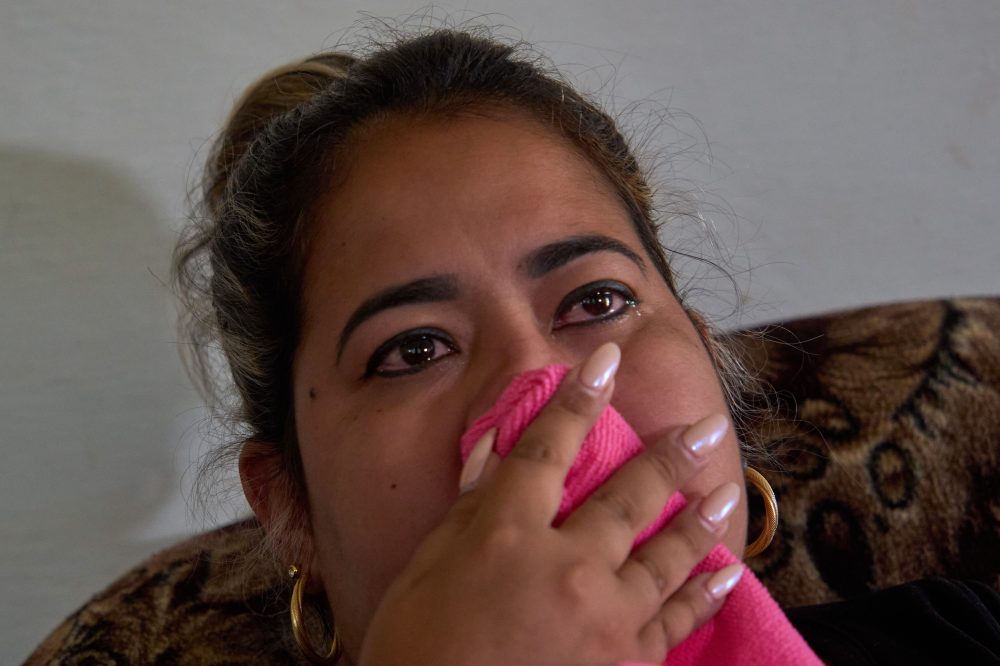

BATABANÓ, Cuba (AP) — For nearly four years, Irisleydis Tristá has fought a tumor through two surgeries and multiple rounds of radiation therapy. But for the past seven months, she has been unable to get a CT scan to find out whether her cancer has grown or spread.
The CT scanner at Hermanos Ameijeiras Hospital in Havana — the country’s top medical facility — is out of service. Doctors have told Tristá, 34, that due to a lack of resources, they are unable to perform another surgery on her in Cuba.
“I feel like my life is in danger,” said Tristá, a mother of a 13-year-old who lives in Batabanó, a town about 70 kilometers (43 miles) south of Havana. “I don’t know if it has grown. We have no way of knowing.”
What was once a point of national pride — Cuba’s free, universal healthcare system — has deteriorated dramatically. Analysts say the crisis has been made worse by fuel shortages linked to tightened U.S. sanctions on the island’s energy sector, compounding an economy that had already been struggling for years.
The Trump administration has been pressuring Cuba’s socialist government to carry out significant economic reforms and change how it governs in exchange for sanctions relief.
Hospitals throughout the island are running short on basic supplies, including syringes, gauze, vaccines, and anesthetics. A lack of spare parts has left equipment such as hemodialysis and CT scan machines out of commission, cutting off patients like Tristá from essential care. Food shortages have also made it difficult for her to follow the diet her doctors prescribed.
Large numbers of medical specialists and technicians have left the country.
Cuba was already dealing with an economic crisis stemming from the COVID-19 pandemic and increasing U.S. sanctions. Conditions worsened after U.S. authorities captured then-Venezuelan President Nicolás Maduro in early January, cutting off one of Cuba’s most important allies. The White House then threatened countries that supplied fuel to the island and increased pressure on foreign companies and individuals to stop doing business with Havana.
The fallout has included power outages stretching more than 20 hours, gasoline rationing, and drops in both industrial and food production.
For a country whose health statistics have historically rivaled those of developed nations — including low mortality rates, high life expectancy, widespread vaccination, and broad prenatal care — the current situation “is shocking,” according to the Pan American Health Organization and World Health Organization representative on the island.
That representative said fuel shortages have caused “quite large” disruptions to health services, affecting not just care delivery but the entire chain of continuity around patient treatment.
He added that PAHO and the WHO themselves have struggled to distribute humanitarian aid. The United Nations, on which both organizations rely, launched a $94 million emergency plan in March to address the growing humanitarian crisis resulting from the energy blockade.
A government report released in June revealed that the survival rate for children with cancer had dropped to 65%, down from 85% before energy restrictions took effect in January.
“We have had children die. Two so far this year,” said a specialist at the National Institute of Oncology and Radiobiology in Havana, during a walk-through of the pediatric ward. “This situation is terrible.”
The specialist noted that some children — especially those from distant provinces — must return to the hospital every 21 days for treatment.
“Sometimes a week or even 15 days go by before they can come because of the fuel shortage,” she said.
One mother, whose 4-year-old daughter is receiving treatment at the hospital, described the ordeal as “very hard.” The family traveled roughly 350 kilometers (217 miles) from their home in Sancti Spíritus, east of Havana, to get care for their child.