
DENVER (AP) — A Colorado woman who operated a funeral home with her former husband is set to be sentenced Friday for her role in concealing almost 200 decaying bodies, a horrific case that prompted state lawmakers to implement stricter regulations on a previously unregulated industry.
Carie Hallford is expected to receive a prison term of 25 to 35 years under a plea deal when she appears before District Judge Eric Bentley in Colorado Springs for corpse abuse charges.
Her former spouse, Jon Hallford, was handed a 40-year prison sentence in February for the same charges, with relatives of victims calling him a “monster” during that proceeding for allowing their loved ones’ remains to decay.
At Return to Nature funeral home, Carie Hallford served as the primary contact with grieving families at their Colorado Springs location. Meanwhile, Jon Hallford handled most operational duties at a separate facility in Penrose, south of Colorado Springs, where residents began reporting strange smells in 2023.
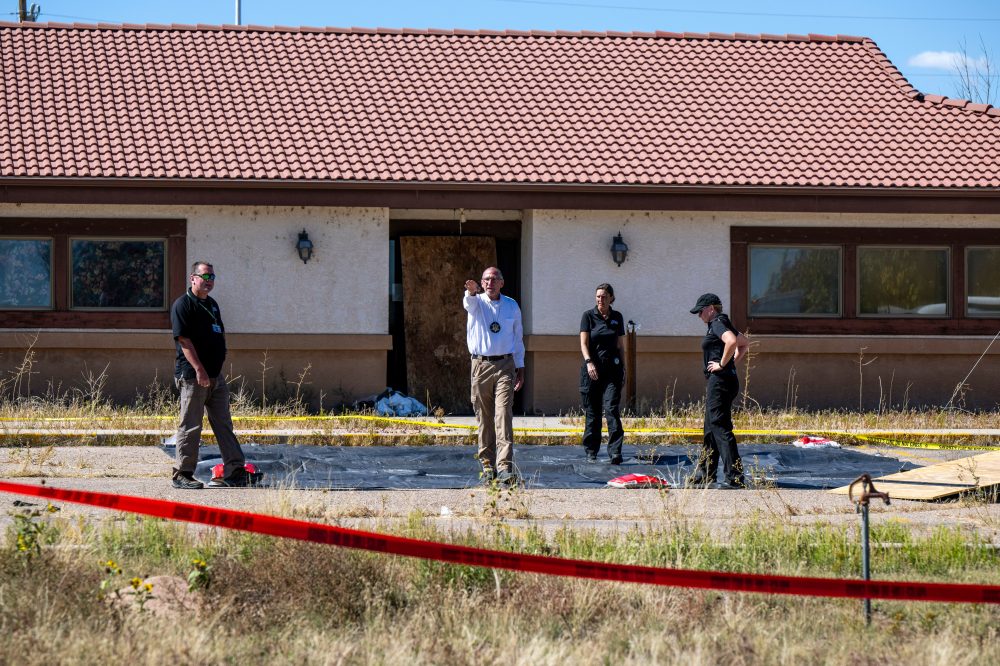
Investigators discovered corpses stacked throughout the insect-infested Penrose facility in different stages of decay.
This incident represents the most shocking among several criminal cases involving Colorado funeral establishments, as investigators uncovered the Hallfords’ extravagant lifestyle and systematic customer fraud.
Only months before the Penrose discovery, a mother-daughter team running a funeral business in Montrose, western Colorado, received federal prison terms for allegedly trafficking body parts and providing families with counterfeit ashes.
In 2024, Denver police arrested a financially struggling former funeral director who stored a deceased woman’s body in a hearse at a residence for two years, where officers also discovered cremated remains of at least 30 individuals.
Additionally, last year state inspectors discovered 24 decomposing bodies and numerous bone containers behind a concealed door at a Pueblo funeral establishment operated by the Pueblo County coroner and his sibling. This marked the first inspection of that facility under new regulations requiring routine examinations of all funeral homes.
During her March sentencing for related federal fraud charges, Carie Hallford requested mercy, claiming she suffered abuse and manipulation during her marriage.
However, she faces Friday’s hearing with little compassion from victims like Crystina Page, whose son David passed away in 2019. His remains deteriorated for years inside the unrefrigerated Penrose building alongside other bodies before their discovery.
“Jon Hallford was the monster under the bed, but Carie was the one who fed the monster,” Page stated. Page and other families received fraudulent ashes rather than their loved ones’ actual cremated remains.
The divorced couple also received federal fraud sentences — 18 years for Carie and 20 years for Jon. Both have filed appeals.
State officials and industry leaders reported this week that legislative reforms enacted by Colorado are proving effective.
Following the Hallford scandal, the state required mandatory inspections and established a licensing framework for the industry. These modifications place Colorado “in the middle of the pack” regarding regulation compared to other states, according to Sam Delp from the state Department of Regulatory Agencies, which supervises the funeral sector.
“We were the only state in the country that didn’t regulate them,” stated Delp, who leads the agency’s Division of Professions and Occupations.
Matt Whaley, president of the Colorado Funeral Home Directors Association, noted that consumers have become more vigilant following extensive media coverage of Return to Nature and other criminal cases.
Family members now frequently request to witness their loved one’s cremation process rather than simply receiving ashes afterward, Whaley explained.
“The confidence level of a funeral professional in the state of Colorado is questioned, and we’ve got to work hard, one family at a time, to build that trust back,” he said.
Blanca Eberhardt, a licensed funeral director with previous experience in Indiana, Texas and Hawaii, remembered relocating to Colorado and being shocked by the poor treatment of corpses at a Pueblo funeral home where she was employed. For Eberhardt, this experience validated Colorado’s reputation for lacking fundamental regulations like director licensing and regular inspections.
“The joke has been for the last 40 years if you lose your license in another state, just move to Colorado,” she explained.