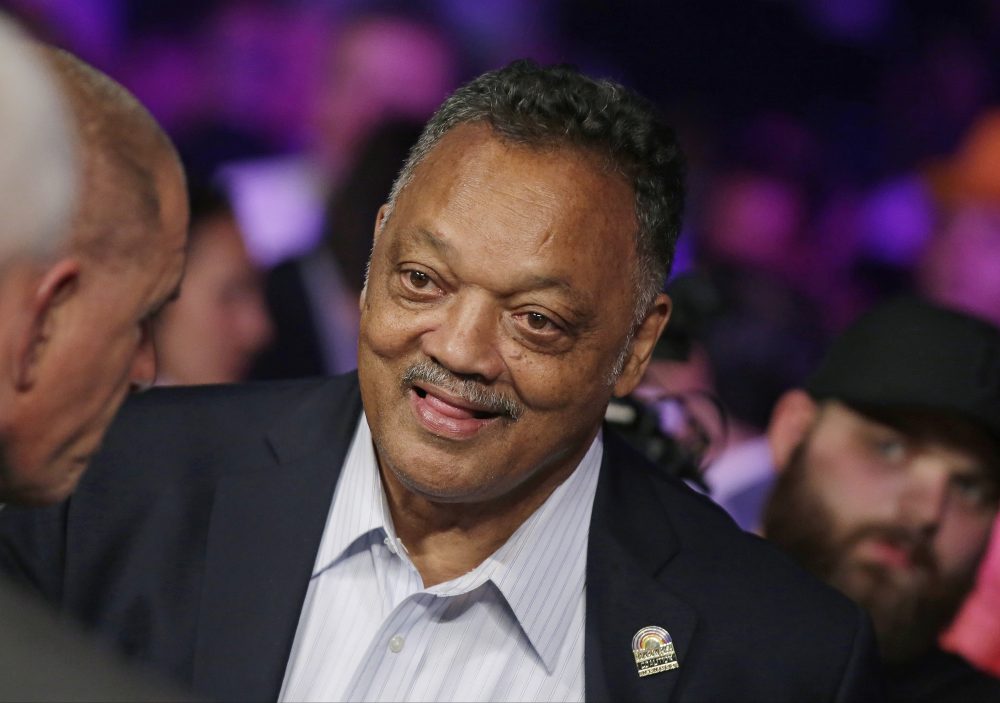

The Rev. Jesse Jackson, a towering figure in the civil rights movement who passed away Tuesday at 84, played a pivotal role in championing the widespread adoption of ‘African American’ as a term that would honor cultural heritage and restore dignity to the community.
Jackson, who learned from and worked alongside the Rev. Dr. Martin Luther King Jr., became part of a broader movement in the late 1980s that included NAACP leaders and other activists seeking to move away from terms like ‘colored’ and ‘blacks’ toward language that better reflected ancestral connections and commanded respect.
‘To be called African Americans has cultural integrity — it puts us in our proper historical context,’ Jackson stated during that era. ‘Every ethnic group in this country has a reference to some base, some historical, cultural base.’
The two-time presidential contender, who carried forward the Civil Rights Movement following King’s death, succumbed to a rare neurological condition at his Chicago residence with family by his side, according to his daughter Santita Jackson’s confirmation Tuesday.
Throughout his life’s work, Jackson championed voting access, employment opportunities, and educational advancement for marginalized communities while promoting Black pride. He believed that terminology originating from within the Black community could strengthen collective self-worth.
While academics had utilized ‘African American’ before Jackson and the NAACP’s campaign, the term remained largely academic until the reverend mobilized grassroots support. Historical records show the phrase appeared as early as 1782 in a Philadelphia sermon pamphlet authored ‘By an African American,’ according to Yale law librarian Fred R. Shapiro’s research.
Jackson drew inspiration from similar efforts by other minority communities working to reshape their public identification and recognition.
The 1990s brought discussions around ‘Latino’ versus ‘Hispanic’ terminology. Meanwhile, Asian Americans had successfully petitioned the U.S. Census Bureau to include Native Hawaiians and Pacific Islanders in the 1990 census for the first time. Though ‘African American’ gained prominence too late for that census, the bureau issued guidance stating ‘Black or Negro includes African-Americans.’
Black sociologist Walter Allen described the term’s acceptance as ‘a significant psychological and cultural turning point’ in a January 1989 New York Times piece.
This assessment followed Jackson’s December gathering of 75 Black organizations, encompassing fraternities, sororities, advocacy groups, and social organizations, where organizers reported ‘overwhelming consensus’ supporting the terminology shift. Chicago and Atlanta school systems quickly embraced the change, integrating it into their educational programs.
Today, ‘Black’ and ‘African American’ are commonly used interchangeably throughout the United States, though ‘Black’ is often considered more encompassing as it includes individuals from Latin America and the Caribbean.
Critics of ‘African American’ argue it qualifies their American identity or implies contemporary African connections that may not reflect their actual experiences.