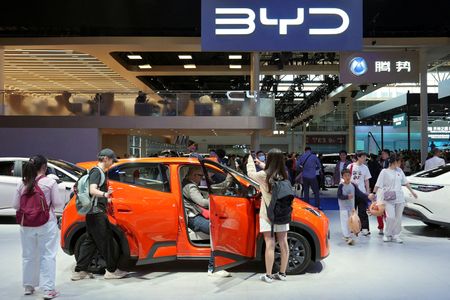

Chinese electric vehicle manufacturer BYD reported a second consecutive month of rising global sales in June, with a dramatic jump in exports helping counterbalance sluggish demand within China.
Overall sales reached 403,472 vehicles last month, representing a 5.5% increase compared to June of the previous year, based on Reuters calculations drawn from a stock exchange filing released Wednesday. That follows a modest 0.3% uptick in May, which broke an eight-month streak of declining sales figures.
For context, BYD’s fastest-growing competitor, Leapmotor, posted a 95% year-over-year jump in June sales, moving 93,376 electrified vehicles during the month.
BYD’s international sales surged 94.7% compared to June 2025, totaling 175,349 vehicles sold abroad. That strong overseas performance helped soften the blow from China’s domestic market, where BYD’s sales dropped 22%, continuing a run of year-over-year declines that started in May 2025.
The company, widely regarded as Tesla’s biggest Chinese rival, is reportedly close to choosing a location for its second European manufacturing facility, following its existing plant in Hungary. A senior adviser to the company’s European operations made that disclosure on Wednesday.
At BYD’s annual shareholder meeting held last month in Shenzhen, Chairman Wang Chuanfu laid out a vision for the automaker to claim the title of world’s largest within five years. The announcement came as the company sought to reassure investors following a notable decline in its stock price.
Wang highlighted robust export growth and technological progress — including improvements to battery technology and rapid-charging capabilities — as the cornerstones of that goal.
BYD isn’t the only EV maker feeling the financial pressure. Competitors including Leapmotor, Li Auto, and Xiaomi have also seen their share prices struggle amid intensifying price wars and a dimming demand outlook across the industry.
Sales within China have been dragged down by several factors: reduced government subsidies, a prolonged downturn in the real estate market that has eroded household wealth and consumer confidence, and a buildup of unsold inventory at dealerships.
China remains the world’s largest automobile market, but the China Passenger Car Association now forecasts that car sales there will fall 11% this year — a steep downgrade from an earlier projection of just a 1% decline.