
LONDON (AP) — The word “ceasefire” seems simple enough: both sides stop shooting, diplomats get to work, and civilians finally get some breathing room. But that straightforward definition is being put to the test across the Middle East, where conflict has continued well after ceasefire agreements were declared — and after President Donald Trump announced victory.
Israel has been conducting strikes on Gaza on a near-daily basis. The arrangement in Lebanon is a ceasefire in name only. And diplomatic talks between the U.S. and Iran are still in early stages, with negotiators meeting in Qatar this week under a 60-day deadline — far from any lasting peace agreement. People living in the region, along with analysts and journalists, are pushing back against describing the current situation as a ceasefire at all.
The periodic closure of the Strait of Hormuz and ongoing shooting, they note, have never truly stopped.
“There is no ceasefire between the United States and Iran,” said Fawaz A. Gerges, a professor of international relations at the London School of Economics and Political Science. “Iran has zero trust in the Trump administration, so they are making the U.S. fulfill its obligations step by step. This tells me we are living in a new era where the ceasefire no longer really means what it used to.”
Ceasefires have existed almost as long as warfare itself — a long-established method of formally pausing hostilities. Also called a truce, the concept is generally understood as a bridge between war and peace, during which warring parties agree to hold off on fighting while diplomats negotiate. Beyond that basic framework, a truce means whatever the parties at the table are willing to accept, as long as neither side walks away. Violations are frequent and are often used strategically, establishing an unspoken threshold for lower-level conflict that won’t derail the broader talks. The intent is to allow room for accidents or misunderstandings that the parties agree shouldn’t blow up the negotiations.
Some ceasefires have effectively functioned as long-term peace arrangements even without a formal treaty. A prime example is the Korean Armistice Agreement, which halted the Korean War on July 27, 1953. No peace treaty was ever finalized, meaning the Korean Peninsula technically remains in a state of war. Even so, that agreement ended the active fighting and created the DMZ — a roughly 4,000-meter (2.5-mile) buffer zone separating North and South Korea — despite frequent violations over the decades.
The situation in the Middle East is far less settled. Negotiators are still in the early phases of talks, with U.S. midterm elections on the horizon and President Trump pushing to bring an end to a conflict that has grown increasingly unpopular. Two U.S. envoys — Steve Witkoff, Trump’s special Mideast envoy, and Jared Kushner, his son-in-law — arrived in Qatar on Tuesday for discussions with mediators aimed at reaching an initial deal to end the war with Iran. Their visit followed a weekend of clashes in the Persian Gulf over efforts to reopen the Strait of Hormuz to commercial shipping.
Ceasefire terms can range from highly detailed to deliberately vague. They may address troop pullbacks, limits on where fighting can occur, humanitarian access, buffer zones, and timelines. Violence levels often do drop during a declared ceasefire — but not always enough to match public expectations of what “ceasefire” should look like.
Technically, ceasefire arrangements of varying stability exist between Israel and Hamas in Gaza, between Israel and Hezbollah in Lebanon, and between the United States and Iran. But none of those agreements has brought fighting to a halt.
Trump acknowledged the complicated reality. “It’s a different part of the world, you know,” he told reporters last month. “I’d say in that part, a ceasefire is when you’re shooting in a more moderate manner.”
Rather than ending the conflict, the agreements have “paved the way for a new conflict in which the various parties are fighting over the postwar strategic reality and the acceptable rules of the game,” according to analyst Daniel Sobelman of Hebrew University in Jerusalem.
In the Middle East, “so-called ‘rules’ emerge through a process of violent bargaining over what is acceptable and what is a violation,” said Sobelman, who directs the graduate program in international security and diplomacy. That dynamic explains the gap between the quiet many people associate with a ceasefire and the near-daily news of continued fighting.
Does it actually work? Sobelman noted in an email that the U.S. and Iran have exchanged fire multiple times since their ceasefire took effect, “and nonetheless the war has not erupted again because these upticks in violence are limited in time and scope.”
Major institutions — from the United Nations to the U.S. Department of Defense, as well as many news organizations including The Associated Press — have broadly defined ceasefires as political tools designed to reduce pressure on a conflict as long as both sides remain at the negotiating table.
Regarding the U.S.-Iran situation, the AP advised its reporters on June 10 to provide details about conditions on the ground, consider describing the deal with qualifying language such as “tenuous,” and refer to a “‘ceasefire deal,’ which speaks to the political process and not just the military/security dynamic.”
Over the weekend, as fighting flared again in the region, Sen. Roger Marshall, R-Kan., offered a more blunt assessment. Asked on NBC’s “Meet the Press” whether the war was truly over, he compared the ceasefire talks to “almost just a mop-up operation” and described the terms this way: “We have to press them if they strike us. We have to strike them back by 10.” He added: “This is a ceasefire, and yeah, they broke the ceasefire.”
For people on the ground in the region, the experience feels like war — and resistance is growing to calling it anything else.
“It is not a ceasefire when it applies only to Hezbollah, Hamas or Iran, but not to Israel and the United States,” wrote Kathy Gannon, who covered Pakistan and Afghanistan for the AP for 35 years before retiring, in a June 7 Substack post.
Much of the criticism centers on Israel’s continued military operations in Lebanon and Gaza despite the ceasefire agreements. Israeli leaders reference the deals but emphasize their country’s right to respond to what they describe as violations and existential threats.
“Continued Israeli strikes are treated as compatible with the truce; comparable actions by others are treated as its collapse,” said H.A. Hellyer, a senior associate fellow of Middle Eastern studies and geopolitics at the Royal United Services Institute and the Center for American Progress. “A word that once implied mutual restraint now serves to legitimize profoundly unequal restraint.”
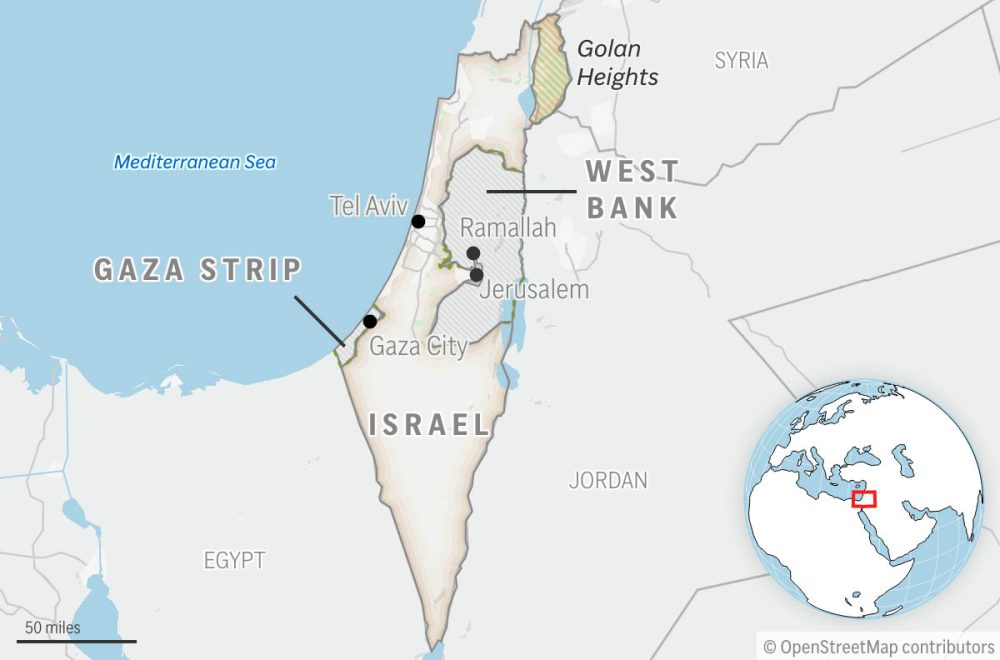
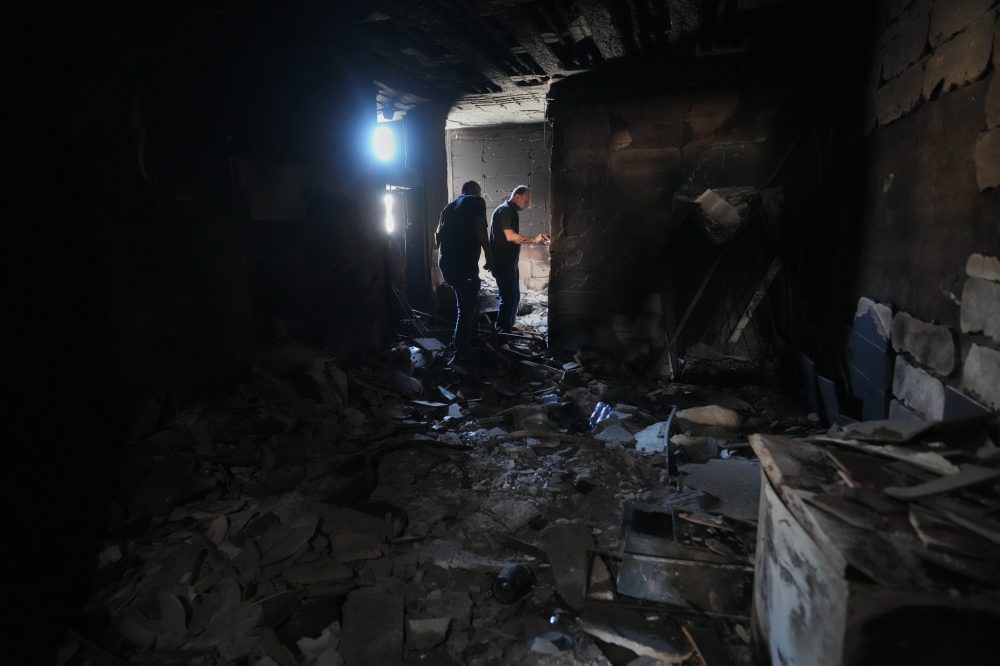
Israel continues to hold large portions of southern Lebanon while fighting Hezbollah, resulting in civilian deaths and damage to infrastructure. More than 4,000 people in Lebanon have died in Israeli strikes since March, when Hezbollah fired on Israel two days after the Iran war began. On the Israeli side, 38 soldiers and three civilians have been killed.
In Gaza, Israeli strikes have continued even after the ceasefire agreement with Hamas reached in October. On Monday alone, strikes in southern and central Gaza killed at least eight people — including two children — and wounded at least 20 others, according to health officials and emergency services. Palestinian authorities say more than 1,000 people in Gaza have been killed since that ceasefire took effect.