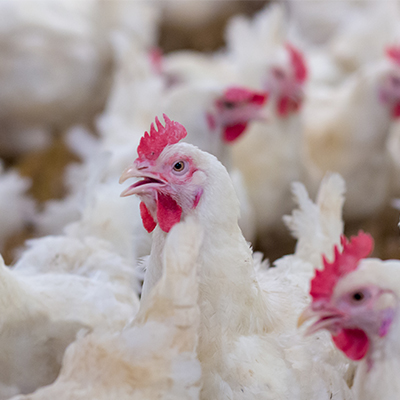
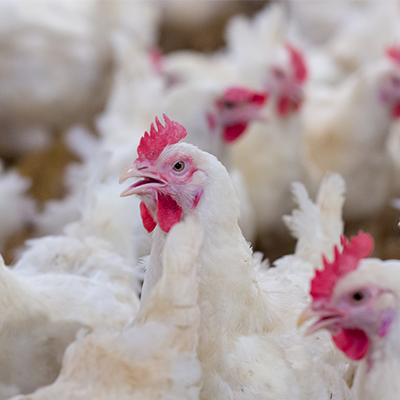
Scientists have uncovered promising evidence that illuminating eggs during the hatching process may produce stronger, more resilient chickens.
Researchers at The Roslin Institute conducted a study revealing how exposure to light while eggs develop can influence how young birds behave, grow, and thrive overall. The investigation adds to expanding research in bird development science.
According to the findings, making basic modifications to how eggs are incubated might help create healthier chickens that adapt better to life in commercial farming operations. The research focused on understanding the connection between lighting conditions during egg development and the resulting quality of the hatched chicks.
The study represents part of ongoing scientific efforts to improve poultry welfare and productivity through better understanding of early developmental factors that affect bird health and behavior throughout their lives.
Select sections of Florida’s Apalachicola Bay have welcomed back commercial wild oyster harvesters following a five-year moratorium on the practice. The resumption of limited harvesting operations has brought excitement to both seafood lovers and the fishing community.
The restricted reopening marks the end of a lengthy suspension that kept harvesters away from the bay’s oyster beds for half a decade. Commercial fishermen and oyster enthusiasts are celebrating the return of access to these prized shellfish waters.
A surprising new international study suggests South Africa may hold the number two spot among the world’s most competitive chicken producers, despite weathering a perfect storm of industry challenges over recent years.
The nation’s poultry sector has endured a barrage of difficulties including illegal dumping practices, severe drought conditions, skyrocketing feed expenses, power supply issues, and devastating bird flu outbreaks. Yet somehow, the industry has managed to maintain both its resilience and technical excellence on the global stage.
These findings come from the Bureau for Food and Agricultural Policy’s 2025 Competitiveness Benchmark Report, a comprehensive analysis developed alongside researchers from Wagenen University in the Netherlands. The report examined how South Africa’s chicken industry has managed to stay both globally competitive and operationally efficient despite facing such significant headwinds.
The study’s preliminary findings highlight the remarkable adaptability of South Africa’s poultry operations in the face of mounting pressures that have challenged producers worldwide.
With another growing season approaching, Delaware area farmers are being encouraged to understand their crop insurance coverage before severe weather strikes. Agricultural insurance experts emphasize the importance of knowing what protection is available when Mother Nature threatens their livelihood.
During a recent agricultural management discussion, Meg Yandell, who serves as vice president of technical claims at RCIS, provided guidance on how farming operations can better prepare for the insurance claims process when weather disasters impact their crops.
The advice comes as farmers across the region gear up for what could be another challenging year of unpredictable weather patterns that threaten agricultural productivity and farm income.
Agricultural equipment manufacturing is experiencing renewed momentum across the United States, according to U.S. Senator Chuck Grassley. The Iowa Republican expressed enthusiasm about employment opportunities returning to his home state.
“I’ve been very happy to hear jobs are coming back to Iowa, whether it’s construction or making farm machinery,” Grassley stated. “It’s good for our workers and very good news for the economy.”
The positive developments in equipment manufacturing come as the agricultural sector continues working toward full recovery. Recent announcements from major manufacturers over the past month indicate growing confidence in the farm equipment industry.
While these manufacturing investments signal strength in the equipment sector, industry observers note this doesn’t necessarily indicate a complete turnaround for agriculture as a whole.
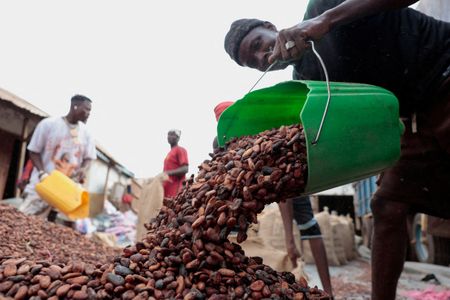
LONDON – West Africa’s leading cocoa producer, Ivory Coast, faces a mounting crisis that could leave approximately 200,000 metric tons of cocoa beans unsold by the conclusion of March, according to industry analysts and international trading company executives.
The accumulation stems from a pricing dispute where the government established farmer compensation rates last October that significantly exceed current global market values, creating financial losses for traders who purchase the beans.
Together with neighboring Ghana, Ivory Coast supplies roughly half of the world’s cocoa production. Both nations are grappling with growing stockpiles of unsold beans that have been building up at ports and inland storage facilities over recent months.
These surplus inventories have contributed to a dramatic decline in worldwide cocoa prices, which have dropped by 50% this year and recently reached nearly three-year lows.
International trading companies ceased purchasing Ivorian beans from the main harvest several months ago due to the price disparity. However, government and local trade officials confirmed that the country successfully negotiated sales of 200,000 tons from its upcoming April through September secondary harvest to global buyers last week.
The secondary crop typically undergoes local processing and commands lower prices due to perceived quality differences compared to the main harvest.
To provide financial relief to farmers awaiting payment for their main crop deliveries, Ivory Coast committed in late January to purchase 100,000 tons of unsold cocoa at an estimated cost of $500 million.
Industry executives predict the actual volume requiring government purchase will substantially exceed this amount. Two senior officials from major agricultural commodity trading firms, speaking anonymously due to media restrictions, revealed that Ivorian intermediary traders have failed to complete purchases of at least 100,000 tons from the main crop.
These same executives estimate farmers will harvest an additional 100,000 tons of main crop beans through March’s end that remain unsold to international buyers and will likely stay that way unless the government reduces its pricing structure.
The Coffee and Cocoa Council (CCC), Ivory Coast’s Abidjan-based regulatory body responsible for sector oversight and farmer price determination, disputed the market estimates of unsold inventory as “erroneous” but declined to provide additional specifics when contacted by Reuters.
On Monday, Ivory Coast’s agriculture minister announced plans to reveal farmer pricing for the upcoming secondary crop by February’s conclusion, representing an earlier timeline than typical practice.
Ghana implemented significant changes last week, reducing its farmer prices by nearly one-third following complaints from cocoa producers who reported receiving no payments since November. Industry sources indicated that Ivory Coast is evaluating similar price reductions to match Ghana’s adjusted rates.
Wisconsin Representative Derrick Van Orden is highlighting provisions in the latest farm bill that extend beyond the typical focus areas of environmental programs, food assistance, and agricultural trade enhancements.
Speaking with Brownfield, Van Orden emphasized that the legislation contains funding opportunities specifically designed to support smaller meat processing operations across the country.
“We’ve got the new mobile and expanded meat processing grants. So, there’s only four major processors in the entire country, and what we’re trying to do is” support alternatives to this concentrated industry structure, Van Orden explained.
The congressman’s comments point to efforts aimed at diversifying the meat processing sector, which has faced scrutiny over its limited number of major players controlling much of the nation’s processing capacity.
Federal workplace safety officials announced Tuesday they are imposing penalties totaling $246,609 against three companies following the tragic deaths of six dairy workers who lost their lives due to toxic gas exposure at a Colorado facility.
The deadly incident occurred on August 20, 2025, when a manure pipe became disconnected in a confined area, releasing lethal hydrogen sulfide gas that killed five men and one teenager. The tragedy devastated the small farming communities near Keenesburg, located about 35 miles northeast of Denver.
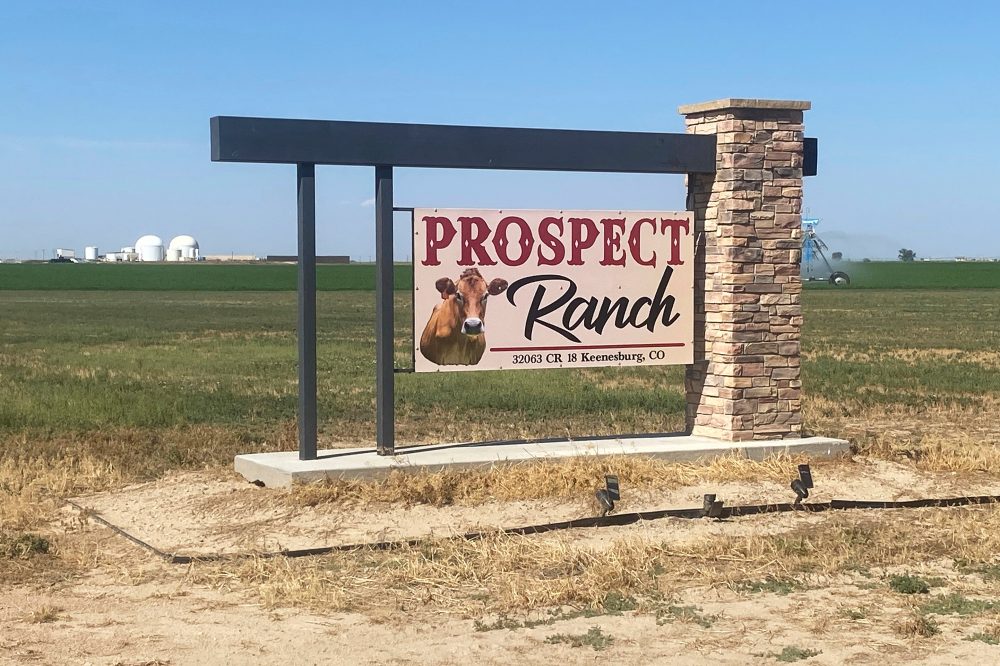
The U.S. Occupational Safety and Health Administration hit the dairy operation, Prospect Ranch LLC, with the steepest penalty of $132,406 for multiple serious safety violations. Officials cited the company for inadequate worker training, poor safety planning, and failing to safeguard employees from dangerous atmospheric conditions. The company has not yet responded to requests for comment.
Federal regulators also levied fines against two contractors who were working on the manure handling system when the fatal gas release occurred, according to Tuesday’s government announcement.
Colorado-based Fiske Inc., whose subsidiary High Plains Robotics maintains dairy equipment and employed several of the victims, received a $99,306 penalty for failing to protect workers and not providing proper hydrogen sulfide detection training.
OSHA officials described the sequence of events in their statement: “A Fiske employee and a Prospect Ranch employee attempted to stop the flow but were overcome by the gas. Subsequently, three more Fiske employees and one Prospect Ranch employee entered the pump room, which led to the loss of a total of six workers.”
The Weld County medical examiner confirmed through post-mortem examinations and toxicology analysis that hydrogen sulfide gas exposure caused the deaths, though few details about the specific circumstances were released beyond describing it as an industrial accident in a restricted space at the dairy operation.
A third contractor, HD Builders, received a $14,897 citation for lacking proper written hazard communication procedures and failing to train workers on hydrogen sulfide detection. Workers from this company were on-site when the pipe failure occurred but escaped injury.
All three companies now have 15 days to either pay the proposed penalties, request informal discussions with safety officials, or contest the citations before an occupational safety review board.
Confined space dangers at agricultural facilities represent a persistent and well-documented threat to farm workers nationwide, frequently involving exposure to invisible, odorless toxic gases or suffocation in enclosed areas where oxygen levels have dropped dangerously low.
Emergency responders from the local Weld County fire department arrived at Prospect Ranch around 6 p.m. on August 20 and took extensive safety measures before entering the confined area.
All six victims were Latino workers, ages 17 to 50. Tragically, four of the deceased, including the teenage high school student, belonged to the same extended family.
The victims included Alejandro Espinoza Cruz from Nunn, who died alongside his 17-year-old son Oscar Espinoza Leos and another son, 29-year-old Carlos Espinoza Prado.
The Espinoza family was connected through marriage to another victim, 36-year-old Jorge Sanchez Pena from Greeley, according to the county medical examiner.
The remaining two workers who perished were Ricardo Gomez Galvan, 40, and Noe Montañez Casañas, 32, both residents of Keenesburg.
Montañez Casañas, a veterinarian working in the United States on a visa, was laid to rest in his home state of Hidalgo in central Mexico, with assistance from the Mexican consulate in Denver.
Delaware dairy producers are running out of time to sign up for an enhanced federal assistance program that could provide payments as early as next month.
The USDA’s Undersecretary for Farm Production and Conservation, Richard Fordyce, announced that dairy operators have only days remaining to register for the updated Dairy Margin Coverage Program covering 2026.
Speaking with agricultural reporters, Fordyce emphasized the program’s recent enhancements. “The revisions in the One Big, Beautiful Bill, I think it even makes it a stronger program,” Fordyce stated.
The federal official noted positive feedback from dairy operators across the country. “When I talk to dairy farmers, they’ve got” concerns about market volatility that this program can help address, according to Fordyce.
The improved coverage program offers financial protection when the difference between milk prices and feed costs falls below certain thresholds, providing a safety net for dairy operations during challenging market conditions.
A Wisconsin legislative initiative aimed at establishing a $20 million loan program for dairy cattle innovation has collapsed during the current session, leaving both agricultural advocates and lawmakers expressing frustration.
According to Assembly Agriculture Committee Chair Travis Tranel, the original proposal underwent significant changes during the legislative process. The bill was restructured to allocate $10 million specifically for dairy cattle loans while designating another $10 million for beef cattle financing.
“We should have recognized, and we had a substitute,” Tranel stated when discussing the bill’s challenges.
The program was designed to provide financial assistance to Wisconsin farmers looking to implement innovative practices and technologies in their dairy operations. However, the legislation has now stalled without advancing through the current session.
Both farming communities and state representatives had hoped the innovation loan program would help modernize Wisconsin’s dairy industry and support agricultural advancement throughout the state.
Trading activity on the Chicago Mercantile Exchange showed mixed results for livestock futures, with cattle contracts experiencing mostly modest gains while feeder cattle prices climbed higher. The upward movement represents a recovery from losses seen earlier in the week, supported by stronger boxed beef prices as traders anticipate direct trading sessions scheduled for later this week.
April live cattle contracts declined $0.15 to settle at $239.10, while June contracts posted a gain of $0.10 to reach $235.55. Feeder cattle showed stronger performance, with March contracts jumping $0.80 to $365.10 per hundredweight.
The livestock market activity reflects ongoing volatility as agricultural commodity traders navigate fluctuating demand patterns and supply chain considerations affecting both cattle and pork markets nationwide.
Soybean futures posted small increases during trading as investment funds and technical buying patterns drove market activity. The legume commodity took direction from soybean oil markets, which received additional strength from anticipated demand growth.
Agricultural traders are keeping a close eye on Brazil’s ongoing harvest season while remaining cautious about potential tariff developments and trade relations with China. Although Lunar New Year festivities have concluded, market participants are still uncertain about Beijing’s next moves in the agricultural trade sector.
Meanwhile, corn and wheat futures displayed varied performance, with neither commodity showing a clear directional trend as markets continue to weigh multiple economic factors affecting grain prices.
Agriculture Secretary Brooke Rollins addressed mounting concerns from farmers nationwide regarding the Department of Agriculture’s data collection and reporting methods during last week’s Ag Outlook Forum.
While defending the USDA’s market reports as the industry’s “gold standard,” Rollins acknowledged there’s opportunity for enhancement. She noted that agricultural producers throughout the nation are increasingly questioning the department’s data gathering processes and seeking greater transparency.
“We want farmers to have confidence in our reporting,” Rollins emphasized, highlighting the agency’s commitment to maintaining both accuracy and openness in its market analysis.
The secretary’s comments come as trust issues between farmers and federal agricultural reporting agencies have become more prominent, with producers seeking clearer explanations of how market data is collected and analyzed.
Agricultural extension experts are reporting that organic grain producers are facing mounting difficulties as the farming economy continues to struggle. According to Ashley Adair, an extension specialist with Purdue University Extension, these economic headwinds are preventing farmers from expanding their operations into new areas.
“We have a pretty robust market for feed-grade grains,” Adair explained. “We have a lot of organic” producers in the region, she noted, but the current market conditions are limiting their ability to branch out into different crops or farming methods.
The ongoing agricultural economic slowdown has created a challenging environment where even successful organic operations are finding it difficult to take the financial risks associated with diversification efforts.
Agricultural commodity markets wrapped up Monday’s trading session with mixed results across major futures contracts on February 24, 2026.
Grain markets showed mostly positive movement, with March corn futures finishing at $4.27¾ per bushel, gaining a quarter cent from the previous session. Soybean futures performed particularly well, with March contracts closing at $11.39½, marking an increase of 5¼ cents.
Soybean-related products also posted gains during the trading day. March soybean meal contracts ended at $310.70, climbing $2.00 higher, while March soybean oil futures reached 60.03, advancing 64 points from Friday’s close.
Wheat futures bucked the trend among grains, with March Chicago wheat contracts settling at $5.67½ per bushel, declining 2 cents for the session.
Livestock markets displayed varied performance across different contracts. April live cattle futures closed at $239.10, dropping 15 cents, while March feeder cattle contracts gained significant ground, finishing at $365.10 with an 80-cent increase.
Hog futures showed strong performance, with April lean hog contracts closing at $95.80, surging $2.10 higher than the previous trading day.
January brought an unexpected rise in the nation’s frozen pork inventory, according to new federal agriculture data. The U.S. Department of Agriculture reports that pork held in freezer facilities reached 410.404 million pounds by February’s beginning, marking a 1% increase from the same period last year.
The inventory boost occurred despite decreased pork production throughout January, with the growth driven primarily by larger quantities of pork butts and bone-in hams entering cold storage facilities. Meanwhile, frozen beef supplies moved in the opposite direction, dropping 4% compared to the previous year’s levels.
Federal agriculture officials report that dairy storage facilities experienced mixed inventory changes during January, with cheese stocks rising while butter reserves declined compared to the same period last year.
According to the U.S. Department of Agriculture, cold storage warehouses held 1.38 billion pounds of natural cheese by January 31st, representing a marginal increase from the 1.37 billion pounds recorded twelve months earlier.
American cheese varieties accounted for 792.3 million pounds of the total inventory at January’s close, falling just short of the volumes stored during January 2025. Meanwhile, Swiss cheese reserves climbed to 23.1 million pounds during the reporting period.
The data reflects ongoing fluctuations in dairy product storage levels as producers and distributors manage seasonal demand patterns and production cycles throughout the industry.
Refrigerated cheese inventories held in cold storage facilities nationwide showed marginal growth as of January 31, 2026, according to newly released federal agricultural data.
The latest cold storage report indicates that natural cheese reserves increased modestly compared to December 2025 levels, while also posting a small gain when measured against the same period in the previous year.
These warehouse inventory figures provide agricultural analysts and dairy industry stakeholders with important data points for tracking supply chain trends and market conditions in the cheese sector.
The monthly cold storage survey captures inventory levels at refrigerated warehouse facilities across the country, offering a snapshot of how much product is being held in reserve at any given time.
As agricultural bankruptcies climb throughout the Midwest this year, a legal expert is recommending that farmers take proactive steps to protect their operations through comprehensive financial planning.
Joe Peiffer, an attorney with Ag and Business Legal Strategies, emphasizes that conducting thorough financial assessments could serve as an essential tool for managing risk. According to Peiffer, examining loan agreements and monitoring operational costs may help agricultural producers prevent defaulting on their financial obligations.
“If things aren’t going to work in a restructuring mode, they might have to look” at other options, Peiffer noted, suggesting that early intervention could make the difference between saving a farming operation and losing it entirely.
Wheat farmers across the Great Lakes region are implementing advanced management techniques to significantly increase their crop yields, according to agricultural researchers.
Dennis Pennington, an extension educator with Michigan State University, explains that developing substantial plant biomass has become crucial for optimizing grain development and achieving superior wheat production. Speaking with agricultural reporters, Pennington noted a shift in farming approaches.
“Sometimes we’ve tended to let wheat go a little bit in the spring before we start to push it,” Pennington explained. “But, I think to get the kind of yields” farmers are seeking, more intensive management is required.
The Great Lakes wheat grower network has been working to share these high-management strategies among regional farmers, focusing on techniques that maximize the grain-filling process during critical growing periods.
COCKEYSVILLE, MD – Maryland’s State Soil Conservation Committee has announced plans for a public meeting next month that will address soil conservation issues across the state.
The committee will convene on Thursday, March 19, 2026, beginning at 9:30 a.m. and continuing until noon. Officials have organized the session as a hybrid meeting, allowing both in-person and virtual participation.
The gathering will take place at the Baltimore County Agricultural Center, located at 114 Shawan Road in Cockeysville, Maryland 21030. Committee members have opened the meeting to public attendance and indicated that discussions will center on soil conservation initiatives.
Agricultural economists are closely monitoring international responses following a Supreme Court decision that stripped away presidential emergency tariff authority. The ruling has removed a key negotiating tool that could affect recently announced agricultural trade agreements.
Ben Brown, an agricultural economist with the University of Missouri Extension, is tracking how trading partners might react to this shift in U.S. trade policy. Without tariffs serving as bargaining leverage, Brown questions whether agricultural purchase commitments outlined in recent trade deals will remain intact.
The economist’s concerns center on whether international partners will honor their agricultural purchasing agreements now that the threat of emergency tariffs has been eliminated from future negotiations.
Key policy decisions regarding biofuel requirements and potential trade agreements with China could dramatically influence American farmers’ crop selection this planting season, according to a leading agricultural economist.
Arlan Suderman, who serves as the principal commodities economist at Stone X Group, warns that the most significant influences on what farmers decide to plant may not be captured in upcoming federal planting intention surveys.
According to Suderman, both the Trump administration’s final requirements for biofuel blending and a potential trade agreement with China are anticipated to be announced after the U.S. Department of Agriculture completes its surveys on planting intentions.
These timing issues could mean that farmers’ actual planting decisions for corn and soybeans may differ significantly from what government data initially suggests, as producers adjust their plans based on these late-breaking policy developments.
New research from Ohio State University reveals a notable transformation taking place in agricultural real estate markets nationwide. The study shows that farmland purchase prices are climbing at a faster rate than the rental income those properties generate.
Carl Zulauf, a professor emeritus at the university, explains that this represents a major market shift. “After about 25-year period of fairly stable agricultural cropland, it began to suddenly increase,” Zulauf stated. “We may be hitting a peak now, but…”
The findings suggest that investors and farmers are paying premium prices for agricultural property even as the income potential from leasing that same land hasn’t kept pace with the rising values.
As spring planting season approaches, American farmers facing challenging economic conditions are making tough choices about what crops to grow, with soybeans emerging as the clear winner for 2026.
A fresh analysis from CoBank’s Knowledge Exchange predicts that soybean plantings will jump nearly 6 percent this year as growers shift away from corn, wheat, grain sorghum, cotton and rice due to unfavorable market conditions.
The banking cooperative’s report attributes the soybean surge to expanding domestic processing facilities and anticipated continued purchases from China, which have pushed soybean prices to more competitive levels compared to alternative crops.
“Following recent price rallies, soybeans offer greater profit potential than corn, wheat, sorghum, cotton and rice,” said Tanner Ehmke, lead grains and oilseeds economist with CoBank. “Beyond price signals, crop rotation needs will also play a role. Following a big year for corn in 2025 in which acres climbed to the highest level in decades, more corn acres will be available to rotate to soybeans. And with record supplies of corn in storage, farmers will look to rotate into other crops to diversify their marketing risk. Soybeans currently offer the best marketing opportunities.”
Soybean and Corn Projections
The bank’s forecasting shows soybean plantings climbing 5.9 percent above last year’s levels to reach 86 million acres, drawing land away from multiple competing crops.
Market expectations that the Environmental Protection Agency will announce higher renewable fuel requirements, combined with ongoing Chinese demand, have boosted soybean prices relative to other commodities. Southern farmers are expected to convert cotton, rice and corn fields to soybeans, while Midwest and Central Plains producers will likely reduce wheat and corn plantings in favor of beans.
The Northern Plains region stands as an exception, where weakened export demand to China has pressured local soybean prices, encouraging farmers to favor corn over beans. Additionally, soybean performance in that region has lagged behind corn yields.
Total corn plantings are forecast to drop 4.8 percent to 94 million acres nationwide. Despite the overall decrease, corn will gain ground in western states by taking acreage from wheat, grain sorghum and soybeans, benefiting from more stable demand compared to crops affected by trade disruptions.
Northern Plains farmers dealing with poor soybean pricing will likely convert bean fields to corn, encouraged by consecutive years of strong corn yields that have proven the crop’s success in their region.
Elsewhere, last year’s heavy corn plantings suggest many acres will rotate to different crops, with soybeans typically being the preferred alternative. Midwest farmers holding record corn inventories are reluctant to plant more corn this spring.
Wheat, Durum and Sorghum Outlook
Spring wheat acreage is projected to decline 1 percent to 9.89 million acres due to weaker yields and profit margins compared to corn, as the continued westward expansion of corn production typically reduces wheat plantings.
However, if the USDA forecasts significant wheat acreage reductions in its March Prospective Plantings report, potentially triggering price increases, farmers might adjust their plans and boost wheat production in response.
Durum wheat plantings are expected to fall 3 percent to 2.12 million acres. After last year’s production increase brought U.S. durum acreage to its highest point in eight years, abundant supplies in both the U.S. and Canada have significantly weakened durum prices versus other crops. North Dakota durum growers will likely shift to pulse crops and spring wheat.
Grain sorghum acreage is forecast to decrease 5 percent to 6.31 million acres as Central Plains farmers choose more corn or soybeans for their rotations, discouraged by wide pricing gaps that make sorghum less profitable. U.S. sorghum inventories have reached four-year highs following last year’s larger harvest.
Corn’s substantial price advantage over sorghum, impressive yield performance last year, and improved soil moisture throughout the Central Plains will encourage farmers to expand corn plantings at sorghum’s expense. More consistent local corn demand from cattle feeders and better crop insurance rates also favor corn over sorghum, though sorghum acres could recover if Chinese export demand strengthens.
Cotton and Rice Forecasts
Cotton planted acreage is projected to fall 1 percent to 9.19 million acres, marking the lowest level in 11 years. Southern cotton fields will transition to soybeans, while irrigated Plains cotton acreage will move to corn. Slower U.S. cotton exports to China, increased competition from Brazilian and Australian exports, and growing synthetic fiber usage have prevented cotton price recovery. However, government base acreage payments will help stabilize cotton plantings and limit further losses.
Rice plantings are expected to reach just 2.83 million acres, representing the lowest level in three decades and a dramatic 20 percent year-over-year drop. Among major commodities, rice carries the highest planting costs and has been hit hardest by price declines. Subsidized Indian rice is overwhelming global markets while increased South American rice exports to key markets like Mexico are displacing U.S. shipments. Southern farmers are looking at soybeans as an alternative to long-grain rice, Ehmke noted.
A deadly strain of bird flu has been discovered at a commercial turkey operation in southwestern Indiana, marking the first detection in Daviess County this year. State animal health officials confirmed the presence of Highly Pathogenic Avian Influenza at the facility.
The Indiana State Board of Animal Health announced that over 30,000 birds at the affected farm will need to be euthanized to prevent the virus from spreading. Officials have established containment measures including a control zone spanning approximately 6.2 miles around the infected site, with an extended surveillance area covering more than 12 miles in parts of Daviess County.
This outbreak represents the return of the dangerous bird flu strain to the southwestern Indiana region after its previous appearance in 2024. The highly contagious virus poses significant threats to both commercial poultry operations and wild bird populations.
Dairy commodity trading showed varied results during Tuesday’s session at the Chicago Mercantile Exchange, with some products gaining ground while others declined.
Dry whey prices dropped by $0.0175 to close at $0.6375 per pound. Trading activity included two transactions recorded at prices of $0.6375 and $0.64.
Forty-pound cheese blocks saw an increase of $0.0450, finishing at $1.56 per pound. Market activity was robust with eight transactions completed, with prices spanning from $1.5250 to $1.56.
Cheese barrel prices held steady at $1.49 per pound with no trading activity reported for the day.
Butter maintained its previous closing price of $1.8125 per pound. The commodity saw significant trading volume with 28 transactions recorded, ranging from $1.79 to $1.8125.
Nonfat dry milk posted a modest gain of $0.0050, reaching $1.65 per pound, though no sales were completed during the session.
With winter’s grip finally loosening and baseball spring training underway, one local food writer is already dreaming of ballpark treats and warmer days ahead. The anticipation of hearing bats crack, smelling fresh popcorn, and cheering for favorite teams has inspired some creative thinking about a stadium staple: the corn dog.
While corn dogs remain a beloved ballpark tradition, there’s no reason to stick with the same old approach every time. Food author Deborah Walker, who has spent 15 years writing about recipes and resides in Ocean City, Maryland, believes variety is the key to keeping this classic treat exciting.
Walker emphasizes that mastering the fundamentals is essential before getting creative. A proper corn dog requires four key elements: a bamboo skewer for easy handling, a flavorful coating that complements rather than overwhelms the meat, the right batter-to-hot dog ratio that functions like a bun around the protein, and a golden-brown, crispy exterior.
Traditional corn dog batter typically contains both baking powder and baking soda, which might seem redundant but serves specific purposes. The baking soda neutralizes acidic ingredients like buttermilk in the recipe, while baking powder creates the light, airy texture that makes corn dogs so appealing.
Walker recommends a few practical techniques for better results. Rolling hot dogs in flour before dipping creates better batter adhesion, acting like glue to keep the coating in place. Using a tall glass or canning jar for the batter makes dipping much easier than trying to maneuver skewered dogs in shallow dishes.
While mustard and ketchup remain the go-to condiments, today’s corn dog enthusiasts are pushing beyond traditional boundaries. Specialty hot dogs with cheddar and jalapeño add bold flavors, while kielbasa on a stick pairs perfectly with beer for game-watching sessions.
For those seeking more upscale options, seafood sausage with aioli transforms the humble corn dog into something more sophisticated. Parents can engage kids in the kitchen by rolling corn dogs in colorful cereals like Cap’n Crunch Berries for added texture and visual appeal.
One particularly creative variation Walker suggests is the taco-inspired corn dog, featuring finely diced tomatoes, red onions, yellow peppers, jalapeños, cilantro, and crumbled Cotija cheese, finished with swirls of sour cream and queso dip.
As baseball season approaches and families start planning outdoor gatherings, Walker encourages experimentation and creativity with this classic treat, promising that innovative corn dog variations will be a hit with both family members and guests.
Tuesday’s livestock cash market opened with minimal activity as cattle trading remained stagnant with no established bid or asking prices. Market analysts expect substantial trading activity may not materialize until later in the week, possibly Thursday or Friday.
Current inventory listings present a mixed picture across key cattle-producing regions. Kansas and Texas are reporting decreased showlist numbers, while Nebraska and Colorado are seeing increases in available livestock.
Last week concluded with limited direct trading activity that emerged on Friday in Northern markets, suggesting a gradual buildup toward more active trading sessions later this week.
With winter’s grip finally loosening and spring training underway, one local food expert is helping families prepare for baseball season with creative takes on America’s favorite ballpark treat.
Food writer Deborah Walker, who has been covering culinary topics for 15 years and authored “An Eastern Shore Special: Recipes from the Heart,” says she’s ready for warmer weather after purchasing a tulip plant to remind herself that spring is on its way.
As baseball training camps prepare for another season, Walker notes that soon “the crackling of bats, smell of popcorn popping, and fans cheering their favorite team will become a reality.”
While corn dogs remain a ballpark staple, Walker believes there’s room for innovation beyond the standard recipe. She emphasizes that tradition has its place, but warns against becoming too predictable in the kitchen.
Walker outlines four essential elements for creating the perfect corn dog: a bamboo skewer stick, a flavorful coating that doesn’t overwhelm the meat, proper batter-to-hot dog proportions that work like a bun around the protein, and a golden-brown crispy exterior.
The key to a successful corn dog lies in understanding the chemistry behind the batter, according to Walker. Traditional recipes call for both baking powder and baking soda, which might seem redundant since baking powder already contains baking soda.
Walker explains that the baking soda neutralizes acids in the recipe, particularly from buttermilk, while the baking powder creates the light, airy texture that makes corn dogs so appealing.
Her technique involves rolling hot dogs in flour before dipping them in batter, as the flour acts as an adhesive. She recommends using a tall glass or canning jar to hold the batter, making it easier to dip the skewered hot dogs compared to using a flat dish.
While mustard and ketchup remain popular condiments, Walker encourages cooks to experiment with different mustard varieties based on personal taste preferences.
Modern corn dog trends focus on breaking away from conventional approaches. Walker suggests trying cheddar and jalapeño hot dogs for added flavor, or pairing long-skewered kielbasa with beer for sports viewing.
For those seeking sophistication, she recommends seafood sausage served with aioli as an elevated version of the typically humble dish.
Families with children might enjoy coating corn dogs in colorful cereals like Cap’n Crunch Berries, which adds texture and visual appeal while providing an opportunity for kids to help in the kitchen.
Walker’s featured recipe focuses on taco-style corn dogs, incorporating finely diced tomatoes, red onions, yellow peppers, jalapeños, cilantro, and crumbled Cotija cheese, finished with swirls of sour cream and queso dip.
Her final advice to home cooks is simple: experiment freely with corn dog variations and don’t be afraid to try new combinations, as these taco corn dogs are sure to impress both family members and guests.
DENVER — As spring planting season approaches, Delaware farmers and agricultural producers across the nation are grappling with challenging economic conditions including depressed commodity prices and escalating input costs while making crucial decisions about their crop selections.
A new analysis from CoBank’s Knowledge Exchange predicts that soybeans will capture a larger portion of American agricultural land in 2026, while farmers are expected to reduce planted acres of corn, wheat, grain sorghum, cotton and rice compared to the previous year.
The banking cooperative’s report forecasts U.S. soybean plantings will jump nearly 6 percent this season, with the crop drawing acreage away from multiple competing commodities.
Growing domestic processing capacity for soybeans and anticipated sustained demand from Chinese markets have pushed soybean prices to more competitive levels relative to alternative crops.
“Following recent price rallies, soybeans offer greater profit potential than corn, wheat, sorghum, cotton and rice,” said Tanner Ehmke, lead grains and oilseeds economist with CoBank. “Beyond price signals, crop rotation needs will also play a role. Following a big year for corn in 2025 in which acres climbed to the highest level in decades, more corn acres will be available to rotate to soybeans. And with record supplies of corn in storage, farmers will look to rotate into other crops to diversify their marketing risk. Soybeans currently offer the best marketing opportunities.”
The banking network’s analysis projects U.S. soybean plantings will climb 5.9% compared to last year, reaching 86 million acres as the crop attracts acreage from various other commodities.
Market performance for soybeans has outpaced most competing crops due to expectations that the EPA will establish higher renewable fuel requirements and China will maintain its purchasing patterns. In southern growing regions, soybeans are anticipated to capture acres from cotton, rice and corn production, while Midwest and Central Plains wheat and corn ground will transition to soybean production. The Northern Plains represents an exception, where soybean pricing remains pressured by reduced Chinese export activity, leading producers to favor corn plantings over soybeans.
Total U.S. corn plantings are forecast at 94 million acres, representing a 4.8% decrease from the previous year. Despite the overall reduction, corn acreage will expand in western states, taking ground from wheat, grain sorghum and soybeans due to more consistent demand patterns compared to crops affected by trade disruptions.
In the Northern Plains, weakened soybean pricing will motivate producers to convert soybean ground to corn. Multiple seasons of strong corn performance have demonstrated that corn varieties are well-suited to Northern Plains conditions.
Spring wheat plantings are projected to decline 1 percent to 9.89 million acres due to inferior yield potential and profitability compared to corn. The ongoing westward expansion of corn production typically reduces wheat acreage.
U.S. durum wheat acres are expected to drop 3 percent to 2.12 million acres. After last year’s increase in durum production reached the highest level in eight years, abundant supplies in both the U.S. and Canada have significantly weakened durum prices relative to other crops.
Grain sorghum plantings are forecast to fall 5% to 6.31 million acres as Central Plains farmers choose more corn or soybeans in their rotations due to wide sorghum pricing discounts. U.S. sorghum inventories have reached four-year highs following last year’s larger harvest.
CoBank’s analysis indicates U.S. cotton planted acreage will decrease to 9.19 million acres, falling 1% year-over-year to the lowest level in 11 years. Southern cotton acres will shift to soybeans, while irrigated Plains cotton ground will move to corn production.
Total U.S. rice planted acreage is projected at 2.83 million acres – the lowest in three decades and a 20% year-over-year decline. Among major commodities, rice carries the highest planting costs and has experienced disproportionate price pressures. Subsidized Indian rice is saturating global markets while increased South American rice exports are displacing U.S. shipments in key markets like Mexico.
Farmers who grow potatoes in Michigan are sounding the alarm about proposed state regulations that could cut off their access to crucial irrigation water sources. The potential changes would involve reclassifying certain waterways, which agricultural producers fear could severely limit their ability to water crops.
Kelly Turner, who serves as Executive Director for Potato Growers of Michigan Incorporated, explained to reporters that guaranteed water access forms a critical part of agreements between farmers and the companies that process their potatoes. “That will directly affect the amount of water that is available for large” operations, Turner stated, highlighting the significant impact such restrictions could have on agricultural businesses throughout the state.
The farming organization is now urging local water management districts to take action to safeguard irrigation rights for potato producers who depend on consistent water supplies to meet their contractual obligations and maintain viable crop production.
A middle school instructor from Bedford County has received Virginia’s highest recognition for weaving agricultural concepts into her teaching curriculum.
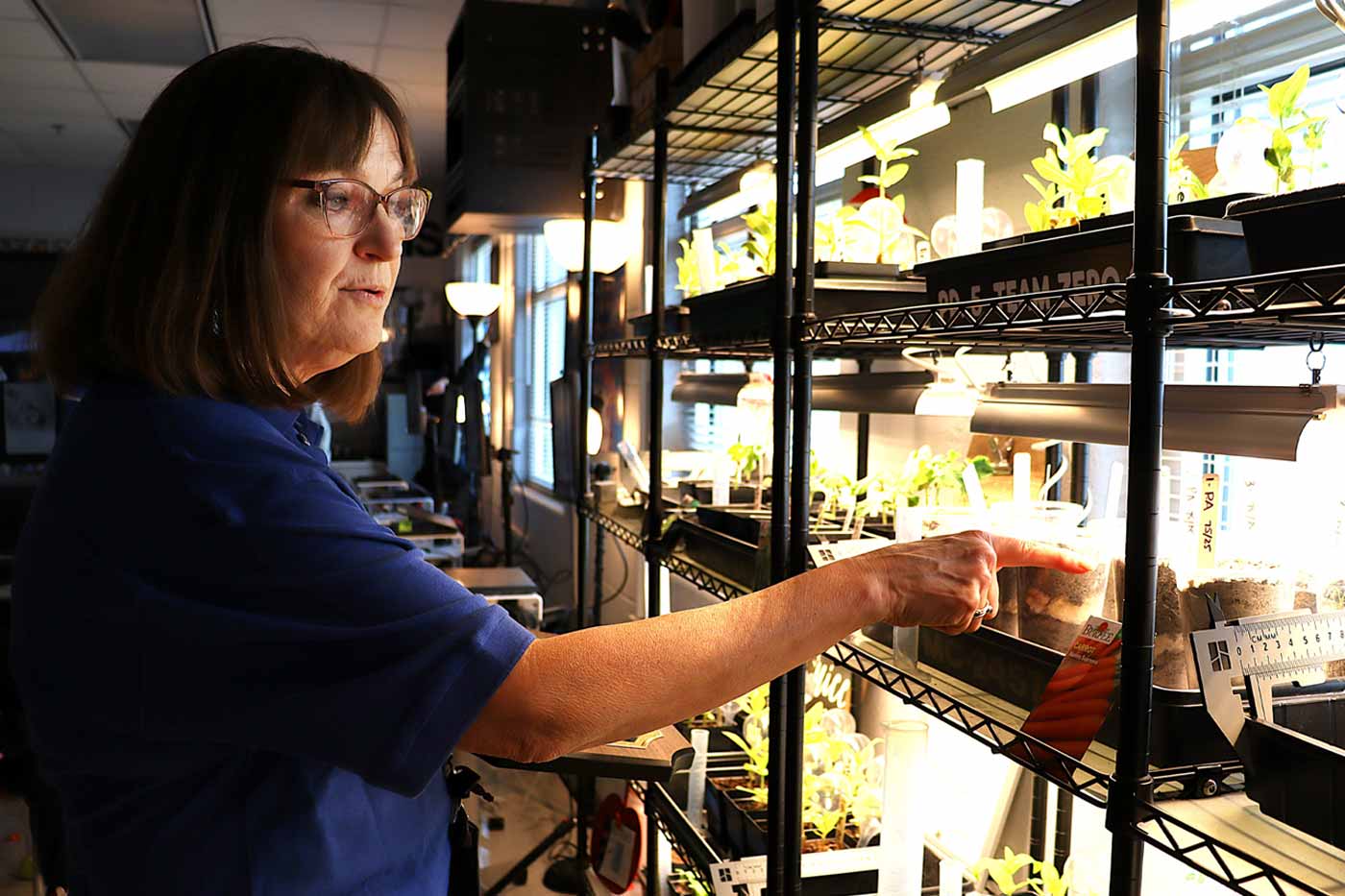
Cindy Watson, who teaches at Forest Middle School, has been selected as the 2026 Virginia Agriculture in the Classroom Teacher of the Year. The honor celebrates educators who successfully blend farming topics with standard academic subjects.
The recognition highlights Virginia educators who effectively weave agricultural themes into their regular lesson plans.
Watson builds her exploratory science and robotics design courses around agricultural foundations, creating hands-on STEM experiences for students. Her technology-focused lessons help pupils grasp how farming affects everyday life while dispelling outdated beliefs about contemporary agricultural practices.
“Cindy’s application of agriculture in her curriculum enhances her students’ agricultural literacy and sparks curiosity,” said Lynn Black, Virginia AITC director of education. “By connecting farming with STEM concepts, she’s helping students become more informed and responsible adults who understand where their food comes from, and the vital role agriculture plays in our world.”
Watson’s classroom activities have included challenging science projects such as NASA’s Plant the Moon initiative, Growing Beyond Earth experiments, and Space Chile Grow a Pepper Plant studies. These educational experiences allowed students to investigate agricultural fundamentals including plant genetics, soil composition, hydroponics systems, and nutrient cycles while gathering and examining plant development data.
Her curriculum also incorporates robotics technology, unmanned aircraft systems, and computer modeling to study pollination processes and food production ecosystems, natural disaster impacts, and intricate agricultural distribution networks. The robotics component introduces students to precision farming techniques and shows how farmers employ drones and GPS technology for crop management and operational improvements.
Watson’s lessons demonstrate career connections between agriculture and STEM fields, including programming autonomous harvesting equipment, applying biotechnology for drought-resistant crop development, and managing vertical farming operations. Her teaching approach emphasizes how science and technology drive modern agriculture and help innovation address global food security challenges.
“Students can figure out at a younger age whether this is something they’d want to pursue as a career,” said Watson, who grew up on a farm outside of Chicago. “I like to give my students opportunities they might not get somewhere else. This is my passion, and I’m fortunate to have a community that supports these programs.”
Watson’s Virginia AITC Teacher of the Year recognition includes funding for the 2026 National AITC Conference scheduled for June in Providence, Rhode Island, plus a $500 monetary prize.
Additional details about the Teacher of the Year program are available at virginia.agclassroom.org.
The Virginia Foundation for Agriculture in the Classroom operates as a nonprofit organization dedicated to building agricultural understanding and appreciation through educational programs and community outreach. More information and support opportunities can be found at virginia.agclassroom.org.
Questions can be directed to Black at [email protected] or 804-350-3596.
Federal agriculture officials have launched registration for the Farmer Bridge Assistance Program, with specialty crop producers being urged to participate after meeting acreage documentation requirements.
Richard Fordyce, the USDA’s Undersecretary for Farm Production and Conservation, explained to agricultural reporters that numerous crop varieties are eligible for the program. He emphasized the importance of proper documentation, stating: “There’s a bunch of crops on there, and we’re asking farmers that grow those crops to make sure they have a completed acreage report.”
The federal assistance program requires growers to submit detailed acreage information before they can access the bridge funding designed to support agricultural operations.
A decade of agricultural service has provided valuable insights for one Minnesota farming professional. Joe Serbus, who operates a farm in Renville County, Minnesota, recently reflected on his extensive experience with the Minnesota Soybean Research and Promotion Council during a conversation with Brownfield.
According to Serbus, his decade-long involvement with the council has highlighted several key areas of emphasis. He points to the development of future leaders within the agricultural sector as a primary concern, alongside efforts to engage and educate younger generations about farming and related industries. Additionally, Serbus notes that improving transportation infrastructure remains a significant focus area for the organization.
A major European agricultural trade exhibition will reach a significant milestone this June as it celebrates a quarter-century of connecting industry professionals in Utrecht, Netherlands.
VIV Europe is preparing for its 25th anniversary event, which organizers expect will feature over 600 exhibitors displaying the latest agricultural innovations and technologies. The trade show has established itself as a cornerstone event for the agricultural sector over its 25-year history.
Jeroen van Hooff, who serves as president and CEO of both Royal Dutch Jaarbeurs and VNU Group, recently highlighted the exhibition’s significance for agricultural professionals in a promotional video. Van Hooff emphasized the value the event brings to industry participants and outlined compelling reasons for agricultural professionals to make the journey to Utrecht for this year’s milestone celebration.
The agricultural trade show represents one of Europe’s premier gatherings for professionals seeking to explore cutting-edge developments in farming technology, livestock management, and agricultural innovation.
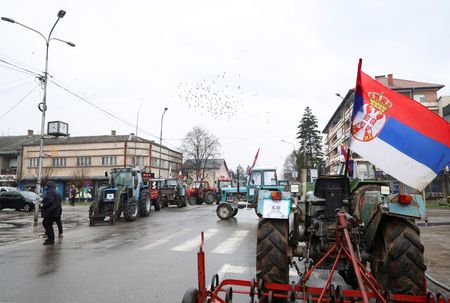
Agricultural workers throughout Serbia brought traffic to a standstill Tuesday as they positioned tractors across major roadways, calling for increased government financial support and barriers against low-cost foreign agricultural products including dairy and pork.
The demonstrations began in Serbia’s southwestern region nearly two weeks ago and have now expanded nationwide, with protesters targeting 42 locations on Tuesday alone.
In the agricultural community of Bogatic, located west of Belgrade, tractors adorned with Serbian flags occupied the primary road junction. Agricultural workers stated they would maintain their blockade until officials address their concerns.
“We are ready for anything … and we will not back down … as this is the rock bottom,” stated Milan Zorbic, representing a local farmers’ organization, while recognizing that agricultural workers like himself have lost valuable field work time during the demonstrations.
Those in the dairy industry report that massive quantities of imported milk and related products, primarily originating from European Union nations and other Western Balkan countries, are being marketed at costs well beneath what local Serbian producers can maintain, pushing domestic operations toward financial ruin.
Agricultural workers also report that livestock prices have fallen to unsustainable levels, with viable pricing needing substantial increases to cover operational expenses.
Demonstrators are pursuing enhanced government financial assistance and temporary trade limitations or duties on certain agricultural imports to create more competitive market conditions.
Agriculture Minister Dragan Glamocic announced Tuesday that farming representatives had not appeared for scheduled discussions regarding measures designed to strengthen the dairy market. He noted that certain retail chains had committed to purchasing more dairy products from domestic producers.
These agricultural demonstrations are occurring alongside broader anti-government protests that began in 2024 following a train station canopy collapse that killed 16 people. Some protest signs also demanded the resignation of Serbian President Aleksandar Vucic.
Agriculture represented 6.1% of Serbia’s gross domestic product in 2024, while employing 20% of the nation’s workers.
As a European Union membership candidate, Serbia has agreed to align its agricultural policies with the bloc’s standards, including opening domestic markets to EU products.
A historic Virginia mill continues operating with traditional stone-grinding methods, connecting local farms with area restaurants and consumers seeking authentic, locally-produced grains and flour.
Wade’s Mill represents a living piece of agricultural history, where time-honored techniques meet contemporary demand for locally-sourced ingredients. The facility processes various grains using stone grinding equipment, maintaining quality standards that have served the region for generations.
The mill’s operations bridge the gap between regional farmers and establishments focused on farm-to-table dining experiences. By processing locally-grown grains through traditional methods, the facility supports both agricultural producers and food service businesses committed to regional sourcing.
This approach to grain processing demonstrates how historic agricultural practices can remain relevant in today’s marketplace, where consumers increasingly value locally-produced food products and traditional preparation methods.
Agricultural leaders from Virginia made their way to California this week to take part in the American Farm Bureau Federation’s annual convention held in Anaheim.
The Virginia Farm Bureau sent a delegation to represent the Commonwealth’s farming community at the national gathering, which brings together agricultural advocates from across the United States.
The convention serves as a major forum for discussing issues affecting farmers and rural communities nationwide, with state delegations participating in policy discussions and networking opportunities.
Virginia’s agricultural representatives joined their counterparts from other states to address challenges and opportunities facing the farming industry at the federal level.
Listen to the Evening Delmarva Farm Report Update — February 24, 2026
DELMARVA — Delaware’s poultry industry posted mixed results during January, according to new federal agriculture data. Egg production across the state increased by 2% compared to the same period last year, providing welcome news for producers. However, hatching of egg-type chicks dropped by 6% during the month, potentially signaling future supply challenges. On the broiler side, chicks destined for meat production showed encouraging numbers.
Markets
March corn closed at $6.42 a bushel, up $0.04. Soybeans for March settled at $14.33, gaining $0.08. March wheat finished at $7.19, down $0.03. Locally, Delmarva grain elevators are paying $5.90 for cash corn and $13.60 for soybeans.
Forecast
The region is looking at mostly sunny skies Tuesday with temperatures reaching 35° and northwest winds 10 to 15 mph. Tonight turns mostly cloudy with a low of 24° and a chance of light snow developing. Wednesday brings a chance of mixed rain and snow with temperatures climbing to 47° and southwest winds 10 to 15 mph. Thursday looks wet with rain likely and highs reaching 43°.
This article is based on the Delmarva Farm Report Update Evening Edition, February 24, 2026. Hosted by Tom Bradley.
Listen to the Morning Delmarva Farm Report Update — February 24, 2026
DELMARVA — Delaware’s poultry industry posted mixed results in January according to new USDA data released this week. Egg production across the state increased by 2% compared to last year, providing welcome news for one of Delaware’s key agricultural sectors. However, hatching of egg-type chicks dropped by 6% during the month, potentially signaling future supply challenges. On the broiler side, chicks destined for meat production saw encouraging growth during January.
Policy
Winter weather forced the House Agriculture Committee to postpone farm bill markup sessions until next week. The committee had planned to convene Monday but rescheduled due to an incoming winter storm.
Markets
March corn futures settled at $6.43 per bushel. March soybeans closed at $13.78. March wheat ended at $7.31 per bushel. Local cash corn on Delmarva is running $5.90 to $6.10. Soybeans are bringing $12.50 to $12.75.
Forecast
Expect mostly sunny skies today with highs near 35° and northwest winds 10 to 15 miles per hour. Good conditions for catching up on outdoor work after the weekend storm. Tonight turns mostly cloudy with a chance of light snow developing. Lows around 24°. Wednesday brings a chance of rain and snow with highs near 47°.
This article is based on the Delmarva Farm Report Update Morning Edition, February 24, 2026. Hosted by Tom Bradley.
National FFA Week is shining a spotlight on how the organization creates valuable opportunities for America’s youth, according to a state FFA leader. Max Luedtke, who serves as Wisconsin’s Parliamentarian, spoke with Brownfield about how FFA develops crucial leadership abilities in students.
“Such as job interviews, delivering speeches, how to network, but then also exposes them to a wide variety of careers,” Luedtke explained when describing the skills students gain through participation.
According to Luedtke, the broad exposure FFA provides helps students discover potential career paths they might not have otherwise considered.
Polish poultry producers are bracing for devastating financial impacts following the implementation of a new trade agreement between the European Union and South American Mercosur nations.
Research conducted by Polskie Radio reveals that major Polish poultry operations could face annual losses of approximately 130,000 Polish zloty, equivalent to about $31,000 per farm. The study indicates that many agricultural businesses may not survive the economic pressures created by the new trade regulations.
The trade deal is expected to significantly reduce profit margins for Poland’s chicken farming sector, with industry experts warning that numerous operations could be forced to shut down permanently. The agreement opens European markets to increased competition from South American poultry producers, creating challenging conditions for domestic farmers.
Winter weather predictions have forced the House Agriculture Committee to reschedule an important legislative session. The committee was planning to convene Monday to start reviewing and marking up the farm bill, but the meeting has been moved to next week due to an incoming winter storm expected Sunday.
The postponement affects the timeline for debating the comprehensive agricultural legislation that impacts farming communities across the country, including those here in Delaware and the broader Delmarva region.
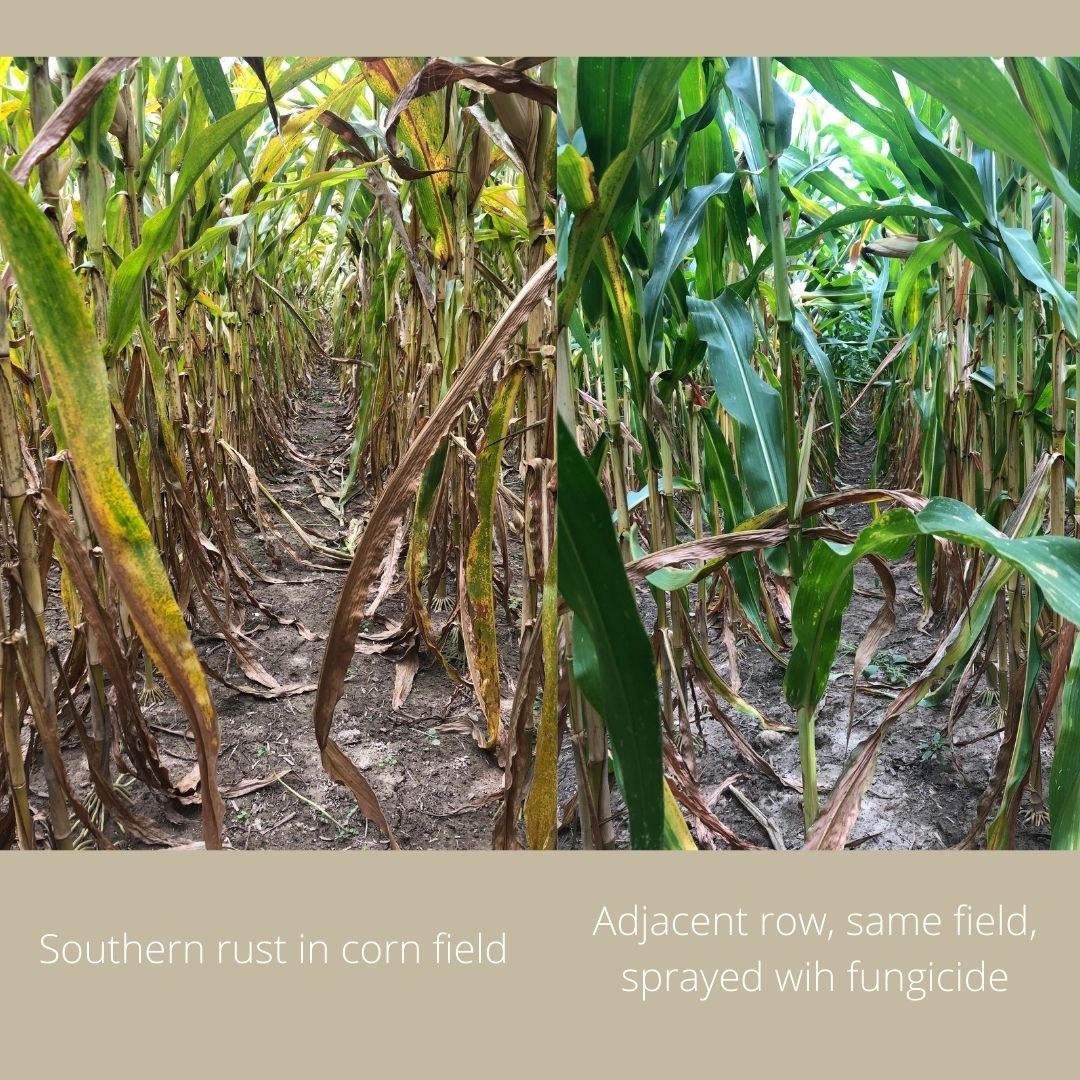
Corn producers across the Midwest are keeping a close watch on whether a devastating crop disease might return to plague their fields once again. After experiencing unprecedented outbreaks of southern rust in 2025, agricultural communities remain on high alert for the upcoming growing season.
Alison Robertson, who specializes in field crop diseases at Iowa State University Extension, noted that last year’s infection rates reached record-breaking proportions. “So it’s a big concern on everybody’s mind here,” Robertson explained when discussing the plant pathogen responsible for southern rust damage.
The agricultural expert emphasized that farmers throughout corn-producing regions are anxiously awaiting signs of whether this destructive disease will make another appearance in their crops this year.
Wisconsin lawmakers concluded their legislative session Friday by moving several agriculture-focused bills through the State Assembly. Multiple measures that have successfully navigated both chambers of the legislature are now awaiting action from Governor Tony Evers, who will decide whether to sign them into law or issue vetoes.
According to Wisconsin Farm Bureau representative Tim Fiocchi, the bills that have completed the legislative process and are bound for the governor’s desk represent various agricultural policy initiatives. However, the legislative pipeline still contains additional farm-related measures that require Senate consideration before they can advance further in the process.
The completion of the Assembly session marks a significant milestone for Wisconsin’s agricultural community, as these pending bills could impact farming operations and rural communities throughout the state.
Agricultural commodity markets concluded Monday’s trading session with mixed results across major grain and livestock contracts for February 23, 2026.
In grain markets, March corn futures held steady at $4.27 and 1/2 with no change from the previous session. March soybean contracts experienced downward pressure, closing at $11.34 and 1/4, representing a decline of 3 and 1/4 cents. Soybean meal for March delivery also fell, finishing at $308.70, down $1.10 for the day. However, March soybean oil bucked the trend in the soy complex, gaining 47 points to close at 59.39.
Wheat futures faced selling pressure, with March Chicago wheat contracts dropping 44 cents to settle at $5.69 and 1/2.
Livestock markets predominantly moved lower during Monday’s session. April live cattle futures declined $2.75 to close at $239.25, while March feeder cattle contracts fell more sharply, losing $3.72 to finish at $364.30. April lean hog futures provided the lone bright spot in livestock trading, edging up 2 cents to $93.70.
March Class III milk futures data was incomplete at market close.
Agricultural commodity markets showed varied performance on Monday as traders closely monitored crop conditions across South America. Soybean prices displayed mixed results while market participants tracked Brazil’s ongoing harvest progress, which has now reached approximately 30% completion.
Weather patterns in Argentina continue to capture traders’ attention as the country’s crop conditions have experienced significant challenges this growing season. However, recent rainfall has provided some relief, leading to modest improvements in crop ratings that now exceed last year’s levels during the same period.
Market analysts are also keeping a watchful eye on potential tariff developments and their impact on commodity demand moving forward.
Livestock commodity markets experienced volatile trading today at the Chicago Mercantile Exchange, with cattle contracts experiencing steep declines while hog futures moved higher.
Live cattle contracts faced significant selling pressure as traders cashed in profits and concerns about potential trade policy changes weighed on broader commodity markets. The April live cattle contract dropped $2.75 to close at $239.25 per hundredweight, while the June contract fell $2.07 to settle at $235.45.
Feeder cattle saw even steeper losses, with March contracts tumbling $3.72 to end at $364.30 per hundredweight. The selling was attributed to a combination of technical factors and uncertainty surrounding potential tariff policies affecting agricultural commodities.
In contrast to the cattle market weakness, lean hog futures posted gains during the same trading session, showing the divergent trends affecting different livestock sectors.
Agricultural markets could face significant turbulence in the months ahead, according to a financial expert who specializes in farming economics. Tanner Ehmke, an economist with CoBank, is warning that shifting weather patterns may trigger substantial price fluctuations across commodity markets.
The transition away from La Nina conditions has Ehmke particularly concerned about market stability. “There are signs that we could be getting some hot and dry conditions, so we’ve got to keep an eye on” the developing weather situation, he explained.
Beyond weather concerns, Ehmke is also monitoring how international tensions and conflicts could impact agricultural trade and pricing. These geopolitical factors, combined with changing climate patterns, create a complex environment that could surprise markets with sudden shifts.
The economist’s assessment comes as farmers across the region prepare for the upcoming growing season, making critical decisions about crop selection and input purchases that could be affected by the market volatility he’s predicting.
A series of new trade agreements with Southeast Asian countries could open significant opportunities for American pork producers, according to industry officials.
Maria Zieba, who serves as vice president of government affairs for the National Pork Producers Council, reports that these recent trade frameworks are eliminating barriers that have historically limited U.S. pork exports to the region.
The agreements address both traditional tariffs and other regulatory obstacles that previously restricted trade access. Zieba highlighted Malaysia’s particularly cooperative approach to the negotiations.
“Malaysia went above and beyond,” Zieba stated, adding that “All plants are going” to benefit from the expanded market access.
The development represents a potentially major shift for American pork producers seeking to expand their international market reach in Southeast Asia.
A new bilateral trade agreement between the United States and Taiwan promises to boost American wheat exports by permanently removing import tariffs, according to a trade policy specialist.
Ryan Olson from U.S. Wheat Associates explains that this recently unveiled reciprocal trade arrangement will create lasting benefits for American wheat producers by setting tariff rates at zero indefinitely.
“Taiwan has committed to purchasing over 130 million bushels of U.S. wheat almost through the end of this decade,” Olson stated.
The agreement represents a significant opportunity for expanding American agricultural exports to the Taiwan market, with the elimination of trade barriers expected to make U.S. wheat more competitive in the region.
Agricultural financing experts are predicting a substantial reduction in rice cultivation across Arkansas this spring season, citing depressed market prices as the primary factor affecting the nation’s leading rice-producing state.
According to Greg Cole, a representative from AgHeritage Farm Credit Services, the state normally plants between 1.3 and 1.4 million acres of rice annually. However, Cole warned in an interview with Brownfield that current economic conditions could force a significant decrease in planted acreage.
“We could see rice acres” drop considerably from typical levels, Cole indicated, as farmers grapple with unfavorable pricing that makes rice cultivation less profitable compared to alternative crops.
This potential decline in Arkansas rice production could have broader implications for the national rice supply, given the state’s dominant position in American rice agriculture.
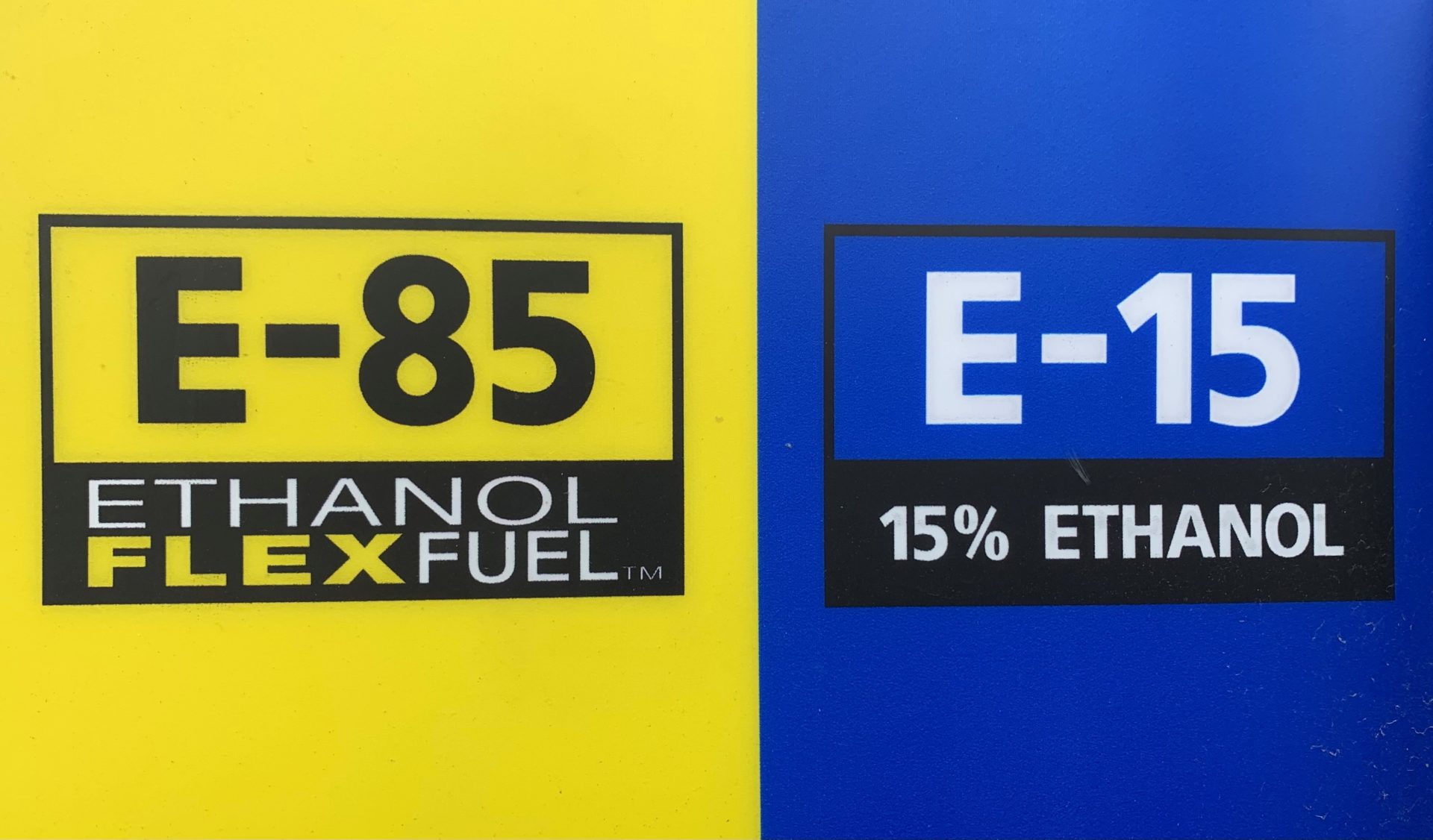
The chief executive of biofuel company POET is expressing frustration over continued delays in advancing nationwide E15 ethanol legislation through Congress. Jeff Broin, who founded and leads the company, shared his disappointment with the ongoing obstacles preventing year-round E15 availability across the country.
“We have been working on that for literally over a decade,” Broin said in an interview with Brownfield. “I cannot believe what it’s taken.”
According to Broin, pushing federal E15 policy through to President Trump’s desk represents a vital step for America’s rural communities. The legislation would allow the higher ethanol blend to be sold throughout the entire year nationwide, rather than facing seasonal restrictions.
The nation’s egg industry kicked off 2026 with encouraging production figures, according to new data from federal agriculture officials.
January numbers show the country produced nearly 9.2 billion eggs, representing a 2% increase over the same month in 2025. The United States Department of Agriculture released the production statistics showing 9.196 billion eggs were laid during the first month of the year.
The growth stems from improvements in both the size of laying flocks and individual bird productivity. The total number of laying hens reached 374.566 million birds, climbing 1% from the previous year. Meanwhile, production efficiency also improved, with each group of 100 hens producing an average of 2,455 eggs, also up 1% annually.
These January figures suggest the industry may continue its expansion trajectory throughout the year, building on steady growth patterns in the agricultural sector.
Delaware’s poultry industry posted mixed results during January, according to new federal agriculture data released this week.
Egg production across the state increased by 2 percent compared to the same period last year, providing welcome news for producers in one of Delaware’s key agricultural sectors.
However, the numbers tell a more complex story when examining breeding patterns. Hatching of egg-type chicks dropped by 6 percent during the month, potentially signaling future supply challenges for egg producers.
On the broiler side, the news was more encouraging. Chicks destined for meat production saw a 2 percent uptick in hatching rates, suggesting continued strength in Delaware’s dominant poultry segment.
The data reflects ongoing adjustments within Delaware’s massive poultry industry, which represents a cornerstone of the state’s agricultural economy and provides thousands of jobs across rural communities.
These production fluctuations come as poultry operations continue adapting to market demands and recovery efforts following previous disease outbreaks that impacted flocks nationwide.
Farmers in Missouri will catch a break on their state taxes thanks to efforts by the Missouri Soybean Association, which successfully lobbied for tax relief on federal disaster assistance payments.
Ben Travlos, who serves as policy director for the Missouri Soybean Association, provided additional information about this development in a recent Spotlight on Soybeans segment.
The tax relief measure will benefit soybean producers who receive federal disaster payments, allowing them to avoid double taxation on assistance designed to help them recover from natural disasters and other qualifying events.
Delaware farmers and agricultural operations across the country should prepare for another difficult year ahead, according to a warning from a prominent agricultural economist. Carl Zulauf, professor emeritus at Ohio State University, predicts that American farming will continue to struggle in 2026 due to mounting financial pressures.
Rising costs for farming supplies and equipment, combined with uncertain government policies, are squeezing farmers’ ability to turn a profit, Zulauf explains. The economist warns that current financial struggles in agriculture are likely to extend into the coming year.
“If this year is a loss year, then next year is likely to be a loss year,” Zulauf stated, highlighting the ongoing challenges facing the agricultural sector nationwide.
Federal agricultural officials are highlighting a remarkable surge in corn shipments from American ports, with export inspections reaching exceptional levels during the week that concluded on February 19th.
According to the U.S. Department of Agriculture, inspectors processed over two million tons of corn destined for international markets. The bulk of these shipments headed to Japan, South Korea, and Mexico – three major trading partners that have demonstrated exceptionally robust appetite for American corn throughout this marketing season.
The agricultural department also noted that wheat exports experienced weekly gains during the same period.
A leading agricultural commodities analyst is expressing renewed confidence that China will increase its purchases of American farm products, driven by political considerations rather than market forces.
Arlan Suderman, who serves as the top commodities economist at StoneX Group, recently shared his growing optimism about Chinese agricultural imports with Brownfield. According to Suderman, Chinese President Xi Jinping is currently navigating complex domestic political challenges and may seek American support to strengthen his position.
“My bias at this point is he will survive it, but in the meantime,” Suderman explained, suggesting that Xi’s political calculations could lead to increased cooperation with U.S. agricultural exporters.
The economist’s assessment indicates that geopolitical factors may play a more significant role than traditional market dynamics in shaping future trade relationships between the world’s two largest economies.
Monday’s trading session at the Chicago Mercantile Exchange brought mostly declining values for dairy commodities, with block cheese standing as the lone exception to the downward trend.
Dry whey prices fell by 2.5 cents to settle at 65.5 cents, though no transactions were completed during the session. Meanwhile, 40-pound blocks of cheese bucked the overall trend, climbing 1.75 cents to reach $1.5150 per pound. Trading activity was robust for cheese blocks, with six transactions recorded at prices spanning from $1.49 to $1.5150.
Cheese barrels maintained their previous closing price of $1.49 per pound without any recorded sales activity. Butter experienced the steepest decline of the day, dropping 5.75 cents to $1.8125 per pound. This commodity saw significant trading volume with 18 transactions completed, with prices ranging between $1.81 and $1.87 per pound.
Nonfat dry milk rounded out the session with a 4-cent decrease, closing at $1.6450 per pound. Two sales were documented for this commodity, with transactions occurring at $1.64 and $1.6450 per pound.
A coalition of environmental and conservation organizations has filed a federal court petition seeking to halt the agricultural use of dicamba herbicide on cotton and soybean crops.
The National Family Farm Coalition and Center for Food Safety, along with other advocacy groups, are challenging three recently approved product labels in their legal filing. The organizations argue that the Environmental Protection Agency failed to comply with requirements outlined in the Federal Insecticide, Fungicide and Rodenticide Act during the approval process.
The lawsuit specifically targets the EPA’s authorization for over-the-top dicamba applications, a farming practice where the herbicide is sprayed directly over crops that have been genetically modified to resist the chemical.
Three decades after helping establish what would become a flagship agricultural conference, one of its founding organizers expresses amazement at the event’s transformation into a cornerstone gathering for the farming industry.
Kent Kleinschmidt, an Illinois agricultural producer, served as one of two original co-chairs responsible for launching the inaugural Commodity Classic in Phoenix, Arizona thirty years ago. The farmer recalls the extensive preparation that went into creating the event.
“We formed a committee about two years before the” first gathering, Kleinschmidt noted, reflecting on the early planning stages that laid the groundwork for what has since developed into one of agriculture’s most significant annual conferences.
The evolution of the Commodity Classic from its humble beginnings to its current status as a premier industry event demonstrates the growing importance of unified agricultural forums in bringing together farmers, industry leaders, and stakeholders from across the nation.
The week’s cattle trading activity has gotten off to a slow beginning, with minimal movement in the direct cash market. Market participants on both sides are currently conducting assessments of their inventory positions and making preparations for the days ahead.
No firm bid or offer prices have been established at this point in the week. Based on patterns observed over recent weeks, substantial trading activity may not materialize until later in the week as buyers and sellers continue to evaluate market conditions.
The leader of the House Agriculture Committee has unveiled new legislation designed to address ongoing concerns about California’s animal welfare regulations affecting farmers nationwide.
Chairman Glenn “GT” Thompson announced that his Farm, Food, and National Security Act of 2026 contains provisions specifically targeting California’s Proposition 12. In an interview with Brownfield, Thompson explained that his bill includes language he refers to as the ‘Save the Bacon Provision.’
“The base language in the bill is called ‘Save the Bacon Provision,’ that basically doesn’t interfere with the state’s policies on animal welfare,” Thompson stated.
The proposed legislation represents Thompson’s attempt to create a federal framework that would work alongside state-level animal welfare requirements, particularly California’s controversial Proposition 12, which has created compliance challenges for agricultural producers across the country.
A Wisconsin state representative believes recent legislative action regarding renewable energy development demonstrates a clear position on safeguarding agricultural land from solar and wind projects.
Representative Travis Tranel indicated that the community solar legislation was moved from the Energies and Utilities Committee to the Agriculture Committee as the State Assembly concluded its Friday session. According to Tranel, this committee transfer resulted in Agriculture Committee members conducting proceedings on the matter.
The lawmaker views this procedural move as delivering a significant statement about the development of renewable energy infrastructure on valuable farming acreage throughout the state.
A Nebraska representative reports that members of Congress are working intensively to reach an agreement regarding nationwide, year-round availability of E15 ethanol fuel. Representative Mike Flood indicated that legislators are making significant headway in their negotiations.
“On the last call I was on, all I will say is, I felt like there was substantial progress and there was some coalescing on some of the concepts,” Flood stated. The congressman serves as a member of the Rural Domestic Energy Council, which has been involved in the ongoing discussions.
A Wisconsin dairy operation owner is raising concerns that crossbreeding practices between beef and dairy cattle are creating financial headaches for the milk industry. Mike Yager, who operates a 325-head Holstein operation near Mineral Point, Wisconsin, argues that while these crossbreeding programs may seem lucrative on paper, they’re contributing to market oversaturation that’s driving down milk payments.
According to Yager, who spoke with agricultural news outlets, the current milk market is flooded with excess supply, partly due to dairy producers extending the productive life of their herds to capitalize on beef genetics opportunities. This practice of keeping cattle in production longer to benefit from crossbreeding programs is exacerbating the industry’s surplus challenges, he explained.
The dairy operator’s concerns highlight a growing tension in the industry between short-term profits from beef-on-dairy programs and the long-term stability of milk pricing for producers nationwide.
With warmer weather on the horizon, agricultural producers are beginning to prepare for the upcoming planting season. According to Heather Vosburgh, Strategic Account Manager for Nitrogen Stabilizers at Corteva Agriscience, farmers need to carefully evaluate multiple factors when determining the optimal timing for nitrogen fertilizer applications.
Federal agriculture officials are reporting a dramatic decline in cattle processing during January, with livestock marketings falling by 13 percent compared to previous periods. The sharp decrease has caught the attention of agricultural economists who are tracking trends in the beef industry.
Kenny Burdine, an agricultural economist at the University of Kentucky, analyzed the latest Cattle on Feed report from the U.S. Department of Agriculture and found the numbers particularly striking. The decline represents the most significant drop in cattle marketings since the early days of the coronavirus pandemic.
“I’ve got to go back to 2020 and COVID time period to find something that light,” Burdine explained when discussing the January figures. The comparison to 2020 is notable, as that year saw major disruptions to meat processing facilities and supply chains due to pandemic-related shutdowns and worker shortages.
The reduced pace of cattle slaughter could have implications for beef prices and availability in grocery stores and restaurants across the region. Industry analysts are monitoring whether this trend will continue in the coming months or if January’s numbers represent a temporary adjustment in the market.
The most recent issue of Poultry World magazine has been published online, featuring comprehensive coverage of the ongoing bird flu crisis affecting poultry operations.
The publication explores how increasing cases of avian influenza are leading industry experts to advocate for vaccination programs, despite ongoing challenges with regulatory approval processes.
This edition also includes an in-depth look at Colombia’s high-tech Don Pollo hatchery facility, which operates using automated systems. The magazine covers expansion plans from Hendrix Genetics and examines cutting-edge precision technology designed to improve broiler chicken production while enhancing bird welfare.
The coverage comes as the poultry industry continues to grapple with managing avian influenza outbreaks that have impacted operations across multiple regions.
Egypt has solidified its dominance in Africa’s poultry industry, claiming the top spot among the continent’s leading producers for 2025, according to a new industry analysis.
The comprehensive report, authored by Sebastiane Ebatamehi from The African Exponent, marks the conclusion of a 10-part series examining Africa’s most significant poultry-producing nations. Egypt’s poultry industry has maintained its leadership position across the African continent throughout 2025.
This final installment in the series provides an in-depth examination of the factors that have enabled Egypt to outperform other African countries in poultry production. The nation’s agricultural sector has demonstrated consistent strength in meeting both domestic demand and export opportunities.
The analysis highlights Egypt’s continued excellence in poultry operations, setting it apart from other major producers across Africa’s diverse agricultural landscape.
Congressional budget analysts have determined that a Republican-backed farm bill proposal would slash nearly $1 billion from a widely-used conservation program over the coming four fiscal years.
The Environmental Quality Incentives Program, which enjoys broad support among farmers, would see its budget authority reduced as Republican members of the House Agriculture Committee redirect those funds toward other legislative priorities, according to the Congressional Budget Office’s analysis.
The proposed legislation essentially treats EQIP as a source of money to finance different aspects of the farm bill, rather than maintaining its current funding levels.
State officials in Maryland have granted commercial watermen an additional two weeks to harvest wild oysters after harsh winter conditions prevented boats from reaching fishing areas for extended periods.
The Maryland Department of Natural Resources approved extending the harvesting season until April 14, pushing back the original March 31 deadline. Bitter cold weather in January and early February created ice formations across numerous waterways and sections of the Chesapeake Bay, leaving fishing vessels stranded at docks.
All existing regulations regarding equipment types and daily catch limits will continue during the extended period. However, handscraping methods will not be allowed in designated hand tong zones throughout the extension.
State crews operated ice-breaking vessels around the clock this winter to maintain open navigation channels and provide access to oyster beds. Despite these continuous efforts, the extreme cold caused waters to refreeze rapidly, severely limiting commercial fishing operations.
The timing coincides with encouraging news about oyster populations, which have reached their strongest levels in more than twenty years. Recent stock assessments revealed adult oyster numbers in Maryland waters have surged to 7.6 billion, representing more than a three-fold increase from the 2005 low point of 2.4 billion.
Reproduction surveys tracking young oyster development showed healthy breeding activity in 2024 and 2025, following exceptional results in 2023. That record year produced approximately 87 young oysters per bushel – nearly four times the typical average of 23.6 per bushel – with widespread distribution throughout bay waters and tributaries.
The State Oyster Committee, comprised of county oyster committee representatives, initially petitioned for the season extension. The Tidal Fish Advisory Commission, which includes commercial fishermen and seafood industry dealers, reviewed and endorsed the proposal before forwarding it to state officials for final approval.
The extended season also addresses ongoing market difficulties facing oyster harvesters. Despite abundant oyster availability in harvesting areas, buyers have significantly reduced their purchasing frequency, with many watermen reporting sales opportunities limited to just one day per week or less over the past two years.
DNR Secretary Josh Kurtz authorized the two-week extension on Thursday, with the agency posting official notification on its website the same day. The new regulations took effect February 23, 2026, applying to all commercial harvesting equipment types through the April 14 conclusion date.
Listen to the Evening Delmarva Farm Report Update — February 21, 2026
DELMARVA — The Supreme Court ruled Friday to limit presidential tariff powers under emergency legislation, a decision Delaware’s farm community is celebrating.
Scott Metzger with the American Soybean Association says the IEEPA tariffs have been used on several ag products, creating uncertainty for producers across Delmarva. The ruling restricts how presidents can utilize the International Emergency Economic Powers Act for trade restrictions.
Policy
Meanwhile, USDA opened registration this week for an $11 billion farm relief program. The Farmer Bridge Assistance initiative starts Monday with one-time payments targeting row crop farmers dealing with disrupted trade markets and rising costs.
Markets
March corn closed at $2.65¼, up $0.01. March soybeans finished at $9.23¾, down $7.75. March wheat gained $0.05½ to $4.95¼. Live cattle for April dropped $1.42 to close at $242 per hundredweight.
Forecast
A major winter storm is headed to the region. Tonight expect mostly cloudy skies with lows around 31°F. A blizzard warning is in effect through Monday evening for Sussex County with heavy snow and blowing snow expected Sunday night into Monday. Winter storm warnings cover Kent County and portions of Maryland’s Eastern Shore. Temperatures Sunday will reach 38°F before heavy snow moves in overnight. Clearing returns Tuesday with highs in the low 30s.
This article is based on the Delmarva Farm Report Update Evening Edition, February 21, 2026. Hosted by Tom Bradley.
America’s cattle industry is experiencing a crisis not witnessed in more than seven decades, with livestock numbers falling to their lowest levels since 1951.
The dramatic decline in cattle populations nationwide has created unprecedented challenges for ranching families, prompting discussions about the future of beef production in the United States.
NPR’s Scott Simon recently conducted an interview with Oklahoma ranchers Zach and Kacie Scherler-Abney to explore the mounting difficulties confronting cattle operations across the country.
The conversation with the Scherler-Abney family sheds light on the complex issues plaguing the livestock industry, as ranchers struggle to navigate economic pressures and changing market conditions.
This significant reduction in cattle numbers represents a concerning trend for both producers and consumers, potentially impacting beef availability and pricing in markets nationwide.
Listen to the Morning Delmarva Farm Report Update — February 21, 2026
DELMARVA — State officials have confirmed a highly pathogenic H5 avian influenza outbreak at a commercial broiler operation in Wicomico County. According to the Maryland Department of Agriculture, this marks the county’s first outbreak this year and the state’s second confirmed case.
All birds at the facility have undergone depopulation and the property remains under quarantine. None of the affected poultry will reach consumer markets.
Policy
Farmers across Delmarva should note that USDA registration opens Monday for the new Farmer Bridge Assistance program. The $11 billion initiative offers one-time direct payments to row crop producers dealing with disrupted trade markets and rising input costs. Producers with Login.gov accounts will see pre-filled applications when the portal opens Monday morning.
Markets
Soybeans closed mixed this week with technical selling offsetting small weekly gains. Wheat futures finished higher on dry weather concerns and short covering. Corn held steady as traders await planting season demand signals.
Forecast
Today looks decent with mostly sunny skies and highs near 47°F. However, a significant weather event begins Sunday. Rain develops Sunday with temperatures near 38°F before transitioning to heavy snow Monday with blizzard conditions expected. Strong north winds 15-25 mph will create blowing snow and dangerous travel. Accumulations look substantial with the heaviest snow Monday into Monday night. Temperatures drop to the low 20s Monday night before moderating midweek.
This article is based on the Delmarva Farm Report Update Morning Edition, February 21, 2026. Hosted by Tom Bradley.
Agricultural leaders across multiple states are sounding the alarm about data centers expanding into farming communities, warning that valuable agricultural land needs better protection from commercial development.
According to Farm Bureau officials, the growing presence of data facilities in countryside locations has sparked concerns about preserving prime agricultural property. Ohio Farm Bureau’s president Bill Patterson describes this as part of a broader land use challenge affecting much of the Midwest region.
“Whether it’s green energy, commercial, housing, or eminent domain, you have to” address these competing land uses, Patterson explained, highlighting the various pressures facing rural landowners today.
The Farm Bureau leadership is now developing new policies specifically designed to shield farming operations from encroaching data center development while maintaining the agricultural character of rural communities.
Delaware’s agricultural community is welcoming a Supreme Court decision that restricts presidential authority to impose trade tariffs under emergency powers legislation.
Scott Metzger, who leads the American Soybean Association, expressed relief following Friday’s high court ruling that limits how presidents can utilize the International Emergency Economic Powers Act for imposing trade restrictions.
“The IEEPA tariffs have been used on several ag products,” Metzger stated, highlighting concerns about how these trade measures have impacted farming operations.
The Supreme Court’s Friday decision struck down multiple tariffs implemented during the Trump administration, providing what soybean producers view as protection against similar future trade policies that could harm their industry.
Listen to the Evening Delmarva Farm Report Update — February 20, 2026
DELMARVA — The United States Department of Agriculture announced registration opens Monday, February 23, for an $11 billion farm relief program. The Farmer Bridge Assistance initiative will provide direct, one-time payments to row crop producers navigating disrupted trade markets and rising production costs. Farmers with Login.gov accounts will have access to pre-completed application forms through the online portal.
Policy
Delaware’s agricultural community is celebrating a Supreme Court decision that restricts presidential authority to impose trade tariffs. Scott Metzger, who leads the American Soybean Association, says the ruling limits how presidents can utilize the International Emergency Economic Powers Act.
Markets
Corn futures showed mixed activity while soybeans faced downward pressure from profit-taking. Wheat climbed higher on dry weather concerns and short covering. At Dover, grain elevators are reporting corn at $6.20 per bushel, soybeans at $11.40 per bushel.
Forecast
Areas of fog are clearing this evening with temperatures near 52 degrees. Tonight drops to 34 with mostly cloudy skies. Saturday brings partly sunny conditions with highs near 48. Sunday brings rain transitioning to rain and snow by evening. A Winter Storm Watch remains in effect through Sunday night with heavy snow possible Monday.
This article is based on the Delmarva Farm Report Update Evening Edition, February 20, 2026. Hosted by Tom Bradley.
Agricultural commodity markets presented a mixed picture during Thursday’s trading session, with grain and livestock futures showing divergent movements across various sectors.
In grain markets, March corn futures climbed 1 and 3/4 cents to settle at $4.27 and 1/2 per bushel. Meanwhile, March soybean contracts dropped 3 and 1/2 cents to close at $11.37 and 1/2. Soybean meal for March delivery surged $5.00 to reach $309.80, while March soybean oil fell 76 points to finish at 58.92.
Wheat markets showed strength, with March Chicago wheat futures advancing 14 cents to end the session at $5.73 and 1/2 per bushel.
Livestock markets faced downward pressure for the most part. April live cattle contracts decreased $1.42 to settle at $242.00, while March feeder cattle dropped $2.25 to close at $368.02. However, April lean hog futures bucked the trend, gaining 22 cents to finish at $93.67.
These market movements reflect ongoing supply and demand dynamics affecting agricultural commodities, which can impact local farming operations throughout the region.
Friday’s trading session at the Chicago Mercantile Exchange showed varied results for dairy commodities, with some products gaining ground while others lost value.
Dry whey experienced a decline of six cents, closing at 68 cents per pound. Trading activity remained quiet with no transactions recorded for this product.
Forty-pound blocks of cheese dropped by $0.0125 to finish at $1.4975 per pound. Market activity was moderate with five transactions completed, with prices ranging between $1.4950 and $1.5075.
Cheese barrels moved in the opposite direction, gaining two cents to reach $1.49 per pound, though no trading activity was documented.
Butter showed strong performance, climbing nine cents to $1.87 per pound. This commodity saw the most active trading with seventeen transactions recorded, spanning from $1.85 to $1.88.
Nonfat dry milk also posted gains, increasing by $0.0625 to settle at $1.6850 per pound. Six sales were completed within a price range of $1.6775 to $1.69.
Federal agriculture officials are standing behind a massive $12 billion emergency aid package for struggling farmers as the application process launches Monday, several days earlier than originally planned.
Speaking at the Agricultural Outlook Forum in Arlington, Virginia this week, U.S. Department of Agriculture officials justified the unprecedented assistance as essential to keeping American farmers afloat during continued economic hardship.
The financial relief comes as the agricultural sector faces mounting pressures, with concerns growing after Friday’s Supreme Court decision overturning former President Trump’s emergency tariff policies – a ruling that could create additional complications for farm communities already dealing with financial strain.
Agriculture Secretary Brooke Rollins announced the accelerated timeline during Friday’s conference, telling attendees that qualifying farmers should see money deposited directly into their accounts by February 28th.
“These resources will help carry producers into the next season, truly a bridge, as purchase commitments and new trade deals take effect and input costs continue to decline,” Rollins explained to the crowded ballroom of agricultural professionals.
The relief package centers around the Farmer Bridge Assistance program, which will distribute $11 billion in direct payments to producers who planted any of 19 designated commodity crops, calculated on a per-acre basis. An additional $1 billion has been earmarked specifically for specialty crop growers.
However, industry experts warn that even this substantial government intervention won’t fully address the scale of agricultural losses, which have exceeded $30 billion in recent years.
John Newton, who serves as vice president of public policy and economic analysis for the American Farm Bureau Federation, characterized the aid as temporary relief while longer-term solutions take effect.
The assistance will function as “a bridge until the improvements in the farm bill programs are realized on the farm,” Newton explained during the conference.
Questions remain about the Agriculture Department’s ability to process what officials expect will be an overwhelming number of applications. Significant federal workforce reductions last year, particularly affecting USDA’s Farm Service Agency offices throughout rural America, have already created delays in various government services for farmers.
The emergency payments highlight the severity of current agricultural economic conditions. Department economists project that U.S. net farm income will decline by 0.7% this year, even with record-breaking government support expected to comprise nearly 29% of producers’ total earnings.
Looking ahead to the 2026/27 growing season, USDA forecasters anticipate modest price increases for major crops including corn, soybeans, and wheat. Projected average prices stand at $4.20 per bushel for corn, $10.30 for soybeans, and $5.00 for wheat – representing 10-cent increases from current levels but remaining significantly below the peaks reached in 2022/23.
Chief Economist Justin Benavidez acknowledged that while emergency farm assistance has reached near-historic levels and helped prevent more widespread agricultural business failures, it has likely contributed to keeping input costs elevated for producers.
The United States Department of Agriculture announced that registration will open Monday, February 23, 2026, for a new financial relief initiative targeting agricultural producers. The program, known as Farmer Bridge Assistance, is designed to distribute $11 billion in direct, one-time financial support to row crop farmers.
The federal assistance aims to help producers navigate ongoing challenges from disrupted trade markets and escalating production expenses. Farmers who maintain Login.gov accounts will have access to pre-completed application forms through the online portal when registration launches.
This substantial federal investment represents the government’s response to economic pressures facing the agricultural sector, particularly those growing row crops such as corn, soybeans, and wheat.
Agricultural officials in Michigan have confirmed that cattle at a dairy operation in the state’s northern region have tested positive for bovine tuberculosis.
According to the Michigan Department of Agriculture and Rural Development, the infected herd is located in Charlevoix County. The outbreak came to light when a cow from the operation tested positive for the disease during routine screening at a federally-inspected meat processing facility.
Following the initial positive test result, officials conducted further testing that revealed additional infected animals within the same herd. This marks the second reported case of bovine tuberculosis in Michigan livestock operations recently.
Trading contracts for cattle experienced declines at the Chicago Mercantile Exchange as market participants held back, anticipating the development of direct business activity and the release of Friday’s On Feed report from the U.S. Department of Agriculture.
Live cattle contracts for April delivery dropped $1.42 to settle at $242 per hundredweight, while June contracts fell $1.35 to close at $237.52. Feeder cattle also saw significant losses, with March contracts declining $2.25 to finish at $368.02 per hundredweight, and April contracts posting similar decreases.
The market pullback reflects trader caution as they await key industry data that could influence future pricing trends in the livestock sector.
The National Pork Producers Council is sounding the alarm about potential ripple effects if federal lawmakers don’t take action on California’s Proposition 12 animal housing requirements. The organization’s CEO Bryan Humphreys spoke with agricultural media about his concerns regarding multiple states pursuing similar livestock confinement regulations modeled after California’s controversial law.
According to Humphreys, the core issue with both Massachusetts’ Question 3 and California’s Proposition 12 centers on jurisdictional overreach. “The challenge with Massachusetts’ (Question 3) and with California specifically remains, they are legislating and regulating farmers outside” their state boundaries, Humphreys explained during the interview.
The pork industry leader emphasized that this trend represents a broader question about which level of government should establish farming practices across the United States, as more states consider implementing their own versions of animal welfare legislation.
Agricultural economists are forecasting continued growth in milk production through 2026, despite mounting challenges facing dairy operators across the region. The latest USDA data reveals that 4% of dairy operations have ceased operations, highlighting ongoing pressures within the industry.
During the recent USDA Agricultural Outlook conference, economist Anthony Fisher addressed how elevated beef prices are creating significant impacts on dairy herd management strategies. Fisher noted that milk production increases are expected even as the total number of dairy cows continues to shrink.
“It’s expected to decline from the recent highs as producers respond to lower milk prices, higher replacement heifer costs,” Fisher explained during his presentation, referring to the factors driving changes in herd sizes.
The agricultural expert emphasized that while January milk production showed increases, dairy farmers are navigating a complex economic environment that includes fluctuating milk prices and rising costs for replacement animals. These market dynamics are forcing producers to make difficult decisions about their operations’ future viability.
Grain markets showed mixed results this week as wheat values climbed higher while soybean prices faced downward pressure from investors cashing in profits and technical trading patterns.
Wheat managed to finish the trading period with gains, boosted by ongoing concerns about dry weather conditions and traders covering short positions in the market.
Meanwhile, soybeans experienced a decline as traders took profits and engaged in technical selling strategies, though the crop still managed to post small weekly increases overall.
Market watchers are keeping close tabs on South American growing regions, where weather forecasts show some scattered rainfall expected in both Argentina and Brazil in the coming days.
On the export front, sales figures showed improvement compared to the previous week, though the 29.3 million bushel total remained below typical averages. China and Egypt emerged as the primary buyers driving the increased export activity.
The nation’s poultry industry started 2026 on a slower note, with January production numbers showing a notable decline from the previous year’s levels.
According to federal agriculture officials, processors certified 4.49 billion pounds of wholesome poultry during the month, marking a 3% drop compared to January 2025. The decrease stems from reduced processing speeds combined with birds maintaining steady to lighter average weights across the industry.
Chicken production bore the brunt of the decline, falling 3% to reach 4.081 billion pounds for the month. Turkey processing also experienced setbacks, dropping 4% to 398.607 million pounds during the same period.
The production slowdown reflects broader challenges facing poultry processors as they navigate operational adjustments in the new year.
Agriculture Secretary Brooke Rollins addressed participants at the USDA’s Ag Outlook Forum, emphasizing that legislative action is required to enable nationwide E15 ethanol fuel availability throughout the year.
“While the Trump administration has gone as far as we possibly can on E15, we are asking Congress to step up, answer the call and to finally get nationwide, year-round E15,” Rollins stated during her remarks to forum attendees.
The secretary’s comments highlight the administration’s position that executive measures have reached their limit regarding E15 authorization, and that lawmakers must now take the lead to advance the ethanol fuel initiative on a national scale.
Cattle supplies across the United States continue to tighten, according to new federal agriculture data that shows significant drops in both feedlot activity and market-ready livestock.
Federal agriculture officials report that U.S. feedlots received 1.736 million head of cattle in January 2026, representing a 5% decrease from the same month in 2025. The majority of these incoming animals were classified as lighter and middle weight cattle.
The situation appears even more pronounced when examining cattle ready for sale. Marketing numbers reached 1.626 million head during the reporting period, marking a substantial 13% year-over-year decline.
These trends suggest that tight cattle supplies will likely persist in the coming months, potentially affecting beef prices and availability for consumers throughout the region.
(Editor’s note: Letitia Nichols serves as deputy state director for USDA Rural Development covering Maryland and Delaware.)
Representatives from USDA Rural Development recently took part in the 25th annual MidAtlantic Women in Agriculture Regional Conference, demonstrating the agency’s dedication to assisting farming operations throughout the Delmarva Peninsula and broader Mid-Atlantic area.
The gathering united female farmers, livestock producers, agricultural business owners and farm service providers for comprehensive workshops centered on farming practices.
Taking part in this conference allowed our Rural Development staff to directly hear about the obstacles and requirements facing women in agricultural production within our area.
Conference attendees listened to Oksana Bocharova, who successfully received funding through the Value-Added Producer Grant program.
Agricultural producers throughout the Delmarva area can apply for federal grants designed to boost farm revenues and create new market access.
USDA Rural Development continues to accept submissions for its VAPG initiative. Officials have pushed back the submission deadline to 1 p.m. on April 22.
The VAPG initiative stands as one of USDA Rural Development’s most sought-after resources for assisting farmers, livestock producers, and agricultural enterprises in creating innovative products, broadening marketing reach, and boosting producer earnings.
This program directly addresses the requirements of numerous area agricultural producers dealing with narrow profit margins and changing market conditions.
The VAPG initiative provides funding for two main project categories:
• Planning grants: Financial support for feasibility assessments, business planning, and market analysis for potential projects; and
• Working capital grants: Resources to establish or grow processing, marketing, or distribution operations for value-added agricultural products.
For 2026, planning grant awards max out at $50,000 while working capital grants reach up to $200,000.
Every grant demands a 1:1 matching contribution, which can consist of cash and qualifying in-kind support.
USDA mandates that all submissions must be filed electronically via their online application system.
The online system features a comprehensive user manual and detailed guidance to assist applicants through the submission process.
Those interested should start their preparation well in advance.
Due to the program’s competitive nature and complexity, many agricultural producers collaborate with professional grant writers, cooperative extension personnel, or regional development groups to improve their application quality.
For additional details, reach out to your state’s business programs director or check https://www.rd.usda.gov/programs-services/business-programs/value-added-producer-grants.
Lisa Fitzgerald serves as the business programs director for Delaware and Maryland, and can be contacted at [email protected] or 302-857-3628.
Federal agricultural statistics reveal a decline in poultry production, with ready-to-cook weight measurements showing a 3 percent decrease when compared to the same period last year.
The data, compiled by the National Agricultural Statistics Service, indicates a measurable reduction in processed poultry available for consumer markets across the United States.
This production decline reflects changing dynamics within the nation’s poultry processing industry, which plays a significant role in America’s food supply chain and agricultural economy.
New data from the United States Department of Agriculture reveals a 2 percent decrease in the nation’s cattle inventory, according to the latest federal livestock report.
The USDA’s National Agricultural Statistics Service released figures showing the decline in cattle numbers, along with detailed breakdowns by farm size categories across the country.
This drop in livestock numbers could have implications for beef markets and pricing as the agricultural sector continues to navigate various economic pressures.
The federal report tracks cattle populations as a key indicator of the nation’s agricultural health and provides important data for farmers, ranchers, and market analysts monitoring livestock trends.
Delaware area farmers witnessed a downturn in their peanut crop earnings during the second week of February, according to federal agricultural data.
Agricultural producers received compensation averaging 19.8 cents per pound for all varieties of farm-stock peanuts during the seven-day period concluding February 14th. This figure represents a decline of 4.5 cents compared to earlier pricing periods.
The pricing information comes from weekly market reports tracking farmer compensation across various agricultural commodities. These fluctuations in peanut values directly impact local farming operations and the broader agricultural economy in the Delmarva region.
The dairy industry kicked off the year with impressive numbers, as the nation’s top milk-producing states saw a notable boost in January output.
According to new federal data, the 24 leading dairy states generated a combined 19.1 billion pounds of milk during the first month of 2024, marking a 3.4 percent increase over January of the previous year.
The uptick in production reflects positive trends within the agricultural sector, as dairy operations across these major producing regions continue to expand their output capabilities.
Delaware’s agricultural community gathered with Congresswoman McBride in Harrington on February 19th for a focused discussion on the pressing issues facing local farmers. The summit brought together Farm Bureau officials and growers from throughout the First State to engage in direct dialogue about industry challenges and potential solutions.
Key issues on the table included federal Farm Bill provisions, escalating costs for farming supplies, crop insurance matters, labor shortages, and emerging agricultural technologies. Local farmers emphasized which Farm Bill elements they consider most essential for Delaware agriculture, while also expressing concerns about how mounting input expenses are squeezing their bottom lines and threatening farm viability.
McBride informed attendees that she serves on the bipartisan Poultry Caucus in the House, which Senator Chris Coons co-chairs. She indicated plans to utilize insights gained from the summit regarding insurance coverage issues and High Pathogenicity Avian Influenza (HPAI) in her caucus work.
The congresswoman also discussed her ongoing research into artificial intelligence applications in farming and requested farmer input to bring back to the House Committee on Science, Space, and Technology, where she serves.
Delaware Farm Bureau expressed appreciation for participating in the summit and maintaining strong collaboration with Congresswoman McBride.
Agricultural leaders in Minnesota are gearing up for a legislative fight to protect their farming drainage practices. The Minnesota Corn Growers Association plans to advocate for maintaining current drainage rights as lawmakers convene for the new session.
According to MCGA President Wes Beck, environmental groups are working to expand the Minnesota Pollution Control Agency’s regulatory authority over agricultural drainage systems, potentially bypassing existing statutory guidelines. Beck stated the organization is focused on “defending our rights to continue to drain our farmlands appropriately.”
The upcoming legislative battle highlights ongoing tensions between agricultural interests and environmental advocates over water management practices on Minnesota farmland.
Agricultural organizations across the United States are responding to the Supreme Court’s decision to overturn President Donald Trump’s emergency tariffs with demands for more stable trade policies moving forward.
In the wake of the high court’s ruling, farming groups are emphasizing the need for predictability in international trade regulations while specifically requesting that agricultural supplies and equipment be excluded from any future tariff measures.