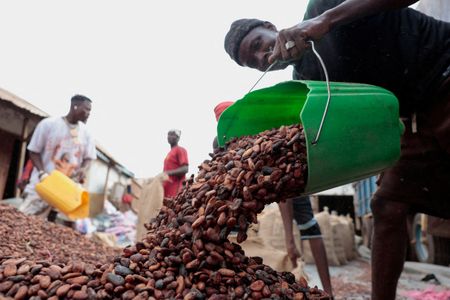

LONDON – West Africa’s leading cocoa producer, Ivory Coast, faces a mounting crisis that could leave approximately 200,000 metric tons of cocoa beans unsold by the conclusion of March, according to industry analysts and international trading company executives.
The accumulation stems from a pricing dispute where the government established farmer compensation rates last October that significantly exceed current global market values, creating financial losses for traders who purchase the beans.
Together with neighboring Ghana, Ivory Coast supplies roughly half of the world’s cocoa production. Both nations are grappling with growing stockpiles of unsold beans that have been building up at ports and inland storage facilities over recent months.
These surplus inventories have contributed to a dramatic decline in worldwide cocoa prices, which have dropped by 50% this year and recently reached nearly three-year lows.
International trading companies ceased purchasing Ivorian beans from the main harvest several months ago due to the price disparity. However, government and local trade officials confirmed that the country successfully negotiated sales of 200,000 tons from its upcoming April through September secondary harvest to global buyers last week.
The secondary crop typically undergoes local processing and commands lower prices due to perceived quality differences compared to the main harvest.
To provide financial relief to farmers awaiting payment for their main crop deliveries, Ivory Coast committed in late January to purchase 100,000 tons of unsold cocoa at an estimated cost of $500 million.
Industry executives predict the actual volume requiring government purchase will substantially exceed this amount. Two senior officials from major agricultural commodity trading firms, speaking anonymously due to media restrictions, revealed that Ivorian intermediary traders have failed to complete purchases of at least 100,000 tons from the main crop.
These same executives estimate farmers will harvest an additional 100,000 tons of main crop beans through March’s end that remain unsold to international buyers and will likely stay that way unless the government reduces its pricing structure.
The Coffee and Cocoa Council (CCC), Ivory Coast’s Abidjan-based regulatory body responsible for sector oversight and farmer price determination, disputed the market estimates of unsold inventory as “erroneous” but declined to provide additional specifics when contacted by Reuters.
On Monday, Ivory Coast’s agriculture minister announced plans to reveal farmer pricing for the upcoming secondary crop by February’s conclusion, representing an earlier timeline than typical practice.
Ghana implemented significant changes last week, reducing its farmer prices by nearly one-third following complaints from cocoa producers who reported receiving no payments since November. Industry sources indicated that Ivory Coast is evaluating similar price reductions to match Ghana’s adjusted rates.