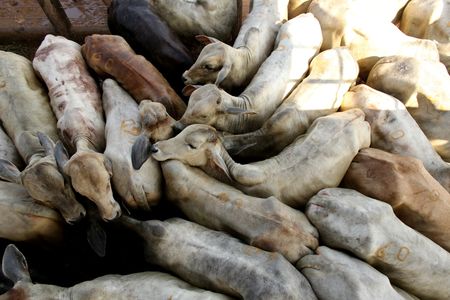

Brazilian government officials are moving forward with a proposal that would establish minimum export quotas for beef companies shipping to China, guaranteeing each exporter access to at least 8,000 metric tons annually.
The initiative emerged after China implemented substantial 55% additional tariffs on beef imports that surpass established quota thresholds from major suppliers including Brazil. This tariff structure, which also impacts exporters from Australia and the United States, became effective January 1st and will remain in place for three years.
According to a legal assessment obtained by Reuters and prepared by law firm Barral Parente Pinheiro on February 5th, the proposal aims to ensure export opportunities for smaller meat processing facilities. The firm stated in its analysis for industry organization ABIEC that the plan would establish “a minimum quota of 8,000 tons per year per company, to make exports viable for smaller meat processing plants.”
Under China’s new protective measures, the total import quota for affected countries will reach 2.7 million tons in 2026, closely matching the record 2.87 million tons China imported in 2024. Brazil specifically has been allocated quotas of 1.106 million tons for 2026, increasing to 1.128 million tons in 2027 and 1.151 million tons in 2028.
The Brazilian government is also considering establishing a technical reserve system to support beef exporters who were previously ineligible for Chinese markets but may qualify moving forward. The legal document explains that “the technical reserve comprises 3% of 1.1 million tons, equivalent to 33,000 tons, and is intended for new exporters who did not export in 2025 but are authorized to export in 2026.”
Additionally, the proposal includes provisions for expanding individual company quotas when other exporters cannot meet their shipping commitments.
Agriculture Ministry officials confirmed last week that the government intends to distribute specific export quotas among individual beef exporters to better manage shipment flows. The proposal has garnered broad industry support, though not universal agreement, and requires approval from Brazil’s Foreign Trade Chamber (CAMEX).
Luis Rua, foreign trade secretary at the Agriculture Ministry, forwarded a memorandum to CAMEX on February 6th explaining that regulated shipments would prevent Brazilian exporters from rushing to sell beef to China.
The legal opinion indicates that individual company quotas for 2026 beef shipments should mirror the volumes each company exported in 2025. The document further states that “from 2027 onwards, the quota will be calculated based on a two-year moving average of the volumes actually exported, promoting gradual adaptation and long-term stability.”
Industry group ABIEC declined to provide comments on the proposal.