
SAN FRANCISCO (AP) — While Americans typically display patriotism through red, white and blue attire or flag imagery, the truest representation of the nation’s spirit might just be hanging in your closet. Blue jeans serve as America’s universal uniform, owned by nearly every person regardless of background.
Despite today’s polarized climate, denim serves as a unifying force that crosses all boundaries — political affiliations, age groups, economic classes, social circles, and backgrounds. From native-born Americans like the jean-wearing Bruce Springsteen featured on his 1984 hit album to immigrants like Levi Strauss who arrived seeking opportunity, denim connects all.
Among America’s diverse tapestry of cultures and ethnicities, blue jeans stand as the singular unifying element.
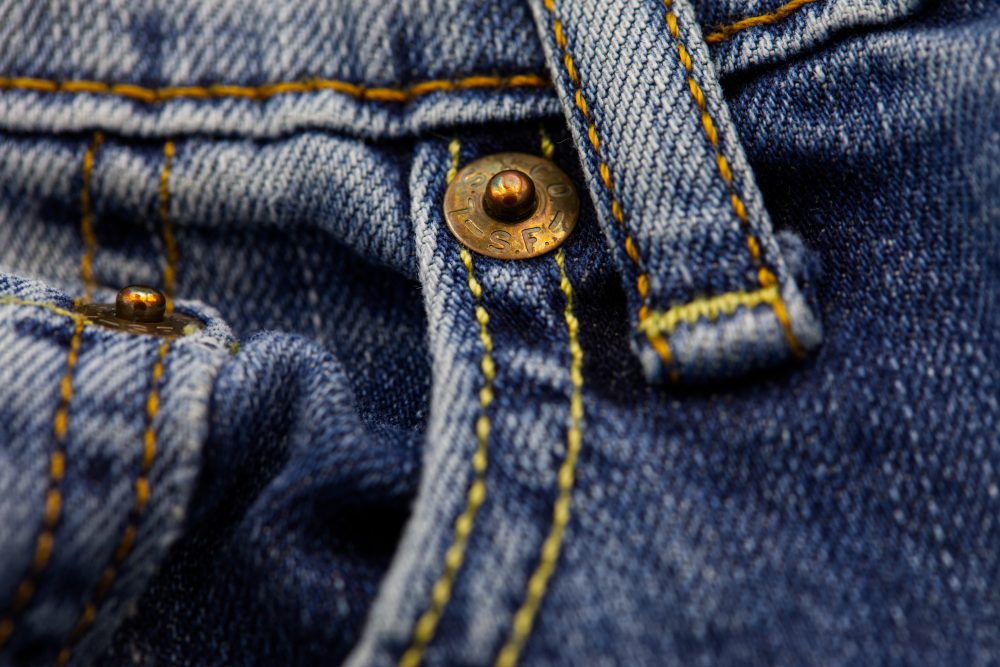
The iconic garment’s origins trace back to brown canvas material rather than blue fabric. In 1853, Strauss, an immigrant from Bavaria who arrived in San Francisco during California’s Gold Rush era, initially crafted the pants from tent canvas material. When gold prospectors embraced the sturdy pants so enthusiastically that canvas supplies were depleted, Strauss transitioned to indigo-colored denim fabric. The collaboration with Nevada tailor Jacob Davis, who proposed adding copper rivets to strengthen pocket areas, led to their 1873 patent that established today’s blue jean design.
While Levi Strauss & Co. and competitors like H.D. Lee and Wrangler have generated enormous profits from denim sales over the years, blue jeans represent cultural significance beyond the commercial success that defined America.
Beyond their connection to Gold Rush history, blue jeans symbolize:
—the unwavering resolve of railway laborers who donned them while constructing cross-country transportation networks;
—the adventurous courage of frontier cowboys and wanderers who wore them during westward expansion;
—the strong work values of agricultural workers and industrial laborers who chose them for daily tasks;
—the nonconformist attitude of motorcycle riders and other rebels who adopted them following Marlon Brando’s iconic 1953 “The Wild Ones” performance;
—the vibrant creativity of hippie culture, who decorated flared versions with flower appliques and colorful patterns during San Francisco’s 1967 “Summer of Love” movement.
Across all variations and designs, blue jeans represent the ideal match for American identity.