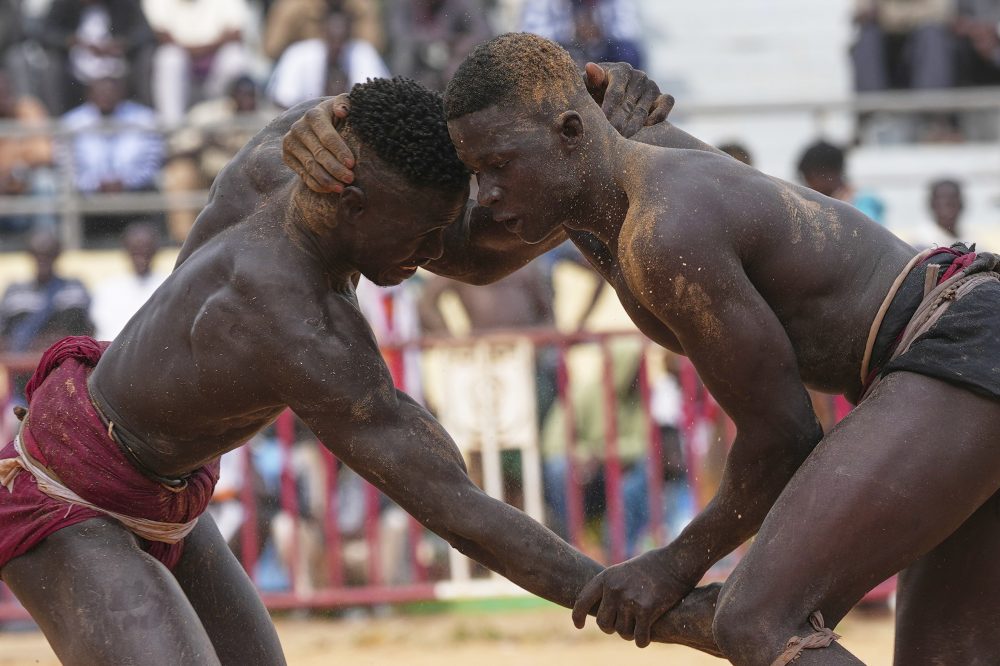

DAKAR, Senegal (AP) — Traditional wrestling holds deep cultural significance in Senegal, where the sport called laamb in the local Wolof language serves as a cornerstone of village culture. Elite competitors who achieve the highest level earn recognition as “King of the Arenas” and attract enormous crowds both in person and on television.
What sets laamb apart is its ceremonial nature, incorporating ornate clothing, spiritual amulets, and traditional ceremonies. Athletes adorned in decorative outfits and wearing protective talismans thought to prevent harm and harness mystical energy dance to traditional sabar drumbeats, highlighting the spiritual dimension that many consider equally vital to the physical competition.
The ancient practice has transformed into a commercial enterprise complete with corporate backing and monetary prizes. Young athletes view the sport as a pathway to prosperity and celebrity status, though financial hardships remain common among participants who dream of opportunities overseas.
Omar, a 22-year-old amateur competitor, sees the wrestling ring as his ticket to success. “I do this because wrestling pays more than being a footballer in this country,” he said. “If I become a professional, I will be rich.”
Despite these aspirations, wrestlers competing in regional competitions typically receive minimal compensation and face economic difficulties, placing their faith in training programs and potential international opportunities while hoping to join the select few who achieve stardom.