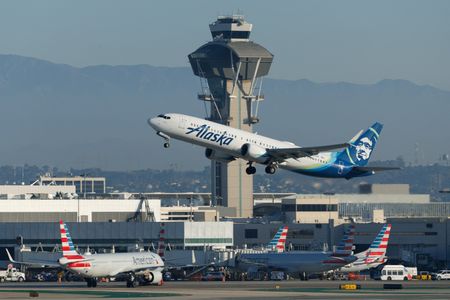

Alaska Air issued a disappointing profit outlook for the third quarter on Tuesday, with the Seattle-based carrier projecting earnings far short of what financial analysts had expected — a consequence of rising jet fuel costs driven by renewed U.S.-Iran military hostilities.
The airline said it anticipates adjusted earnings of between $0 and $1 per share for the July-through-September period. That falls well below the average analyst estimate of $1.38 per share, based on data compiled by LSEG. Following the announcement, the company’s stock slid 3% in extended trading.
Alaska Air is not alone in feeling the squeeze. U.S. airlines collectively face billions of dollars in unexpected fuel expenses this year after the war in Iran and prolonged disruptions to shipping through the Strait of Hormuz sent oil and jet fuel prices surging. One major carrier alone expects nearly $6 billion in additional fuel costs in 2026 compared to what it had originally budgeted at the start of the year.
Jet fuel prices had pulled back significantly from a peak reached in the spring after the U.S. and Iran reached a fragile ceasefire agreement in June. However, prices climbed again after fighting resumed in July.
Alaska Air expects to pay an average of $3.75 per gallon for jet fuel during the third quarter. While that is lower than the $4.43 per gallon the airline paid in the prior quarter — a drop attributed largely to easing refining margins — it still represents a significant cost burden.
Fuel expenses typically make up roughly one-quarter of an airline’s total operating costs. The ongoing volatility has pushed carriers across the industry to raise ticket prices, reduce the number of flights they operate, and look for additional ways to cut spending.
Alaska Air faces a particular challenge because of its heavy reliance on West Coast fuel markets, where limited refinery and pipeline capacity can make fuel more expensive and unpredictable. The airline has been working to reduce that exposure by importing more fuel from Singapore, though refining margins in Singapore also spiked earlier this year. Alaska currently gets about one-fifth of its fuel from Singapore and has indicated it could eventually increase that share to between 30% and 40%.
Other major carriers have reported mixed results. Delta Air Lines earlier this month offered a stronger-than-expected third-quarter outlook, while another large carrier’s forecast came in below analyst expectations. Both said robust travel demand and higher fares were helping cushion the blow of fuel costs, with premium cabin bookings remaining especially strong.
For the second quarter, Alaska reported an adjusted loss of 92 cents per share — a smaller loss than the 99-cent-per-share deficit analysts had forecast, according to LSEG data.