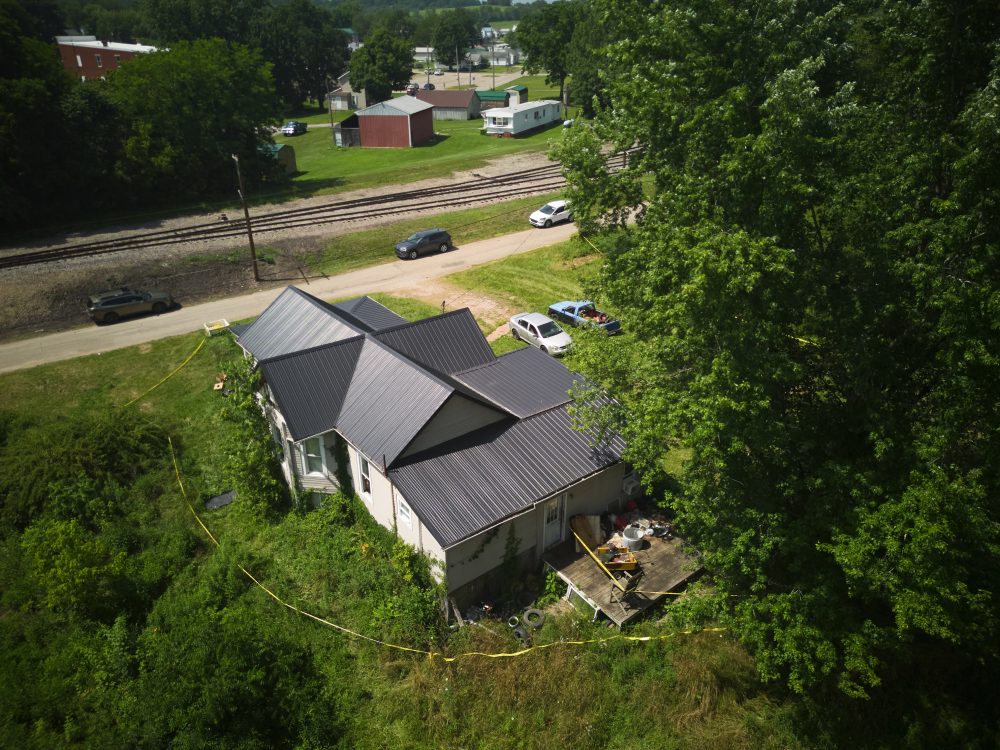

Among the 16 children discovered living in appalling conditions inside an Ohio home, some were unable to speak, and one — an 18-year-old with a developmental disability — could not write her own name.
Following their rescue on Tuesday, seven of the children were hospitalized, including one who was in critical condition, according to investigators. Their conditions as of Thursday had not been publicly updated. Child welfare authorities have been granted temporary custody of all 16 children.
If investigators’ allegations prove accurate, these children face a long and difficult path toward healing — one that will require undoing years of abuse, neglect, and deep emotional trauma. Experts note that not every foster family is equipped to handle cases this severe, and Ohio, like many states, already faces a shortage of available foster homes that is only growing harder to address.
Officials have indicated that some of the children may need to be placed in specialized treatment facilities as part of their recovery process.
Ohio Attorney General Andy Wilson addressed the situation at a news conference this week, saying he had never encountered anything like the conditions these children endured. “It’s going to take a lot of work to address the emotional harm and some of the issues that are going to result from this,” Wilson said. “But we need to make sure those kids are surrounded and loved and supported by people who truly care for them.”
Four individuals — the children’s parents and grandparents — have been arrested and charged with child endangerment. Defense attorneys have asked the public to withhold judgment and allow the facts to emerge through the legal process.
Past cases involving children rescued from severe abuse have illustrated just how steep the recovery challenges can be. In one Michigan case, children were found alone in a home so contaminated that law enforcement evidence technicians had to wear hazmat suits to enter.
In Southern California in 2018, 13 children were freed from a home where they had been locked up and starved by their parents for years. That abuse, centered in the community of Perris — roughly 60 miles southeast of Los Angeles — went undetected until a then-17-year-old named Jordan Turpin slipped out of the house and dialed 911. When authorities arrived, all but the youngest of the 13 siblings, a 2-year-old, were dangerously underweight and had gone months without bathing.
Their parents, David and Louise Turpin, admitted guilt to charges of torture and prolonged abuse and were sentenced to life in prison, with the possibility of parole after 25 years.
Despite their rescue, the Turpin children later encountered additional failures within the very system designed to protect them. Six of the siblings were placed in a foster home where they say they were abused again — describing in a lawsuit being struck with sandals and forced to eat their own vomit. The foster family was convicted in the case, and the foster father received a seven-year prison sentence in 2024.
A 2022 investigation conducted by a law firm hired by Riverside County to examine the children’s care found that the county’s child welfare system was understaffed and underfunded. The report concluded that caseworkers were managing excessive caseloads that made it nearly impossible to ensure the safety and well-being of “our most vulnerable populations.”
Scott Britton, assistant director of the Public Children Services Association of Ohio, said that not every foster family has the capacity to care for children carrying multiple and complex traumas. He noted that Ohio’s system is already stretched thin, with one in four children currently in custody not because of abuse or neglect, but due to behavioral health challenges, developmental disabilities, or juvenile justice involvement.
“We have a lot of kids with significant and serious needs, not all of which unfortunately can be met by a foster family,” Britton said. “So we unfortunately are all too accustomed to managing a very broad range of significant deficits in children.” He added that residential care facilities and psychiatric treatment centers often must fill the gap.
Across the country, child welfare systems are under enormous strain. State and federal data indicate that worker turnover rates range from 20% to 40% in some areas, driven by burnout and the emotional weight of the job. Recruiting and retaining qualified workers remains a persistent struggle, with rural communities and high-need regions often the hardest hit.
In New Mexico, the state’s child welfare agency is facing legal action following a scathing report released in April by the New Mexico Department of Justice, which outlined widespread systemic failures. The state’s top prosecutor, Attorney General Raúl Torrez, linked those failures to the deaths of 14 children over the past two years, citing lapses in decision-making and oversight at the Children, Youth and Families Department.
Back in Ohio, Britton expressed cautious optimism about new state investments in children’s services and behavioral health resources. He said he is hopeful that a statewide Medicaid-managed care plan designed specifically for children and adolescents with serious behavioral health needs could make a meaningful difference. “I’m not saying it’s enough,” he said. “We could use more and a lot of it depends on where you’re located.”
In California, Riverside County and a foster care agency agreed to a $13.5 million settlement with the six Turpin siblings who were placed in the abusive foster home. Their attorneys said the case helped drive meaningful reforms to the county’s child welfare system.
Nearly four years after the Turpin children were rescued, one of the siblings, Jennifer Turpin, spoke with ABC News in a 2021 interview about her desire to move forward. “I want the Turpin name to be, like, ‘Wow, they’re strong, they’re not broken,’” she said. She has since written a book about her experiences titled “Where was God?” Her author biography reads: “She has been through hell and came out strong and resilient.”