
The World Bank announced a fresh approach on Friday designed to assist small island nations and compact countries in overcoming their distinctive economic obstacles by prioritizing employment opportunities.
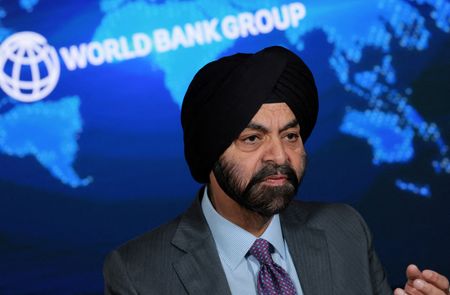
World Bank President Ajay Banga presented the plan during a private meeting with finance ministers and central bank leaders from 50 smaller nations, held as part of the spring conferences for the International Monetary Fund and World Bank in Washington.
Banga explained that the initiative aims to employ specialized tools to help these nations draw more private sector investment, implement policy changes that make business operations easier, and ultimately generate additional employment opportunities.
The strategy will concentrate on sectors including healthcare, cost-effective energy solutions, durable infrastructure, and small enterprises where Bank leadership believes there are significant opportunities to stimulate economic growth and create quality employment.
Last year, the World Bank Group committed a record-breaking $3.3 billion in new funding and guarantees for smaller nations, which encounter distinct economic difficulties and suffer disproportionately from external disruptions, as demonstrated during the conflict in the Middle East.
“For small businesses, a single hurricane, a sudden surge in imported fuel prices, or a downturn in tourism can undo months of investment and income in a matter of days,” the bank stated in a blog post accompanying the new strategy.
According to Banga, the Bank will adopt a customized approach when developing regional initiatives in these countries, with partnerships playing a central role.
“This is not a one-size-fits-all approach. Small states are diverse, and our support will reflect that,” Banga informed the financial officials. “We also know the economics are different.”
He pointed out that operating in smaller nations can cost up to four times more than in larger countries, prompting the Bank to plan for more efficient service delivery, flexible financing options, and scalable solutions to maximize the impact of every dollar spent.
Several initiatives are already in progress.
In Tonga, the bank will jointly fund an urban resilience initiative with the Asian Development Bank through a groundbreaking mutual reliance framework agreement between multilateral development institutions.
Banga indicated that additional similar agreements are being planned, including one with the Inter-American Development Bank to extend this approach to Caribbean nations. He also mentioned that the World Bank is expanding the range of tools available to countries.
Enhanced analysis is also crucial, according to the bank. Comprehensive studies examining barriers to private sector employment are currently underway for Barbados, Guinea-Bissau, Lesotho, Mauritius, Samoa, and Seychelles.
The World Bank can also use its influence to help drive investments, the blog explained. For example, the International Finance Corp, the bank’s investment division, supported funding for Botswana’s first utility-scale solar facility, while the World Bank worked on a related battery storage project to enable solar integration into the electrical grid.
“The result is not only a solar plant, but a replicable model for how unlocking private finance can open markets and create jobs,” the bank stated in its blog.