
FORT COLLINS, Colo. (AP) — Eastern Utah’s canyons will experience massive water releases this spring — equivalent to the flow of 50,000 toilets continuously flushing — as federal officials scramble to preserve electrical generation for hundreds of thousands of homes throughout the western United States.
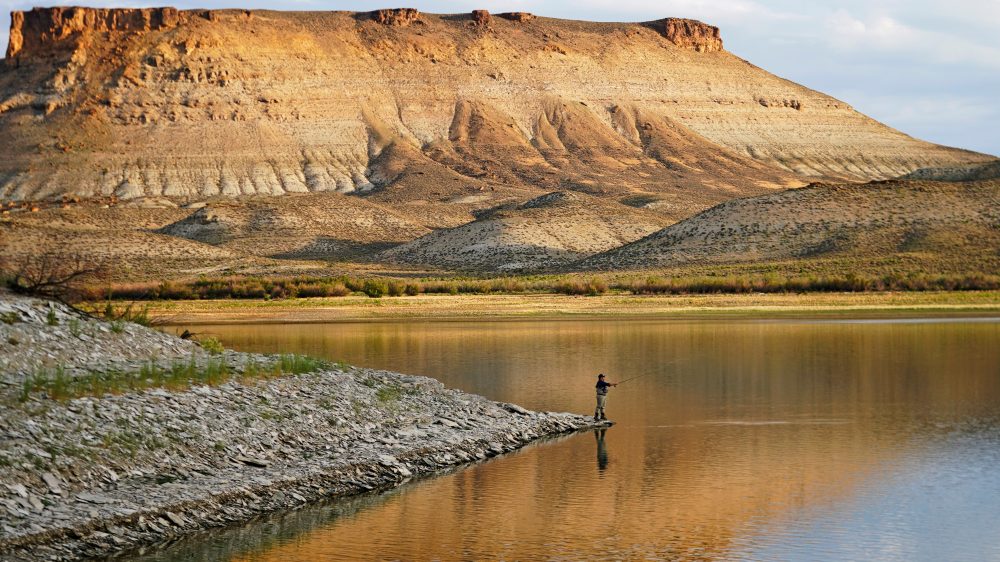
While the rushing waters of the Green and Colorado rivers may appear to bring relief to the arid landscape of red rock formations and desert vegetation, the reality tells a different story.
Following the most severe winter drought on record, authorities plan to dramatically increase Lake Powell’s water levels this spring to preserve the reservoir’s hydroelectric capabilities. Their strategy involves releasing up to one-third of Flaming Gorge Reservoir’s water supply in Wyoming and Utah, surpassing even the record-breaking 2022 emergency release that maintained power generation.
Glen Canyon Dam creates Lake Powell, which generates clean, affordable electricity for more than 350,000 households. However, this solution creates mounting challenges throughout a disputed river system that serves ranchers, businesses, and approximately 40 million residential water users.
At Flaming Gorge in southwestern Wyoming, marina operators Tony and Jen Valdez are monitoring water levels that officials expect to drop 10 feet by summer’s end due to the planned releases. This decline will force boaters to travel increasingly longer distances to reach the water.
“Of course we’re concerned,” Jen Valdez said. “And it will probably get to a point where we’ll need to be more concerned.”
Should the plan proceed without weather intervention, Flaming Gorge could fall as much as 27 feet within twelve months, leaving Buckboard Marina significantly stranded from the waterline.
While potentially offering temporary relief during the extended drought, the strategy will create additional downstream consequences as Bureau of Reclamation officials plan to retain more water than normal in Lake Powell along the Arizona-Utah border.
Further downstream, Lake Mead near Las Vegas is projected to reach levels similar to four years ago when receding waters exposed sunken vessels and human skeletal remains.
Federal authorities explain these extreme actions are essential to maintain Lake Powell’s water level high enough for turbine operation without allowing air into the system, which could cause significant mechanical damage.
Approximately 155 customers spanning cities, tribal nations, rural electric cooperatives, and public utility districts receive hydroelectric power from Glen Canyon Dam and other federal facilities. No customer depends entirely on hydropower.
Most serve economically disadvantaged communities and operate as nonprofit organizations that fund dam operations, maintenance, and federal infrastructure investments.
The Western Area Power Administration maintains contractual commitments to supply specific electricity amounts to its customers. Losing hydropower would force WAPA to purchase more expensive, non-renewable energy from alternative sources, explained Leslie James, executive director of the nonprofit Colorado River Energy Distributors Association.
“If Glen Canyon hydropower is reduced to zero or a low amount, it will have different impacts on what they charge communities,” James said.
James described the situation as unprecedented in her 48 years assisting electricity customers across Arizona, Colorado, Nevada, New Mexico, Utah and Wyoming.
Market electricity purchases replacing federal hydropower have driven rate increases for five consecutive years at Heber Light & Power southeast of Salt Lake City, with the most recent increase reaching 13%, according to Emily Brandt, the utility’s energy resource manager.
Persistent drought conditions, evaporation, and water consumption — particularly for cattle industry alfalfa irrigation — have reduced Lake Powell to 3,526 feet above sea level, representing just 23% of maximum capacity.
Power generation requires the reservoir to remain above 3,490 feet, the elevation of Glen Canyon Dam’s water intake systems.
This critical threshold has never been reached since the 710-foot dam’s completion in 1963 and Lake Powell’s gradual filling to capacity by 1980.
During 2022, the Bureau of Reclamation conducted an unprecedented release of 500,000 acre-feet from Flaming Gorge to boost Lake Powell. The current planned releases to maintain Lake Powell’s power generation could ultimately reach twice that volume.
Simultaneously, retaining 1.5 million acre-feet in Lake Powell will reduce Hoover Dam’s electricity production by 40% as Lake Mead levels continue declining.
An additional concern involves warm surface water from Lake Powell potentially promoting smallmouth bass populations, an invasive species that threatens the native humpback chub in the Colorado River below Glen Canyon Dam. Environmental groups including the Grand Canyon Trust advocate mixing deeper, cooler water to maintain conditions unfavorable to smallmouth bass in the Grand Canyon.
The most intensive Flaming Gorge releases in coming days and weeks will be timed to benefit native fish species in the Green River, a Colorado River tributary.
Flaming Gorge will ultimately decline from 83% to an estimated 59% capacity. The 2022 Flaming Gorge releases were followed by substantial winter precipitation, temporarily easing regional water concerns.
“We kind of got saved by Mother Nature,” said Valdez, the Buckboard Marina owner.
However, one or two wet years cannot reverse the 25-year “megadrought” caused partly by human-driven climate change. Despite this, Valdez remains hopeful for returning wet weather patterns.
“Hopefully we can expand into doing some other things,” Valdez said. “Because it’s going to come back eventually.”