
BUFFALO, N.Y. — The man who was found guilty of attempting to kill world-renowned author Salman Rushdie is heading back to court, this time to face federal terrorism charges that dig deeper into the alleged motivation behind the shocking 2022 knife attack.
Opening statements in Hadi Matar’s federal trial got underway Wednesday at a courthouse in Buffalo, New York — roughly 70 miles from the arts and intellectual retreat where Rushdie was attacked on stage just moments before he was set to speak about the safety of writers.
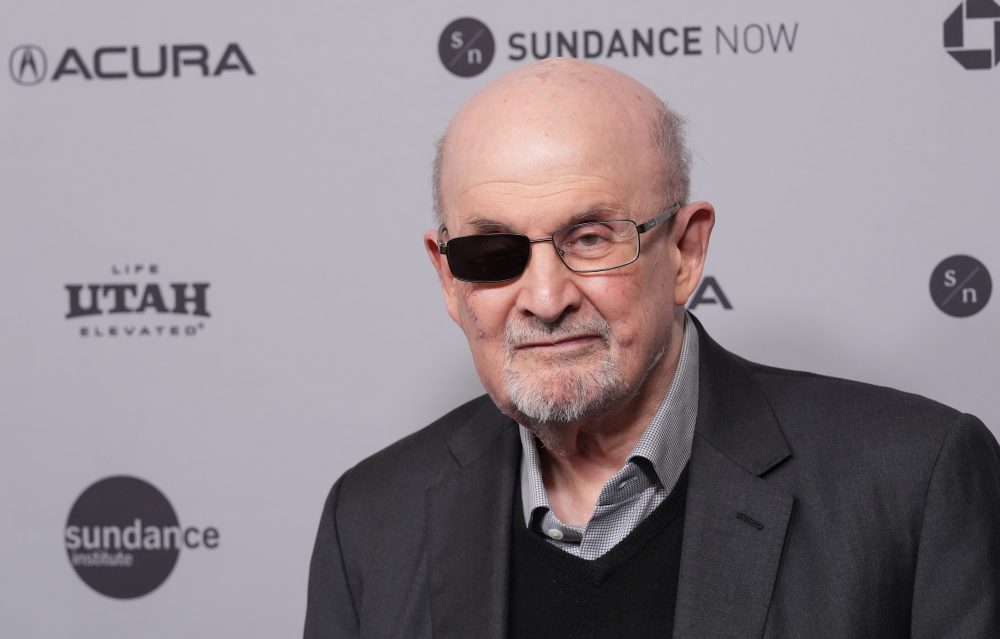
Rushdie, now 79 years old and a Booker Prize-winning author known as a champion of free speech, is expected to be one of the first people called to testify. He has already described the brutal stabbing and his long road to recovery during his state court trial, in a published memoir, and through numerous interviews.
“The thing that happens when you get really a close-up look at death — that’s as close as you can get without actually doing the dance of death and heading off to nowhere — it stays with you,” Rushdie told The Associated Press in 2024. “There’s a shadow.”
Matar, 28, is already behind bars serving a 25-year New York state prison sentence after being convicted on state charges of attempted murder and assault. That earlier case focused primarily on the physical details of the knife attack itself. The new federal case goes further, examining what allegedly drove Matar to carry out the assault.
Matar has entered a not guilty plea to the federal charges, which include engaging in an act of transnational terrorism. A conviction could result in a life sentence.
Federal prosecutors contend that Matar acted out of devotion to Iran’s religious government and the Iran-backed militant organization Hezbollah, following a decree issued by Iran’s late Ayatollah Ruhollah Khomeini calling for Rushdie’s death over his 1988 novel “The Satanic Verses.”
According to a 2025 court filing, Matar’s electronic devices contained information about the fatwa — an Islamic religious ruling — that called for Rushdie’s killing. Investigators also found a journal and sticky notes where Matar had tracked his research on Rushdie, including possible methods and locations for an attack. Federal agents searching Matar’s New Jersey bedroom discovered photographs of Khomeini and his now-deceased successor, Ayatollah Ali Khamenei.
“When he attempted to carry out the fatwa, he believed he was doing so on behalf of” Hezbollah, wrote assistant U.S. Attorneys Timothy Lynch and Charles Kruly in the filing. The U.S. government officially designates Hezbollah as a terrorist organization.
When asked about the upcoming trial on Tuesday, Matar’s attorney Nathaniel Barone said he intended to deliver an opening statement. In the years leading up to this trial, Matar’s legal team made unsuccessful attempts to have evidence from his social media accounts and other digital activity thrown out, arguing that the government’s electronic searches were too broad.
Matar chose not to testify during his state court trial, and it remains unknown whether he will take the stand in federal proceedings. At his state sentencing, Matar claimed to support free speech but called Rushdie “a hypocrite” who “wants to bully other people.” He also made unsolicited statements in support of Palestinians as he entered and exited the state courtroom.
Matar was born in the United States to parents who came from Lebanon, making him a citizen of both countries. His mother has said that following a trip to Lebanon in 2018 — where Hezbollah operates — he became withdrawn and moody.
Rushdie was born in India and raised in Britain, where he was knighted by the late Queen Elizabeth II. He is now an American citizen. He earned the Booker Prize in 1981 for “Midnight’s Children,” a magical realist novel tied to the moment India gained independence. However, it was “The Satanic Verses” that made him both celebrated and controversial — particularly a passage involving a dream sequence about the Prophet Muhammad. Many Muslims viewed the content as blasphemous, sparking widespread and sometimes violent protests. Rushdie himself was born into a Muslim family.
Khomeini’s 1989 fatwa forced Rushdie to live in hiding for years. While Iran has not actively emphasized the decree in recent times, it was never officially withdrawn. Iran denied any role in the 2022 stabbing, though the country’s Foreign Ministry spokesperson at the time suggested Rushdie had brought trouble upon himself by insulting Islam.
Since writing “Knife,” his memoir about surviving the attack, Rushdie has returned to fiction with last year’s release “The Eleventh Hour,” a collection of short stories and novellas. In November, he received a Dayton Literary Peace Prize lifetime achievement award.