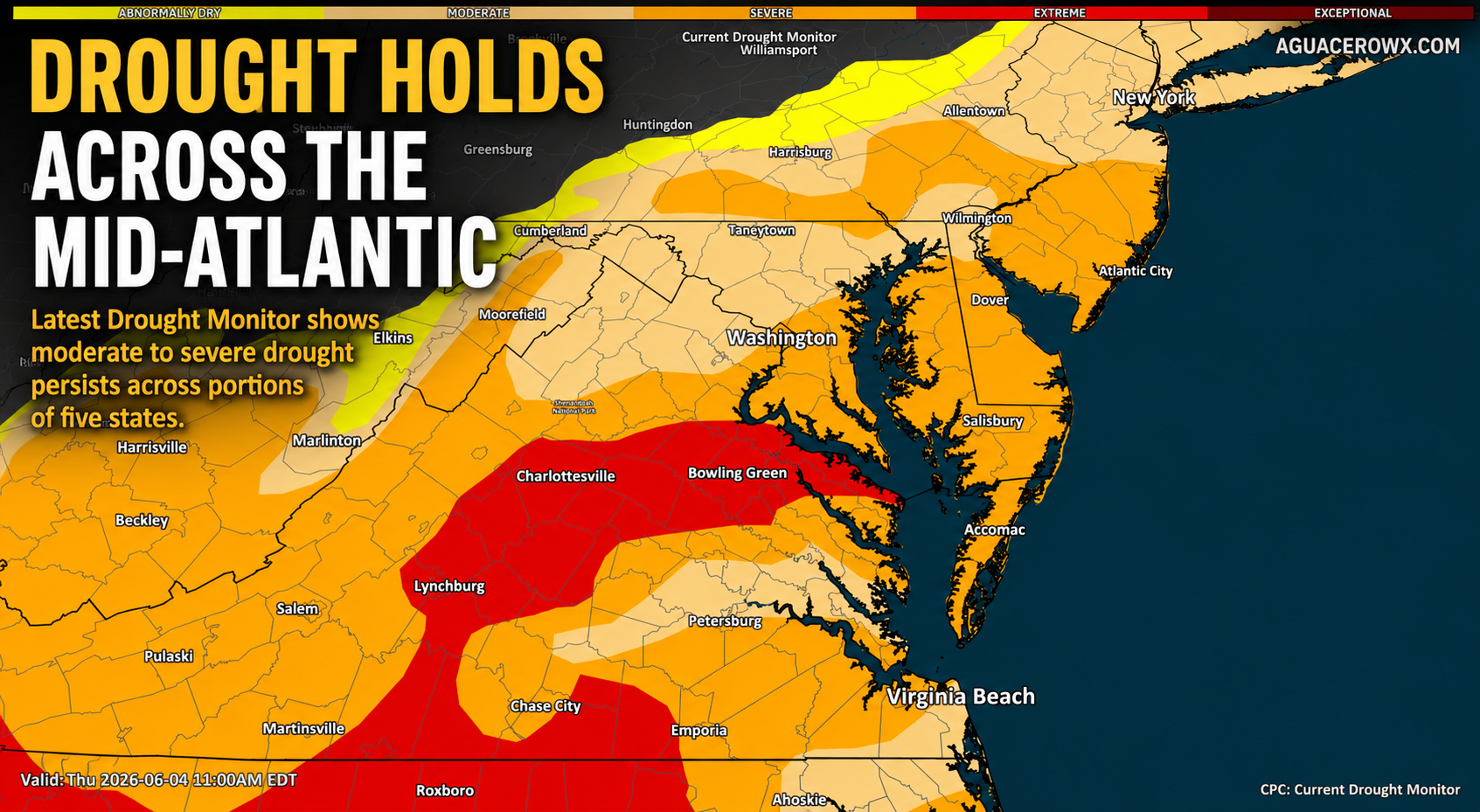

The latest U.S. Drought Monitor shows drought conditions continue across much of the Mid-Atlantic, including portions of Delaware, Maryland, Virginia, Pennsylvania, and New Jersey. While recent rounds of rain have provided some localized relief, long-term moisture deficits remain a concern heading into the heart of the summer season.
Across the region, areas of Abnormally Dry (D0), Moderate Drought (D1), and Severe Drought (D2) remain in place as precipitation deficits that developed during the winter and spring continue to impact soil moisture, streamflows, and groundwater levels. The ongoing dryness has been especially noticeable across portions of the Delmarva Peninsula and southeastern Pennsylvania, where drought conditions have expanded in recent weeks.
The drought outlook from NOAA indicates that drought conditions are expected to persist across much of the Mid-Atlantic through June, although periodic storm systems may help prevent further rapid deterioration in some locations. Forecast guidance suggests no widespread drought-ending rainfall event is currently on the horizon, meaning any improvements will likely occur gradually.
For the Delmarva region, recent rainfall has helped green up vegetation and improve topsoil moisture in some areas. However, deeper soil moisture deficits remain, and many streams and ponds continue to run below normal levels. Agricultural interests are closely monitoring conditions as crops enter critical growth stages during the early summer months.
The drought also continues to elevate wildfire concerns. Dry vegetation combined with occasional periods of low humidity and gusty winds can quickly increase fire danger, particularly in areas that have received below-normal rainfall over the past several months.
The U.S. Drought Monitor is updated every Thursday and integrates precipitation data, soil moisture observations, streamflow measurements, groundwater conditions, and reports from local experts to assess drought severity across the country.
Looking Ahead
While scattered showers and thunderstorms are expected periodically through June, forecasters say the region will likely need several widespread soaking rainfall events over an extended period to fully erase the drought that has developed across portions of the Mid-Atlantic. Until then, residents should remain mindful of local burn restrictions, water conservation efforts, and changing drought conditions throughout the summer.