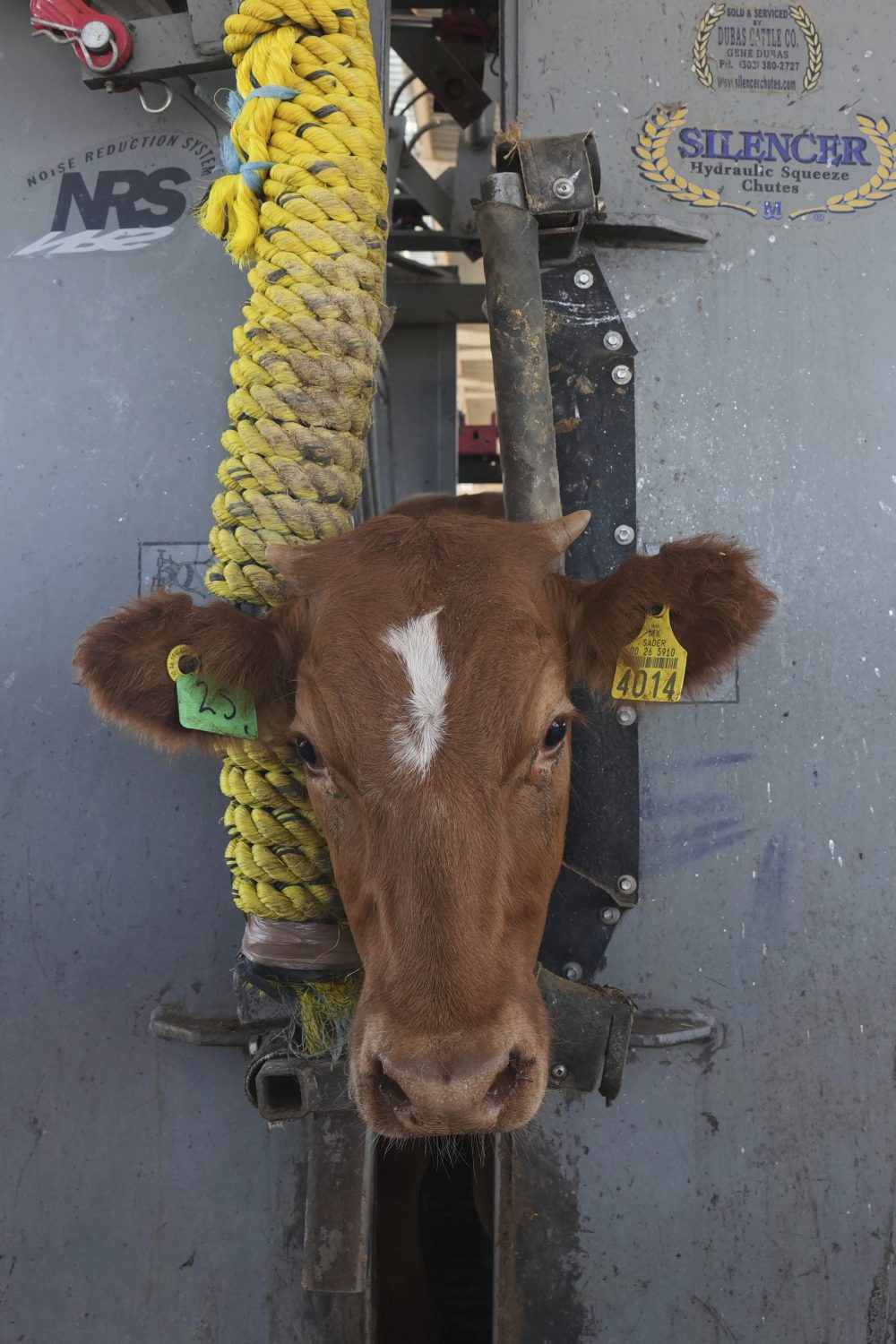

The United States announced Friday that it plans to reopen its border to cattle coming from Mexico beginning August 24, more than a year after the ban was first put in place to stop the spread of the New World screwworm parasite.
According to a statement from the U.S. Department of Agriculture, the first border crossing to reopen will be the Douglas, Arizona crossing, which sits along the border with Agua Prieta in Mexico’s Sonora state.
The USDA statement also indicated that steps will be taken to eventually reopen the Santa Teresa and Columbus crossings in New Mexico, though no specific dates were provided for those locations.
Even with the import ban in effect, the screwworm parasite was detected last month in Texas and southeastern New Mexico, where more than 30 cases have now been confirmed.
The outbreak in Mexico was first identified in November 2024 and has since spread to 29 of the country’s 32 states. Official figures show there are currently 1,792 active cases in Mexico.
The screwworm is a larva of the Cochliomyia hominivorax fly and is capable of attacking warm-blooded animals, including people.
U.S. officials said any Mexican cattle allowed to cross the border will need to comply with a joint action plan, and all animals will be inspected on the U.S. side to ensure no screwworm larvae are present.
Mexican President Claudia Sheinbaum shared on social media that she learned of the decision through a letter from U.S. Secretary of Agriculture Brooke Rollins. Sheinbaum said Mexico will speed up its preparations to resume cattle movement through Sonora and then through the border state of Chihuahua, where five screwworm cases were recently reported.
Sheinbaum described the development as a sign of “dialogue, cooperation, and collaboration with mutual respect between Mexico and the United States.”
Secretary Rollins stated in the U.S. announcement that conditions are now safe enough to reopen the Arizona crossing.
Mexico’s livestock industry has estimated that the suspension caused losses running into the hundreds of millions of dollars.