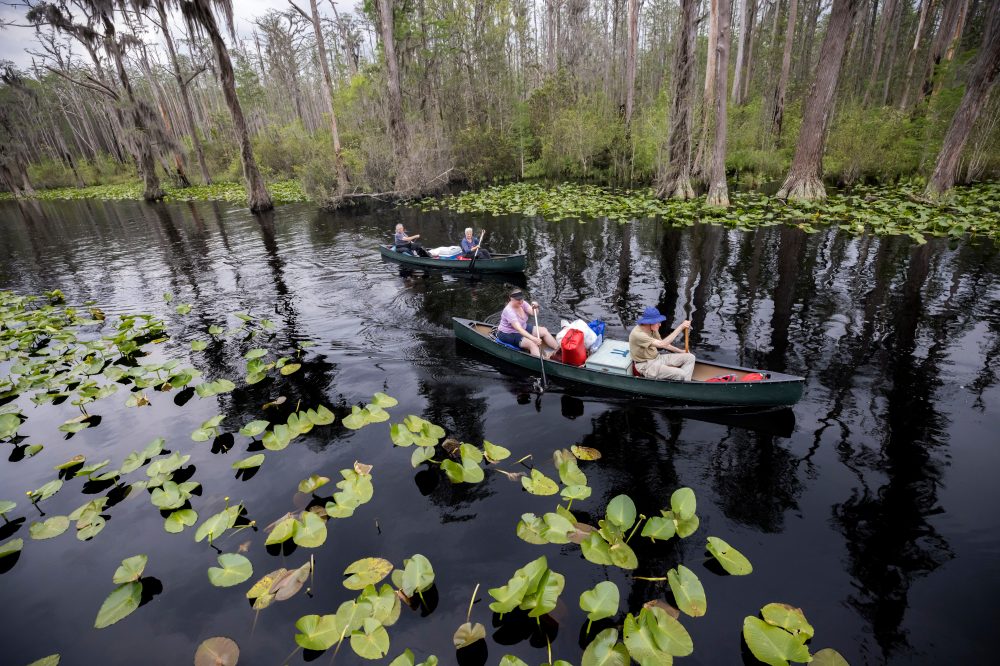

SEOUL, South Korea — Georgia’s Okefenokee Swamp is now a UNESCO World Heritage Site, joining a handful of other newly recognized locations after a United Nations committee meeting held Saturday in South Korea.
The UNESCO gathering in Busan, which runs through next Wednesday, is also reviewing additional nominations, including the D-Day beaches in France, Mount Olympus in Greece, and the ancient Japanese capitals of Asuka and Fujiwara.
Considered one of the planet’s largest freshwater ecosystems, the Okefenokee Swamp spans an enormous network of wetlands that supports remarkable biodiversity and serves as the headwaters for two major rivers. According to UNESCO, the swamp’s largely untouched peat beds hold a 5,000-year record of environmental change, making it both a critical natural habitat and a window into long-term shifts in the environment.
The designation places the Okefenokee National Wildlife Refuge in the same company as celebrated American landmarks like the Grand Canyon. However, not everyone is celebrating — some local residents have pushed back against the listing, worried that it could lead to greater U.N. control over how the site is managed.
Kim Bednarek, executive director of the nonprofit Okefenokee Swamp Park, which partnered with the U.S. government on the refuge’s nomination, offered this response to the recognition: “We accept this inscription not as a finish line, but as a commitment to keep the Okefenokee wild, resilient, and thriving for generations to come.”
The committee also voted to expand an existing World Heritage designation for South Korea’s “getbol” tidal flats, adding four more coastal wetland areas located in Seosan, Goheung, Muan, and Yeosu along the country’s western coast. UNESCO had first recognized four other South Korean tidal flats in 2021 for their biodiversity and their role as a key rest stop for migratory birds.
South Korea’s Foreign Ministry stated that the expanded designation “reaffirms the importance of international cooperation for the conservation of the Yellow Sea ecosystem and the East Asian-Australasian Flyway” — a major bird migration corridor stretching from the Arctic all the way through Asia to Australia and New Zealand.
Also newly added to the World Heritage List were handicraft porcelain industry sites in China’s Jingdezhen. UNESCO says these locations document the development of handcrafted porcelain production in China from the 10th through the 19th centuries, highlighting the innovations that made Jingdezhen a world-renowned center for fine porcelain — particularly its iconic blue-and-white designs, which became a global symbol of Chinese artistry.