
The federal government has unveiled a plan to put massive stretches of ocean surrounding American Samoa up for auction, opening the door to deep-sea mining operations in a move that has no precedent and is expected to face strong international pushback.
The proposed auction would cover a staggering 33 million acres — roughly 51,560 square miles — of ocean surface. The leasing proposal was officially published Friday as part of the Trump administration’s broader effort to fast-track mining permits, even as environmental concerns continue to mount.
The decision also marks a significant break from past U.S. administrations, which had previously deferred to the Jamaica-based U.N. International Seabed Authority — the international body responsible for overseeing deep international waters and crafting mining regulations. That process has been ongoing for years.
More than 43 nations have called for either a moratorium or an outright ban on deep-sea mining. Scientists have cautioned that such operations could generate harmful noise, artificial light, and smothering clouds of sediment that would devastate delicate marine ecosystems.
Despite those concerns, the U.S. and several other nations are pressing forward, eager to extract copper, iron, zinc, and other minerals from the ocean floor. These materials are in high demand for technology products, military applications, and electric vehicles.
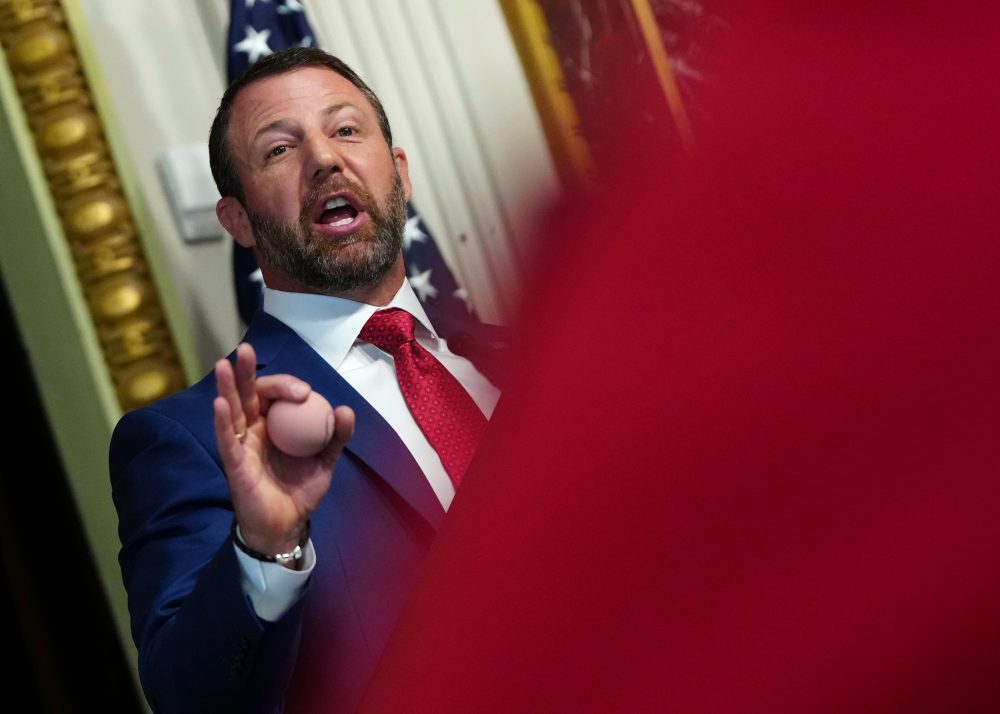
Matt Giacona, acting director of the U.S. Marine Minerals Administration, explained the administration’s position in a statement issued Thursday. “Critical minerals have become a strategic asset in global competition, and China’s dominance in the supply of many of these materials creates unacceptable risks for America’s energy, defense and manufacturing sectors,” he said.
A representative for the secretary general of the International Seabed Authority had not responded to a request for comment at the time of publication.
Community opposition has been vocal. Seumalu Elora Raymond, a spokesperson for Fa’asao Amerika Samoa, a local community organization, blasted the federal government’s rush to move forward with the lease sale. In a statement, she said the process is “ignoring the voices of the very people whose waters, traditions, and livelihoods are on the line.”
“We will not stand by while an untested industry threatens to destroy American Samoa’s environment and cultural heritage for corporate profit,” Raymond added.
The government of American Samoa — which has already enacted its own ban on deep-sea mining in local waters — did not immediately respond to a request for comment.
The nonprofit legal organization Earthjustice accused the federal government of steamrolling the concerns of American Samoan residents. “The Trump administration continues to bow to this untested, extractive industry and seeks to make American Samoa one of the first test sites,” said Earthjustice attorney J.V. Langkilde.
According to a July environmental assessment from the U.S. Bureau of Ocean Energy Management, the proposed lease area sits at water depths ranging from 4,600 to 20,000 feet. It lies just 57 miles from the Rose Atoll National Wildlife Refuge.
The bureau is considering two possible leasing structures. Under the first option, it would issue up to two commercial leases of nearly 17 million acres each, limited at first to preliminary activities such as geophysical surveys, biological sampling, and oceanographic measurements. A second option would involve five leases of nearly 7 million acres each. Either way, any actual mining would require a separate plan to be submitted and approved after an environmental review.
The bureau’s report acknowledged lingering uncertainties, noting that “some uncertainty remains regarding the potential for indirect or accidental impacts, particularly in deepwater and pelagic zones” near Rose Atoll and several national marine sanctuaries. While the agency said it does not expect significant harm to nearshore environments, it admitted there are gaps in data — especially in deeper waters — “where biodiversity, ecological function, and baseline conditions remain poorly characterized.”
The bureau also noted that because the United States has never ratified the U.N. Convention on the Law of the Sea, it is the National Oceanic and Atmospheric Administration — not the international body — that governs U.S. mineral exploration and recovery from the seafloor.
NOAA announced in January that companies could apply for both an exploration license and a commercial operations permit simultaneously, eliminating the previous two-step requirement. In April, President Trump signed an executive order directing NOAA to accelerate the permitting process for seafloor mining operations.
Internationally, the Seabed Authority has approved exploration licenses for 22 contractors, though it has yet to authorize any commercial mining. Much of that exploration is concentrated in the Clarion-Clipperton Fracture Zone, a vast stretch of ocean floor spanning 1.7 million square miles between Hawaii and Mexico, at depths of 13,000 to 19,000 feet.