
CAPE CANAVERAL, Fla. — No human achievement has ever topped what America accomplished when it first landed astronauts on the moon — and the very vehicle that made it possible is still up there, resting silently on the lunar surface.
Over the course of more than half a century ago, NASA successfully placed 12 men on the moon, starting with Neil Armstrong and Buzz Aldrin aboard Apollo 11. The two made history as the first human beings to set foot on another world when their lander, named Eagle, touched down on the Sea of Tranquility on July 20, 1969. Armstrong’s radio transmission became instantly iconic: “The Eagle has landed.”
Just six and a half hours after landing, Armstrong climbed down the ladder and stepped onto the moon’s gray, powdery surface, delivering what would become perhaps the most famous words ever spoken: “That’s one small step for man, one giant leap for mankind.”
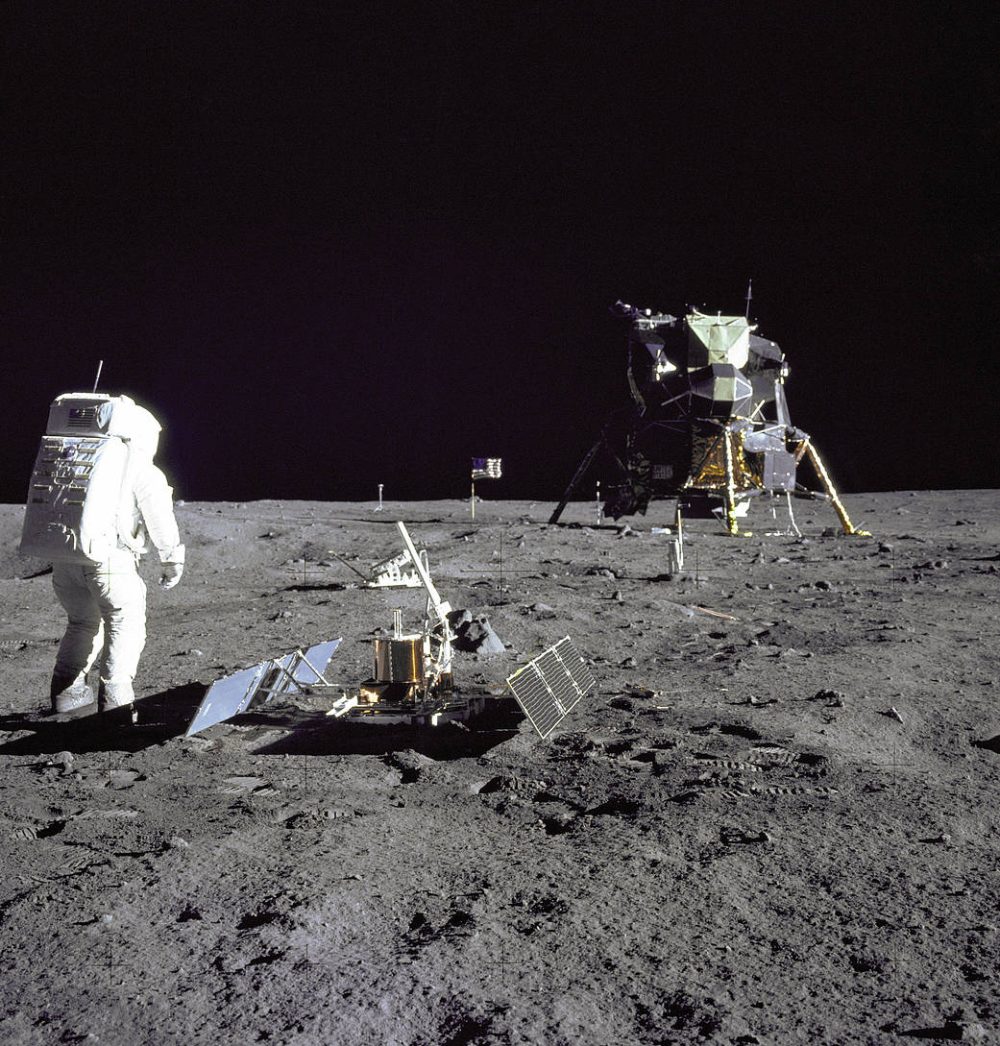
The Apollo lunar module stood about 23 feet — roughly 7 meters — tall, making it slightly taller than a giraffe and about as awkward-looking. It was built in two parts: a lower descent stage equipped with four legs, and an upper section where the crew lived. The descent stage lowered the astronauts to the surface and was left behind when the upper portion blasted back up to lunar orbit.
All six of those descent stages remain on the moon permanently, clustered near the equator on the side facing Earth. Satellites — including NASA’s Lunar Reconnaissance Orbiter and spacecraft from other nations — have captured images of them from orbit, where they appear as faint white spots marking the exact landing locations of Eagle, Intrepid, Antares, Falcon, Orion, and Challenger.
Apollo 13 never made it to the surface after a critical malfunction, but its lunar module, Aquarius, was repurposed as a lifeboat that safely returned its three-man crew to Earth. The upper ascent stages from the successful missions were jettisoned after the astronauts returned to the command module and are now scattered across the moon’s surface in pieces — though some researchers believe Apollo 11’s ascent stage may still be in lunar orbit.
NASA’s new Artemis program takes a different approach from Apollo, relying on private companies to develop and operate the lunar landers. Both SpaceX, founded by Elon Musk, and Blue Origin, founded by Jeff Bezos, are racing to prepare their respective landers for a docking test in low-Earth orbit with a NASA crew capsule next year. If that rehearsal — part of Artemis III — goes smoothly, NASA could attempt its first crewed moon landing since the Apollo era as soon as 2028. SpaceX’s Starship lander is so massive that astronauts will need a ten-story elevator to reach the lunar surface — a far cry from the nine-rung ladder Apollo crews climbed down.
On that historic day in 1969, President Richard Nixon called Armstrong and Aldrin as they stood beside the American flag they had planted 240,000 miles — about 385,000 kilometers — from home. “For one priceless moment in the whole history of man, all the people on this Earth are truly one,” Nixon told them.