
A powerful new artificial intelligence model out of China blindsided the U.S. tech sector on Friday, adding to a growing pattern of Chinese startups releasing open-source AI technology that is putting pressure on the major California-based players in the industry.
The latest model, called Kimi K3, comes from a Beijing-based startup known as Moonshot. Its chief executive earned his doctorate in Pittsburgh and is known among colleagues for his love of rock music, including Pink Floyd. The K3 model appears to be closing in on the best versions of Anthropic’s Claude and OpenAI’s ChatGPT.
Anastasios Angelopoulos, co-founder and CEO of Arena — a platform that evaluates AI systems — called it potentially “the single biggest release of the year,” saying it signals a moment when open-source Chinese models are surpassing closed U.S. models. He added on social media that “more results are rolling in that are likely to continue to show it is at the top of the pack” when it comes to front-end coding capability, one key measure of AI performance.
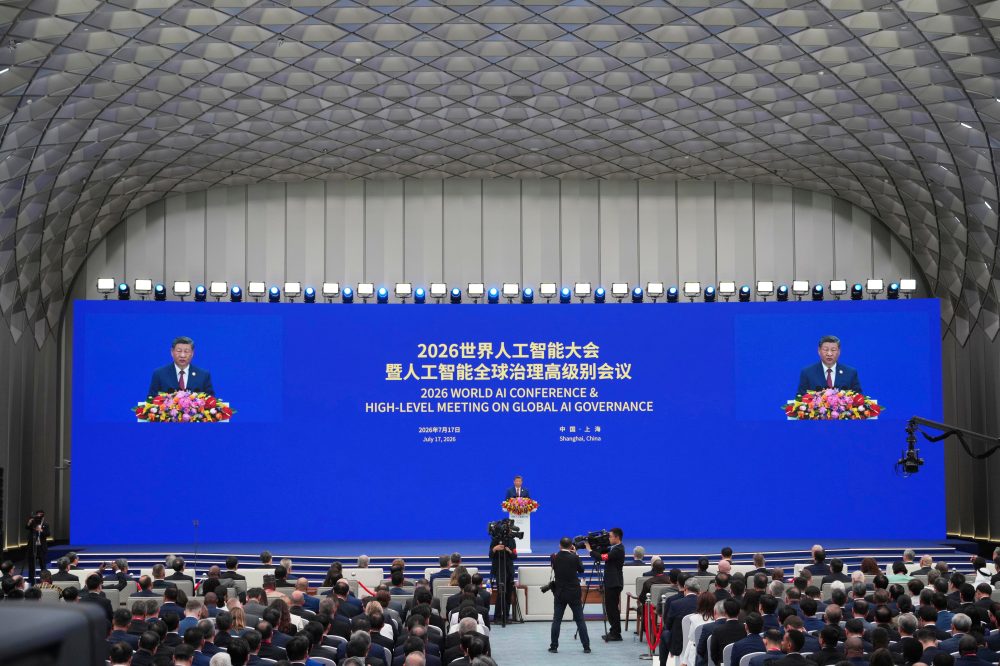
The timing of K3’s announcement was likely no accident. It came just before Chinese President Xi Jinping delivered an opening address Friday at China’s annual World Artificial Intelligence Conference in Shanghai. At the event, Xi declared that “the development of artificial intelligence should not be a solo performance by any single country but rather a symphony of global cooperation.”
American-led export restrictions have cut China off from some of the world’s most advanced technologies, pushing the country to develop its own capabilities and deepening the competitive tension between the two largest economies on the planet.
K3 follows another significant Chinese AI release last month from a startup called Zhipu, also known as Z.ai. Its new flagship model, GLM-5.2, has been widely adopted by software developers globally who report it performs nearly as well as the top U.S. models but at a lower cost.
The excitement surrounding K3 has drawn comparisons to the market disruption caused by the release of a model from Chinese startup DeepSeek earlier in 2025. However, not all observers are convinced the reaction is warranted. Tech analyst Patrick Moorhead called the response an “overreaction shockingly similar” to what happened with DeepSeek’s launch. He acknowledged it could benefit parts of the broader AI industry while creating a revenue challenge for Anthropic and OpenAI.
Running alongside the conference through Monday, tech giant Huawei has been showing off a new AI computing system called the Atlas 950 SuperPoD, suggesting China is increasingly building the domestic hardware it needs despite U.S. restrictions on chip imports from companies like Nvidia. Moonshot has not disclosed what hardware was used to build K3, though the startup does have a partnership with Huawei.
While K3 carries the highest price tag yet seen for a Chinese AI model, it is still half the cost of OpenAI’s high-performing GPT-5.6 Sol model, according to a Friday report from Bank of America research analysts.
U.S. lawmakers and several major American AI companies, including Anthropic and OpenAI, have accused Chinese AI developers of illegally extracting their technology through a process called “distillation.” Beijing has called those accusations “groundless.”
Anthropic specifically alleged in February that DeepSeek, Moonshot, and a third Chinese AI lab called MiniMax had run campaigns to “illicitly extract Claude’s capabilities to improve their own models.” The company described distillation as a technique that “involves training a less capable model on the outputs of a stronger one.” Anthropic said distillation can be a legitimate practice, but becomes problematic when competitors use it to gain powerful capabilities “in a fraction of the time, and at a fraction of the cost, that it would take to develop them independently.”
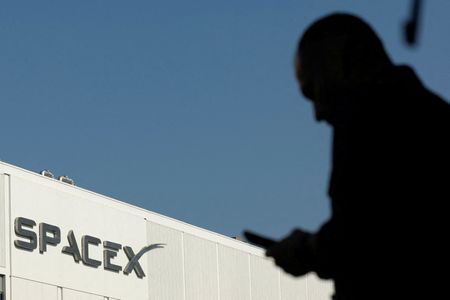
The technology exchange has not been entirely one-sided, however. A San Francisco-based startup called Anysphere, which makes the widely used coding tool Cursor, has acknowledged that one of its top products was built on Moonshot’s earlier K2.5 model. Elon Musk’s SpaceX is reportedly planning to finalize a $60 billion deal to acquire Cursor later this year.
Moonshot’s co-founder and CEO, Yang Zhilin, earned his Ph.D. in 2019 at Carnegie Mellon University in Pennsylvania, where he reportedly made foundational contributions to the machine-learning field. His former academic adviser, Russ Salakhutdinov — who also previously served as a director of AI research at Apple — celebrated the news. “What a huge win for the open-source community! It feels like just yesterday Zhilin was graduating from my lab at CMU,” Salakhutdinov wrote, reflecting a pride that goes beyond national rivalries.
Developers who build open-source AI make the core components of their technology available for anyone to study, change, and build on. Supporters argue this approach drives innovation, while critics caution that making powerful AI systems publicly available creates safety and security risks.