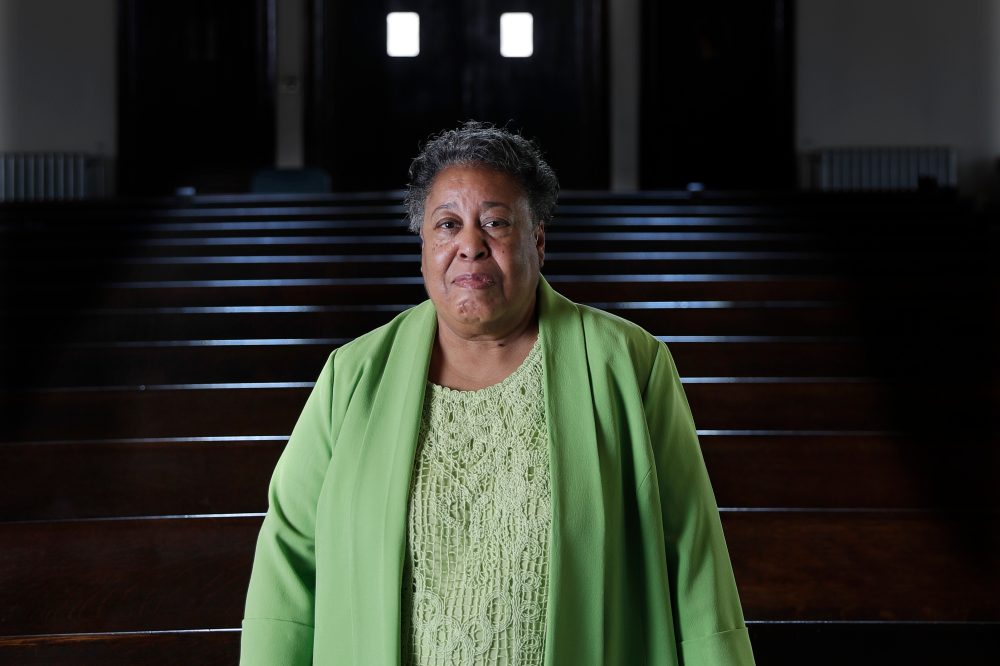

NASHVILLE, Tenn. — Clara Ester, a civil rights activist who sprinted to the Rev. Martin Luther King Jr.’s side as a 20-year-old college student moments after he was shot, has passed away at the age of 78.
Ester died on July 9 and was among the very few remaining people who witnessed King’s assassination and its immediate aftermath in Memphis. With the earlier death of the Rev. Jesse Jackson Sr. in February and now Ester’s passing, King aide and former U.N. ambassador Andrew Young is believed to be the last living eyewitness to the shooting.
Growing up in Memphis, Ester attended Centenary United Methodist Church, where civil rights leader the Rev. James Lawson served as her pastor.
In a 2018 interview with The Associated Press, around the time of the 50th anniversary of King’s death, Ester reflected on what drew her into the civil rights movement. “We used to joke about colored water being Kool-Aid and the white water just being water, and so that satisfied us as children,” she said. “But until you see the racism, until you see what has been withheld from you because of your color — is what started to really truly anger me. And I knew if there was a movement that could help change any of that, I had to be in it.”
Civil rights discussions were a regular part of Sunday services at her church, Ester recalled. Because Lawson was deeply involved in the sanitation workers’ strike, her own participation in the movement felt like a natural extension of her faith community.
“I got to the point that I didn’t miss a mass meeting,” she said. “I picketed every day that the picket lines were up.”
Even decades later, Ester vividly recalled the power of King’s speech at the Mason Temple the evening before his assassination — a speech that seemed to many to foreshadow his death the following day.
“He had seen the mountaintop,” Ester said. “It was evident on the balcony — how calm.”
On April 4, 1968, Ester had gone to the Lorraine Motel for dinner when she spotted King on the balcony, chatting pleasantly with people gathered below. Then she heard a gunshot.
“He was speaking calmly and pleasantly to a crowd,” she recalled. “And so he was happy at that moment. But to lay there with his eyes open, looking toward heaven. He had seen the promised land, and he may not get there with us, but he promised that we as a people will see the promised land.”
Ester ran to King and could see he was struggling to breathe. She worked to loosen his belt and urged bystanders to bring towels to help stop the bleeding. After King was transported by ambulance, Ester was required to remain at the hotel and answer questions from police investigators.
When she was finally permitted to go home, her parents asked if she was alright. “I said, ‘No, I’m not OK. There’s something wrong with this,’” Ester said. “And it was many months later that I guess at some point, I just broke down.”
She left Memphis that summer to work elsewhere, and once she completed her schooling, she left the city for good. “It’s just too much to … it hurt me that it happened, but it hurt me that it happened in my hometown, that that’s the legacy for this city,” she said.
Ester eventually relocated to Mobile, Alabama, where she took a position as a neighborhood organizer at the Dumas Wesley Community Center, a Christian service organization that supports children, senior citizens, and people experiencing homelessness, according to her obituary. She later rose to become the center’s executive director, a role she held until her retirement in 2006.
In 1986, she was commissioned as a deaconess in the United Methodist Church, a form of lay ministry. She remained devoted to her church throughout her life and held prominent leadership positions, including serving as the national vice president of United Methodist Women.
Methodist Bishop David Graves first met Ester when he was assigned to the Alabama-West Florida Conference in 2016. In a written remembrance, he noted that she was initially cool toward him, but that a deep mutual affection developed over time.
“Thank you, Clara Ester, for a life well lived and for loving me. It changed me,” he wrote. “Clara will be missed immensely, but what a day of rejoicing is going on in heaven. For love will always find a way for those who trust in Jesus and seek to love even in our differences.”