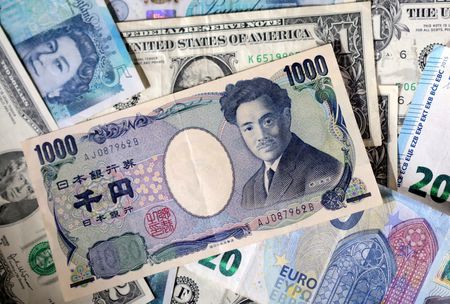

The American dollar maintained stability on Tuesday as diplomatic efforts to resolve ongoing Middle Eastern conflicts showed minimal progress, leading to increased oil prices and investor concerns about prolonged elevated interest rates to combat inflation.
Market participants are growing concerned that the ceasefire established on April 7 may be at risk, with potential for renewed hostilities in the conflict that started in late February, resulting in thousands of casualties and disrupting critical energy supply chains.
Due to the continued closure of the vital Strait of Hormuz, Brent crude futures climbed 0.3% to reach $104.55 per barrel. Meanwhile, U.S. West Texas Intermediate rose 0.13% to $98.17 per barrel.
President Donald Trump characterized the ceasefire agreement with Iran as being “on life support” following recent negotiations on a proposed resolution that highlighted significant remaining disagreements between the parties.
Currency trading remained subdued at the start of the Asian session, with attention turning to Trump’s upcoming visit to China this week. Treasury Secretary Scott Bessent is also conducting meetings in Japan and South Korea during his Asian tour.
The euro traded at $1.1775, while the British pound held steady at $1.3602. The dollar index, tracking the U.S. currency against six major counterparts, stood at 97.98.
Initially, the dollar gained from safe-haven investment flows when hostilities began, but has since lost much of those increases and continues to fluctuate amid uncertain peace negotiations and a fragile ceasefire agreement.
OCBC currency strategist Christopher Wong noted that Trump’s dismissal of Iran’s response to the American peace proposal has maintained market caution and supported the dollar’s value.
“Still, USD gains were contained, suggesting markets are not yet treating the latest headlines as a full risk-off shock,” Wong explained, adding that a complete breakdown in diplomatic talks or new military escalation could trigger a stronger market response.
Market focus will shift to U.S. inflation data later today, with economists predicting consumer prices increased 0.6% last month following March’s 0.9% surge, according to a Reuters poll. Projections range from 0.4% to 0.9% growth.
This information will strengthen expectations that the Federal Reserve will maintain current interest rates. Traders have eliminated predictions of rate reductions this year, compared to two anticipated cuts before the Iranian conflict began.
Commonwealth Bank of Australia currency strategist Sarah Hammoud warned that core inflation could exceed expectations due to energy price impacts on sectors like airfare and food costs.
“An upside surprise to U.S. core inflation will push up U.S. interest rates and the dollar,” Hammoud stated.
The benchmark U.S. 10-year Treasury note yield remained stable at 4.418% during Asian trading hours after Monday’s 4.8 basis point increase.
The Japanese yen held steady at 157.30 against the dollar as traders monitored potential comments from Bessent regarding Japan’s currency and monetary policies.
Japanese Finance Minister Satsuki Katayama confirmed continued close cooperation with the U.S. on currency matters following Tuesday’s meeting with Bessent.
After reportedly investing approximately $63.7 billion in recent intervention efforts, analysts suggest Tokyo may be relying on Bessent’s Japan visit to provide additional market influence through either direct support or strategic statements indicating U.S. acceptance of Japan’s currency actions.
The Australian dollar declined 0.14% to $0.724 ahead of the federal budget announcement, while New Zealand’s currency dropped 0.07% to $0.5959. Bitcoin decreased 0.3% to $81,551 in early trading.