
WASHINGTON — Total construction spending across the United States barely moved in May, as elevated mortgage rates stemming from the ongoing Middle East conflict put a damper on homebuilding activity.
According to figures released Wednesday by the Commerce Department’s Census Bureau, construction spending grew by just 0.1% in May, following a downwardly revised 0.3% gain in April. That modest increase matched what economists surveyed by Reuters had expected, though April’s figure was revised down from an initially reported 0.4% rise.
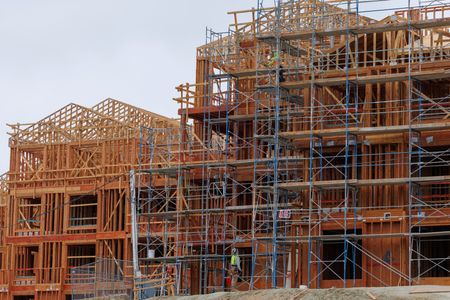
Compared to the same period last year, overall construction spending was actually down 1.5% in May. Private construction investment was flat after posting a 0.3% gain the month before. Residential construction investment edged up 0.3%, but that growth was driven largely by renovation projects rather than new builds.
Spending specifically on new single-family homes slipped 0.1% in May and was down a steep 4.0% compared to May of the previous year.
The conflict between the U.S.-Israeli alliance and Iran has pushed oil prices higher, fueling inflation and driving mortgage rates upward. Data from mortgage finance agency Freddie Mac showed the widely used 30-year fixed-rate mortgage has climbed roughly 50 basis points since the conflict began at the end of February. As of last week, that rate averaged 6.49%.
Multi-family housing — apartments and similar units, which represent a smaller slice of the overall housing market — also dipped slightly, falling 0.1% in May.
On the commercial side, investment in private nonresidential structures such as power plants and factories declined 0.3%. Factory construction spending dropped 1.3%, and spending on power plants eased 0.1%, even as construction of data centers to support artificial intelligence has been surging.
Public construction projects fared better, rising 0.5% after a similar increase in April. State and local government construction spending climbed 0.4%, while federal government construction outlays jumped 1.3% — a gain that analysts believe was likely driven by the construction of detention facilities connected to an immigration enforcement push.