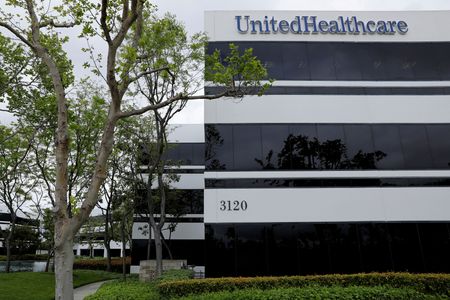

Healthcare giant UnitedHealth delivered better-than-expected first-quarter results on Tuesday, surpassing analyst predictions while boosting its financial outlook for 2026.
The company’s stock jumped almost 6% in early trading following the announcement of stronger earnings and an improved annual forecast.
UnitedHealth increased its projected 2026 adjusted earnings per share to above $18.25, marking a 50-cent improvement from its previous forecast of more than $17.75 per share. Wall Street analysts had anticipated earnings of $17.86 per share for 2026, based on LSEG data.
For the first quarter, the healthcare conglomerate delivered adjusted earnings of $7.23 per share, significantly beating the analyst consensus of $6.57 per share by 66 cents.
Chief Financial Officer Wayne DeVeydt emphasized the company’s cautious approach to future projections, prioritizing trust and transparency with investors.
“You may say ‘it looks like you beat the quarter by more than that. Why not raise by more?’” DeVeydt explained. “We like to believe our execution is the primary driver, but we want to see if any of these trends change in April and May.”
The positive results come as UnitedHealth works to restore investor confidence following a challenging period that included the tragic death of a senior executive, unexpected increases in medical expenses, federal investigations, and widespread public criticism of insurance industry practices. In January, the company projected its first revenue decline in decades.
The healthcare sector has faced mounting pressure since mid-2023 due to increased demand for medical services through government-sponsored Medicare programs serving seniors and disabled individuals. Additionally, shifts in Medicaid enrollment patterns have left insurers covering patients who typically require more extensive medical care.
UnitedHealth’s medical cost ratio—representing the portion of premium income spent on patient care—reached 83.9% in the first quarter, performing better than analysts’ projections of 85.70%.
“We actually think we’re going to do a little bit better than we anticipated,” DeVeydt noted, adding that while the company expects to lose 1.3 million Medicaid enrollees, “Still losing membership, but retaining a little bit more than we thought.”
However, the company’s Optum health services division continued to face headwinds, with operating income dropping 15% to $3.3 billion. This decline reflected higher medical costs and continued investments in operational improvements.
Optum’s revenue decreased slightly by 0.2% as patient enrollment in coordinated care programs declined. DeVeydt characterized this reduction as strategic, resulting from the company’s decision to exit less profitable contracts. During a previous earnings call, UnitedHealth disclosed that Optum faces regulatory and financial challenges expected to cost $11 billion over three years.
The Optum primary care division generated $24.1 billion in first-quarter revenue, while Optum Rx, the company’s pharmacy benefit management arm, saw revenue increase 2% to $35.7 billion.
DeVeydt highlighted operational improvements at Optum, including revised appointment scheduling that boosted patient visits by 12% during the quarter. The company also expanded its hospital-based coordination services to facilitate at-home care, aiming to reduce costly hospital readmissions compared to nursing facility placements.