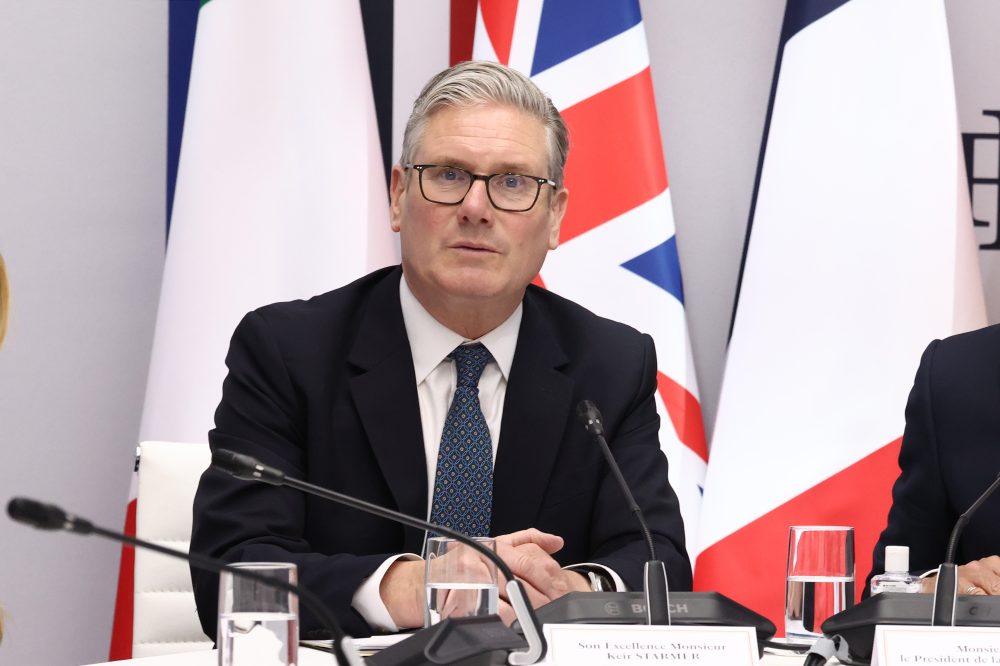

LONDON (AP) — British Prime Minister Keir Starmer finds himself in the political fight of his life, with mounting calls for his resignation over a diplomatic appointment gone horribly wrong.
The crisis centers around Starmer’s controversial choice of Peter Mandelson as ambassador to the United States — a man who openly described himself as Jeffrey Epstein’s “best pal” despite the convicted sex offender’s criminal history.
What began as questionable judgment has escalated into accusations that Starmer deliberately misled Parliament about the appointment process. The revelation could spell the end of his tenure as Prime Minister, particularly damaging given his campaign promise to restore integrity to British politics after years of Conservative scandals.
“Starmer set himself up as the guy who always followed the rules, in stark contrast to, say, Boris Johnson, and he came to power effectively promising to ‘drain the swamp’,” explained Tim Bale, a political science professor at Queen Mary University of London.
“Because of that, the latest revelations in the unholy mess created by his ill-judged appointment of Peter Mandelson mean that many voters now see him not only as a liar but as a hypocrite — and hypocrisy is one of the worst sins that any British politician can possibly commit,” Bale continued.
The latest bombshell dropped Thursday when The Guardian published reports showing Mandelson initially failed security clearance requirements for the ambassadorial position he would later be dismissed from after nine months. This directly contradicts Starmer’s parliamentary testimony that “full due process” had been followed throughout the appointment.
Government officials maintain that Starmer and his cabinet only learned this week that the Foreign Office had reached a different conclusion during its initial evaluation. The controversy has already claimed one casualty — Foreign Office chief civil servant Olly Robbins submitted his resignation.
Starmer now must defend himself against questions about his knowledge of the screening procedures, which examined Mandelson’s financial dealings, personal associations including his Epstein connection, and overall character assessment.
Additional allegations suggest Starmer may have pressured officials to overlook red flags concerning the 72-year-old Mandelson during the vetting process.
The Prime Minister expressed being “absolutely furious” about being kept uninformed, describing the situation as “staggering” and “unforgivable.” He plans to address Parliament directly on Monday.
Despite Starmer’s poor approval ratings and expected Labour losses in upcoming May elections, leadership challenges had recently quieted down. His decision to avoid direct UK military involvement in the Iran conflict had resonated positively with voters.
Mandelson represented a calculated gamble from the start, given his history of resigning twice from previous Labour administrations over financial and ethical violations around 2000, plus his well-documented relationship with Epstein, who died in custody in 2019.
Starmer’s strategy seemed clear: leverage Mandelson’s negotiating experience and trade knowledge to help shield Britain from the harshest Trump administration tariffs.
Initially, this approach appeared successful, but the situation deteriorated by September 2025 when leaked emails revealed Mandelson had continued supporting Epstein even while the financier faced imprisonment for sex crimes. Though politically damaging, Starmer hoped firing Mandelson would end the controversy.
Those hopes were crushed in January when the U.S. Justice Department released extensive Epstein-related documents. The so-called Epstein Files contained emails suggesting that during Mandelson’s government service from 2009-2010, he had shared confidential and potentially market-sensitive government intelligence with the disgraced financier.
Starmer has issued multiple public apologies to British citizens and Epstein’s trafficking victims for trusting what he now calls “Mandelson’s lies.”
British authorities have since opened a criminal investigation, conducting searches of Mandelson’s London and western England residences. Police arrested Mandelson on February 23rd on suspicion of misconduct in public office. Following more than nine hours of interrogation, he was released on bail the next morning. Mandelson maintains his innocence and faces no sexual misconduct allegations.
Starmer likely hoped his measured response to the Iran crisis would suppress leadership speculation, even with Labour’s anticipated poor showing in May’s elections — Britain’s equivalent to American midterm contests.
Such optimism appears misplaced.
“This scandal is not ending,” declared Kemi Badenoch, who leads the opposition Conservative Party. “He has run out of people to sack, he has run out of places to hide, he has run out of authority. The buck stops with him. His position is untenable and he must go.”
The crucial factor will be Labour parliamentarians’ reactions.
Monday’s parliamentary statement will provide Starmer with a key opportunity to assess party support. While few Labour members have publicly called for his departure, any additional defections following weekend campaigning in their home districts could signal serious trouble.
Political leadership can collapse rapidly, as demonstrated by Boris Johnson’s trajectory from commanding a substantial 2019 electoral victory to resigning as both Prime Minister and Member of Parliament just three years later amid a cascade of scandals.