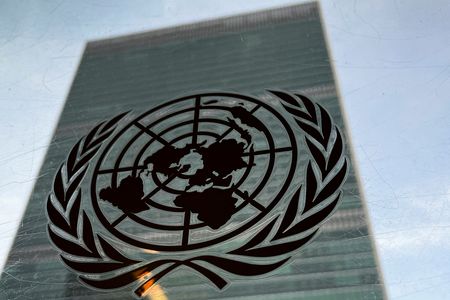

Ugandan diplomat Olara Otunnu has officially entered the contest to lead the United Nations, becoming the seventh person seeking to replace Secretary-General Antonio Guterres when he leaves office at the end of this year.
Otunnu, who previously served as a U.N. under-secretary-general and special representative for children and armed conflict, was formally nominated by Uganda in a letter delivered Friday to the presidents of both the U.N. General Assembly and Security Council.
At 75 years old, Otunnu is the oldest among the current candidates. Guterres, whom he hopes to succeed, served two full five-year terms in the role.
Whoever takes over will inherit a challenging situation — an organization facing criticism over its declining influence, calls for reform of what many describe as an overgrown and expensive bureaucracy, and pressure to reduce overlap among its numerous agencies.
In a statement outlining his vision for the role, Otunnu emphasized the importance of continuing to reform the institution and said that addressing major international conflicts would be his top priority from day one. He also said he would work to create a governing body to oversee the U.N.’s work on artificial intelligence, and called for climate action that does not come at the expense of economic growth.
The other six candidates in the race include Rafael Grossi of Argentina, who currently serves as director-general of the U.N.’s International Atomic Energy Agency; former Chilean President Michelle Bachelet; Rebeca Grynspan, who previously served as vice president of Costa Rica; Maria Fernanda Espinosa, a former foreign affairs and defence minister of Ecuador; Carolyn Rodrigues-Birkett, a former foreign minister of Guyana; and Macky Sall, a former president of Senegal.
The formal selection process is set to kick off this week, with the 15-member Security Council conducting straw polls to begin narrowing the field. Additional candidates may still enter the race.
According to diplomats, no clear frontrunner has emerged, though there is a widely held belief that it may be Latin America’s turn to lead the organization, along with growing support for placing a woman in the role for the first time.
Analysts note that the path to success will largely depend on a candidate’s ability to avoid being vetoed by any of the five permanent Security Council members — particularly China, Russia, or the United States.