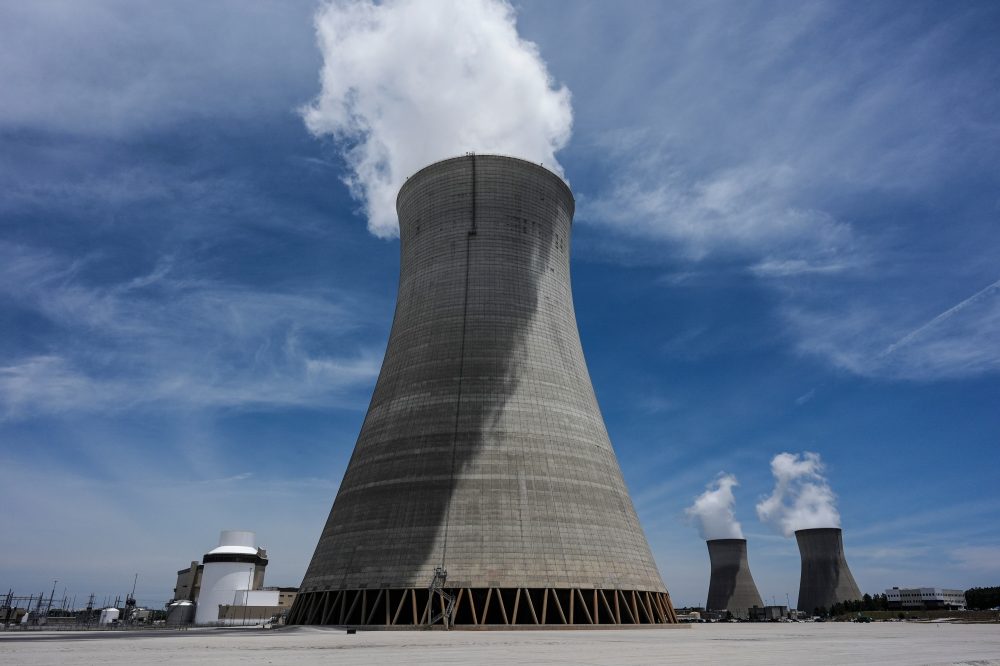

A cornerstone of radiation safety that has been in place for half a century may soon be a thing of the past. The Nuclear Regulatory Commission is proposing to do away with a guiding principle that has long required facilities handling radioactive materials to keep radiation exposure as low as reasonably possible.
Known as ALARA — which stands for “as low as reasonably achievable” — the principle has applied to nuclear power plants, hospitals, and academic institutions that work with radioactive materials. The NRC’s proposal would eliminate this standard while leaving in place a separate cap on the maximum amount of radiation people can be exposed to.
For decades, these two standards have worked side by side. The dose limits define the ceiling for how much radiation members of the public and nuclear workers can receive, while ALARA pushed facilities to stay well below that ceiling whenever practical. Scientific research has consistently shown that radiation exposure raises the risk of cancer, and that risk grows as the dose increases.
The maximum dose limits themselves are not being changed. Instead, the NRC — the agency responsible for regulating civilian nuclear technology and radioactive materials — wants to replace ALARA with what it calls a “graded approach.” Under this system, the level of radiation protection required would depend on how close a facility is getting to the dose limits. As exposures approach those limits, more rigorous safety measures would kick in.
The proposal comes as President Donald Trump is pushing to quadruple the country’s domestic nuclear energy output, driven by soaring electricity demand tied to the growth of data centers and artificial intelligence. Overhauling the NRC is part of his strategy to speed up the development of new nuclear reactors. An executive order he issued last year directed the agency to adopt radiation limits grounded in science.
The Department of Energy, which sets national energy policy, has already stopped using the ALARA standard. The NRC expects to finalize its updated radiation protection rules within the coming months.
NRC Chairman Ho Nieh pushed back against the idea that the agency is weakening safety standards. “We’re just removing the ambiguity,” he told reporters. “But the standard for exposure to workers and the public, those are not changing. We’re just putting in place greater clarification.”
Nieh said he does not anticipate major changes for the country’s existing fleet of large, traditional nuclear reactors. However, he noted that companies building newer, smaller reactors could move more quickly if the radiation protection requirements are spelled out more clearly.
The NRC pointed out that exposure limits are set well below levels known to cause health problems, and that remaining standards and industry practices are expected to keep actual doses far beneath those limits. There is also a financial incentive to keep doses low — working in high-radiation areas is more costly and time-consuming, since access must be restricted and additional monitoring surveys are required.
The nuclear industry’s trade organization is supportive of the change. “We will always continue to look at what can we do to reduce the dose to workers, and maintain our doses to the off-site public as low as possible,” said Doug True, chief nuclear officer at the Nuclear Energy Institute. “It’s not like we’re just going to throw open the doors and let everything run up to the limits.”
Justin Friedman, a nuclear energy consultant who previously spent three decades at the U.S. Department of State, argued that ALARA created a “moving target” for regulators. Scrapping the rule, he said, would allow NRC scientists to make more rational decisions about acceptable levels of manageable risk.
But Edwin Lyman, director of nuclear power safety at the Union of Concerned Scientists, raised concerns that parts of the NRC’s proposal could allow radiation doses to rise in certain situations — even if they remain under the overall cap. He specifically highlighted a proposed revision to standards governing the release of radioactive particles into the environment.
Currently, the public is limited to 100 millirem of radiation exposure per year. For context, a typical chest X-ray delivers about 10 millirem. The NRC is proposing to raise its radionuclide emissions standard from a conservative 10 millirem per year to 25 millirem per year, based on a hypothetical person living at the edge of a nuclear plant’s property. The agency says real-world exposures would remain much lower because people generally live farther away and radiation disperses through air and water.
Lyman argued the NRC should work to improve ALARA rather than eliminate it. He said the standard has become a political target because some people wrongly believe it requires radiation to be kept as low as possible regardless of cost — when in fact it allows for practical tradeoffs.
Katy Huff, a former U.S. assistant secretary for nuclear energy and now a professor and department chair at the University of Wisconsin-Madison, said the ALARA requirement can sometimes be difficult to regulate. She said added clarity would improve the regulatory environment without putting the public at risk. However, she said she had expected the NRC to clarify the meaning of “reasonable” within ALARA rather than scrap it entirely, and she remains open to being persuaded that the graded approach will be equally effective.
The National Council on Radiation Protection and Measurements, a body chartered by Congress to offer independent scientific guidance, has not yet taken an official position. Council president Kathryn Higley said she personally sees merit in some parts of the NRC’s 180-page proposal but finds other elements troubling.
Higley, a professor emeritus at Oregon State University, said regulators need to look at the full picture when managing risk. She gave the example of a nuclear plant worker entering an area with airborne radioactive materials — under ALARA, that worker might be required to wear full protective gear including a respirator. While that limits radiation exposure, it also slows the worker down and could lead to dangerous heat stress, which might pose a greater health risk than a low dose of radiation.
One of her key concerns with the proposal is that it keeps the current annual dose limit for adult radiation workers at 5 rem, or 5,000 millirem, per year. With ALARA in effect, average worker doses have stayed well below that threshold. The International Commission on Radiological Protection recommends an occupational dose of no more than 2 rem per year on average — a standard the NRC previously decided not to adopt because workers were already being exposed to less than that, and updating the regulations would be costly. Higley said if ALARA is eliminated, the U.S. may need to bring its standards in line with the international benchmark.