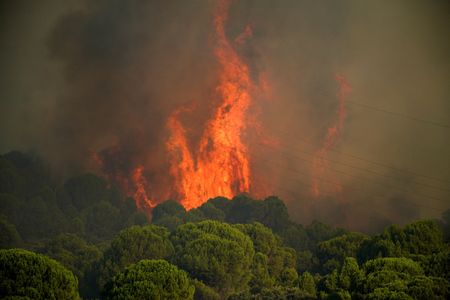

Wildfires are bearing down on the edges of Bordeaux, the storied French city at the center of the country’s wine country, as both France and Spain fight devastating blazes that have uprooted hundreds of thousands of residents.
French authorities report that roughly 220,000 people have been forced to leave their homes, while in Spain, more than 75,000 residents have been evacuated and approximately 30,000 additional people have been told to stay indoors and shelter where they are.
In France, the fires have already torn through the Cap Ferret peninsula along the Atlantic coast — a well-known vacation spot — and are spreading through the countryside surrounding Bordeaux. Emergency crews are working urgently to stop the flames from entering the regional capital.
Bordeaux Mayor Thomas Cazenave addressed the threat on Sunday, saying, “The fire is about 15 kilometres away from the entry points to the main city.” Interior Minister Laurent Nunez echoed those concerns, posting on X that conditions remained “difficult.”
In Spain, Prime Minister Pedro Sanchez traveled to fire-affected areas in Avila, one of three central provinces — along with Madrid and Toledo — where blazes have already consumed more than 45,000 hectares, or roughly 111,000 acres.
Speaking about the ongoing crisis, Sanchez said, “We have a window of opportunity this weekend to fight the wildfire and, therefore, to protect lives, protect population centres and, ultimately, to bring this very serious wildfire under control as far as possible.”
Spain is simultaneously dealing with a separate fire in the eastern province of Castellon, which has burned through more than 4,300 hectares. The regional leader of Valencia, Juanfran Perez, spoke to reporters near the scene, warning that “the fire is out of control — it’s very difficult to extinguish from a technical standpoint, especially because of the adverse weather conditions that will continue throughout the day.” That blaze has now spread into the Sierra de Espadan natural park, which is home to large forests of pine trees and cork oaks.
Scientists have linked these fires to the combination of prolonged drought and back-to-back heatwaves, conditions they say have been made worse by climate change. In both Bordeaux and Avila, July high temperatures have averaged 32 degrees Celsius — about 90 degrees Fahrenheit — which is nearly 6 degrees Celsius above the historical average for that month based on data from 1961 to 1990, according to the Reuters Climate Monitor.
Help has been arriving from across Europe. Under the European Union’s civil protection framework, Greece and Italy have each contributed two Canadair firefighting aircraft to Spain, while Portugal has sent more than 100 military personnel along with equipment. Spain’s interior ministry announced on X that two additional planes from Turkey would arrive “as soon as possible.”
Sanchez announced that his government plans to declare a civil protection emergency on Tuesday for the central provinces hit hardest by the fires, a step that would release additional recovery funding. He also noted that more than 150,000 hectares have burned across Spain since January — six times the area that burned during the same period last year.
While Spain has long dealt with summer wildfires, Sanchez said the growing size and ferocity of these blazes, driven by increasingly extreme weather, demands that policy responses be rooted in climate science.
Meanwhile, in the Scottish Highlands, up to 500 firefighters have been working since July 15 to contain a large fire inside Cairngorms National Park. Residents of the village of Nethy Bridge, who were evacuated Friday evening after weather conditions shifted, were permitted to return home late Saturday.
Pope Leo, speaking from his summer residence of Castel Gandolfo outside Rome, offered words of comfort and support. “In light of the devastating wildfires that have affected various areas of France and Spain in recent days, I wish to express my solidarity and closeness, and I invite everyone to pray for those affected and for the rescue workers engaged in relief efforts,” he said.