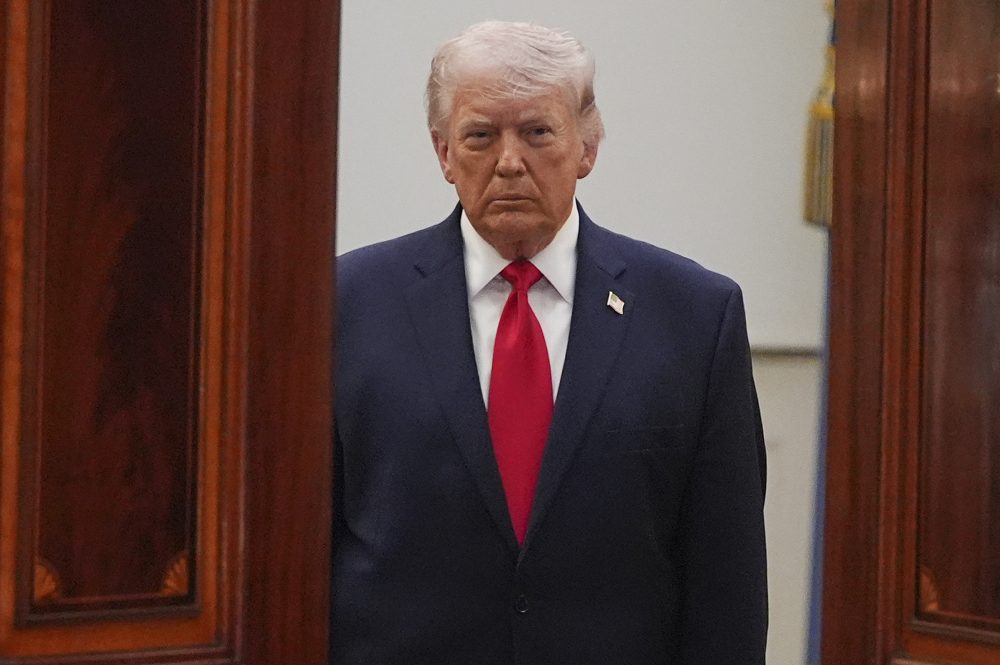

WASHINGTON (AP) — President Donald Trump spoke with absolute confidence during his first live television address to the nation regarding the conflict with Iran.
“We’ve beaten and completely decimated Iran,” he declared during his Wednesday evening speech from the White House. “They are decimated both militarily and economically and in every other way.”
He continued: “Their radar is 100% annihilated. We are unstoppable as a military force.”
However, his unwavering confidence is now meeting the unpredictable realities of military conflict.
The downing of an American fighter aircraft in Iran on Friday served as a stark reminder of warfare’s inherent risks, leading to a rescue mission that successfully recovered one crew member. Iranian state television also reported that another U.S. plane was struck by their air defense systems, just days after Trump claimed Iran possessed “no anti-aircraft equipment.”
The Republican commander-in-chief, who remained out of public view Friday, faced yet another instance where his triumphant war descriptions seemed disconnected from reality.
Trump has shown astonishment at Iran’s decisions to attack neighboring Gulf states. He has found it difficult to address Iran’s actions that have largely blocked the Strait of Hormuz, creating disruptions in worldwide oil distribution and causing gasoline prices to spike across America. His attempts to gain international support for reopening this crucial shipping route have been rejected, with some allies choosing to wait until hostilities cease before addressing the situation, while others openly criticize a conflict Trump decided to begin.
Throughout his career, Trump has depended on unwavering self-assurance to navigate both business and political challenges, declaring during his 2016 presidential campaign that “I alone can fix it.” This mindset has frequently resulted in an independent approach where Trump believes only he possesses solutions to global chaos and Washington dysfunction. This presidential philosophy has justified his domestic executive actions and international tariffs affecting worldwide commerce.
However, the Iranian conflict, which he launched with Israel while bypassing other allies and Congress, presents an unprecedented challenge. For Trump, the situation has evolved beyond “America First” to America isolated, with him as the primary decision-maker.
“You can be the most assertive, aggressive president in the world but you don’t control what happens overseas,” stated Julian Zelizer, a history professor at Princeton University.
As the conflict reaches its sixth week, this truth is becoming increasingly clear. Trump dedicated much of his second term’s first year implementing trade sanctions as leverage to force other nations to comply with his demands. Now, during wartime, some longtime American partners are becoming more vocal in their opposition.
French President Emmanuel Macron stated this week that the United States “can hardly complain afterward that they are not being supported in an operation they chose to undertake alone.”
“This is not our operation,” he declared.
British Prime Minister Keir Starmer has maintained his position refusing involvement in the war despite intense pressure from Trump. France and the United Kingdom are spearheading initiatives to reopen the strait after fighting concludes.
Domestically, even some Republicans are emphasizing the importance of maintaining robust international partnerships. Following Trump’s threat to exit NATO this week, Senate Majority Leader John Thune, R-S.D., indicated insufficient Senate support for such action.
“We got an awful lot of people who think that NATO is a very critical, incredibly successful post-World War II alliance,” Thune commented regarding previous Republican discussions on the matter. “I think in the world today, you need allies.”
Trump avoided mentioning NATO withdrawal during his White House remarks.
John Bolton, who served as Trump’s national security adviser during his first term before becoming a critic, described the current administration’s failure to consult allies before entering war as a “serious mistake.”
“If you don’t build your coalition before the war, it’s pretty tough to do it while you’re in it,” Bolton explained. He faces federal charges for allegedly sharing classified information via email with family members and storing top secret documents at his Maryland residence, to which he pleaded not guilty last fall.
Bolton also warned European leaders against automatically opposing Trump due to frustration over his lack of consultation, calling such behavior “juvenile and petulant.”
Trump’s preference for independent action extends beyond military matters.
This week alone, he declared congressional approval unnecessary for a White House ballroom he wants constructed, despite a judicial ruling. He issued an executive order establishing a national registry of verified eligible voters and limiting mail-in ballot access.
In an unprecedented move for a sitting president, he attended a Supreme Court session where his administration defended an executive order limiting birthright citizenship.
Yet Trump’s independent domestic strategy is also encountering obstacles.
The Supreme Court invalidated his comprehensive tariff initiative. Democrats immediately filed court challenges to his voting executive order, and despite his courtroom appearance, the justices appeared doubtful about his attempt to eliminate constitutional birthright citizenship protections.
The ballroom situation remains unresolved.
During private remarks at a White House Easter gathering this week, Trump — always the developer — appeared to express frustration with his position’s limitations.
“I’m such a king I can’t get a ballroom approved,” he told the laughing audience of Cabinet officials and religious leaders. “I’m doing a lot. But I could be doing a lot more if I was a king.”