
WASHINGTON — President Donald Trump launched military action against Iran without seeking input from international partners, but now he’s demanding global assistance to address the unplanned consequences of the conflict.
The president is displaying mounting frustration with European nations’ reluctance to back the U.S.-Israeli military campaign. He’s also downplaying how his decisions have disrupted worldwide oil supplies through the vital Strait of Hormuz, a waterway Iran has successfully blocked despite Trump’s claims that Iran has been “decimated.”
Trump began Tuesday morning with angry social media posts targeting two key American allies — France and Britain — while telling the world to “Go get your own oil!” and “start learning how to fight for yourself.”
“All of those countries that can’t get jet fuel because of the Strait of Hormuz, like the United Kingdom, which refused to get involved in the decapitation of Iran, I have a suggestion for you: Number 1, buy from the U.S., we have plenty, and Number 2, build up some delayed courage, go to the Strait, and just TAKE IT,” Trump posted.
Shortly afterward, he targeted France, describing the nation as “very unhelpful” because it “wouldn’t let planes headed to Israel, loaded up with military supplies, fly over French territory.”
As Trump intensifies his criticism of NATO partners for avoiding the conflict and responding slowly to its aftermath, senior administration officials are echoing his sentiments. This pattern is generating doubt and worry about the alliance’s future, something Trump has previously questioned.
Though Trump’s scattered attacks on partners and allies have become routine and somewhat accepted, recent similar comments from key advisors including Secretary of State Marco Rubio, Treasury Secretary Scott Bessent and Defense Secretary Pete Hegseth indicate the administration’s anti-NATO stance is strengthening — even as Trump hints at seeking a war exit sooner than expected.
Hegseth stated Tuesday that America conducted “the heavy lifting on behalf of the free world” against Iran’s threat and that nations relying on strait oil shipments should recognize that restoring maritime traffic is “not just our problem set going forward.”
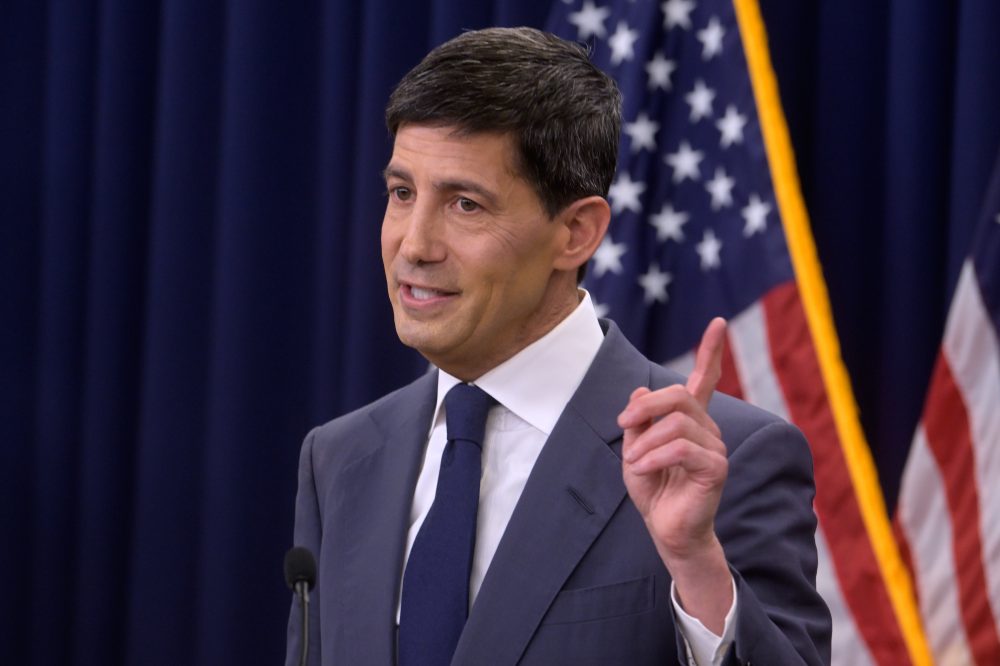
“There are countries around the world who ought be prepared to step up on this critical waterway as well,” Hegseth said at a Pentagon news conference. “It’s not just the United States Navy. Last time I checked, there was supposed to be a big, bad Royal Navy that could be prepared to do things like that as well.”
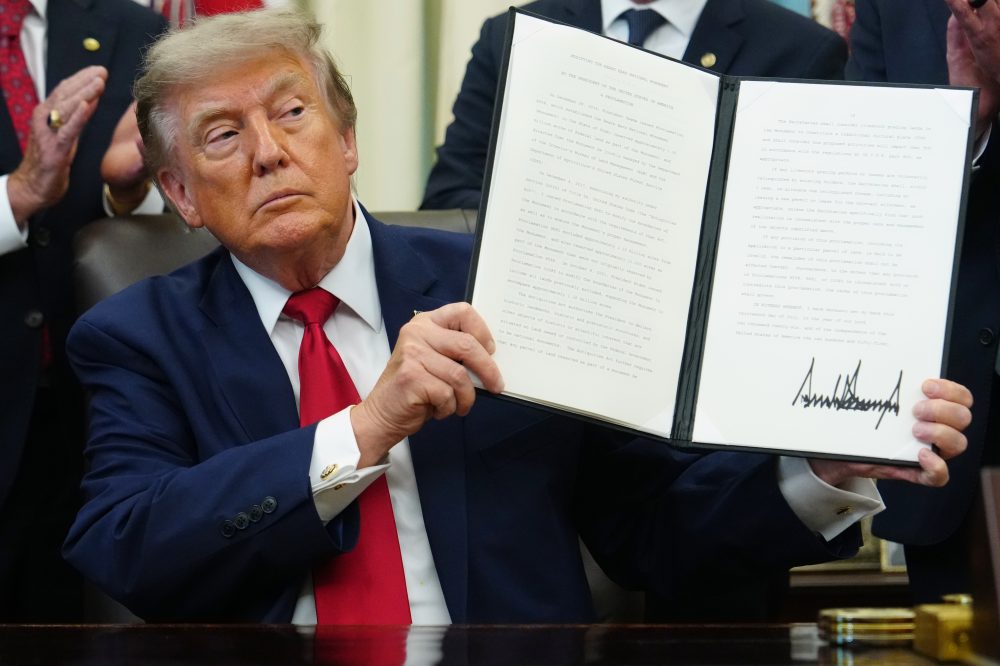
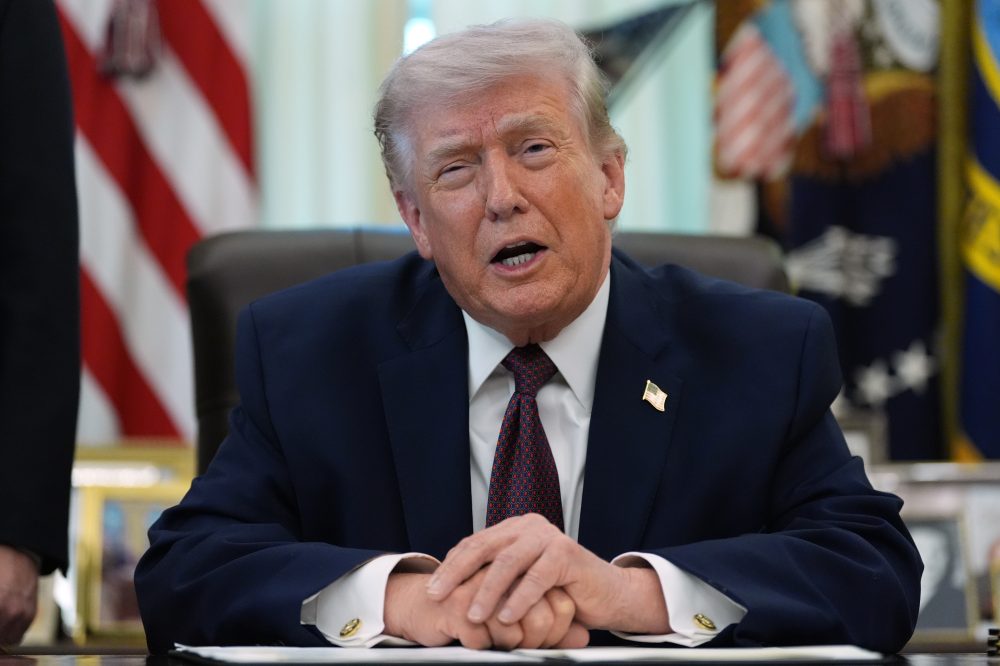
During an Oval Office meeting with reporters Tuesday, Trump said safeguarding the strait would fall to other nations and projected U.S. strikes against Iran would conclude within two to three weeks.
“That’s not for us,” Trump said. “That’ll be for France. That’ll be for whoever’s using the strait.”
Financial markets responded positively to Trump’s aggressive statements, including a CBS News interview where he indicated he wasn’t ready to withdraw U.S. forces positioned near the strait but would soon. The S&P 500 jumped 2.9% in its largest increase since last spring, while the Dow industrials climbed over 2.5% as Wall Street shifted from war concerns to optimism about potential resolution.
However, the president’s attacks, especially weeks of NATO criticism, have made Europe anxious about implications for the military partnership, already strained by Trump cutting U.S. military aid to Ukraine and threatening to take Greenland from ally Denmark.
NATO members Spain and France have blocked or limited American use of their airspace or shared military installations for the conflict. These nations, alongside others, have agreed to participate in an international coalition to maintain Strait of Hormuz access after fighting ends, though their specific roles and the coalition’s overall stability remain uncertain.
France and Britain attempted to minimize Trump’s verbal attacks Tuesday, with Macron’s office expressing bewilderment: “France has not changed its position since day one.”
British Defense Secretary John Healey described America as a crucial ally despite his counterpart’s criticism and emphasized Britain’s contributions to helping Gulf states defend against Iranian strikes.
During a Qatar visit, Healey announced Britain would deploy additional missile and air defense systems to Bahrain, Kuwait and Saudi Arabia while extending Typhoon fighter jet operations in Qatar.
“The U.S. is a uniquely close ally to the U.K.,” Healey said. “We do things as two nations that no other militaries or intelligence services do.”
He explained his role during the conflict was ensuring Britain protects its citizens and partners, adding that “we are.”
Although Europeans have clarified this isn’t their conflict, they have compelling reasons beyond securing the strait to prevent Iranian escalation, experts note.
Over ten years of Syrian civil war forced more than 5 million people to flee, with many seeking European asylum, creating social and political consequences across the continent.
With the Houthis, Iran’s allied militant organization in Yemen, firing their initial war missiles at Israel this weekend and threatening Red Sea disruption — a vital European trade route — European leaders have numerous incentives to use available influence encouraging Trump to end the conflict.
“I think this is a true opportunity for Europe to show the Gulf that it can be a partner,” said Yasmine Farouk, Gulf and Arabian Peninsula Project director at the International Crisis Group. “And I think they have already been showing that in the defense (weapons they’ve provided to Gulf nations), they need now to make it more into the diplomatic side in terms of offering offramps and working on a deal.”
Europe could effectively influence Trump by emphasizing the war’s economic impacts, promoting diplomacy and maritime stabilization missions connected to ceasefires, and creating “an off-ramp that flatters Trump’s vanity,” Jeremy Shapiro, U.S. programs director of the European Council on Foreign Relations, wrote in Tuesday analysis.
“Trump will claim victory no matter how this war ends,” Shapiro wrote. “Europeans should want that to happen sooner rather than later.”