
CAIRO (AP) — President Donald Trump has called upon international partners to deploy naval vessels to protect the strategically important Strait of Hormuz, as Iran issued unprecedented evacuation orders for three ports in the United Arab Emirates amid continuing hostilities with the United States and Israel.
This marks the first instance where Iran has directly threatened civilian infrastructure belonging to a neighboring nation during the current conflict.
Iranian officials accused the United States of utilizing “ports, docks and hideouts” within the UAE to launch attacks against Kharg Island, which houses Iran’s primary oil export terminal, though no evidence was provided to support these claims. Tehran called for civilians to evacuate areas where it claims American forces are positioned.
The humanitarian situation in Lebanon continues to deteriorate, with casualties exceeding 800 deaths and approximately 850,000 people forced from their homes as Israeli forces conduct extensive operations targeting Iran-supported Hezbollah fighters.
Iranian Foreign Minister Abbas Araghchi stated that American forces struck both Kharg Island and Abu Musa Island from UAE locations in Ras Al-Khaimah and near Dubai, describing the situation as perilous. He added that Iran “will try to be careful not to attack any populated area” in those regions.
U.S. Central Command declined to comment on Iran’s allegations. UAE presidential diplomatic advisor Anwar Gargash responded on social media, stating his nation maintains the right to self-defense while “still prioritizes reason and logic, and continues exercising restraint.”
Throughout the conflict, Iran has launched numerous missiles and drones toward Gulf Arab nations, claiming to target American assets despite reported impacts on civilian facilities including airports and oil installations.
Regarding maritime access, Araghchi declared the Strait of Hormuz remains closed only to “those who are attacking us and their allies.”
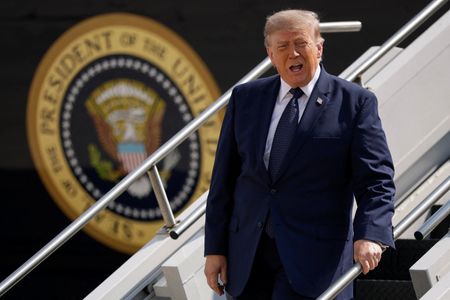
With worldwide concerns mounting over petroleum costs and availability, Trump announced Saturday his expectation that China, France, Japan, South Korea, Britain and other nations would contribute warships to maintain the strait “open and safe.” The United Kingdom responded by indicating discussions with partners about various “options” for protecting maritime commerce.
In a social media statement, Araghchi called on regional neighbors to “expel foreign aggressors” while characterizing Trump’s appeal as “begging.”
Iran’s unified military leadership repeated Saturday its warning to target American-connected “oil, economic and energy infrastructures” throughout the region should the Islamic Republic’s petroleum facilities face attack.
According to Iran’s semi-official Fars news agency, the Kharg Island strikes did not harm oil infrastructure, instead hitting an air defense installation, naval facility, airport control tower and an offshore petroleum company’s helicopter storage building.
The Pentagon announced Saturday the identities of six military personnel killed when their refueling aircraft crashed Thursday during Iran-related operations.
The fallen service members were identified as Major John A. Klinner, 33; Captain Ariana G. Savino, 31; Technical Sergeant Ashley B. Pruitt, 34; Captain Seth R. Koval, 38; Captain Curtis J. Angst, 30; and Technical Sergeant Tyler H. Simmons, 28.
The crash occurred in western Iraq following an undisclosed incident involving two aircraft in “friendly airspace,” according to U.S. Central Command. The second aircraft landed without incident.
A missile attack struck a helicopter landing area within the U.S. Embassy grounds in Baghdad Saturday. No group immediately took responsibility for the strike. The embassy facility, among the world’s largest American diplomatic installations, has faced repeated attacks from rockets and drones launched by Iran-affiliated militant groups.
The State Department has again advised American citizens in Iraq to depart “now” by land transportation, as commercial aviation remains unavailable. Officials noted that Iran and Iran-aligned armed groups “may continue to target” U.S. nationals, interests and infrastructure.