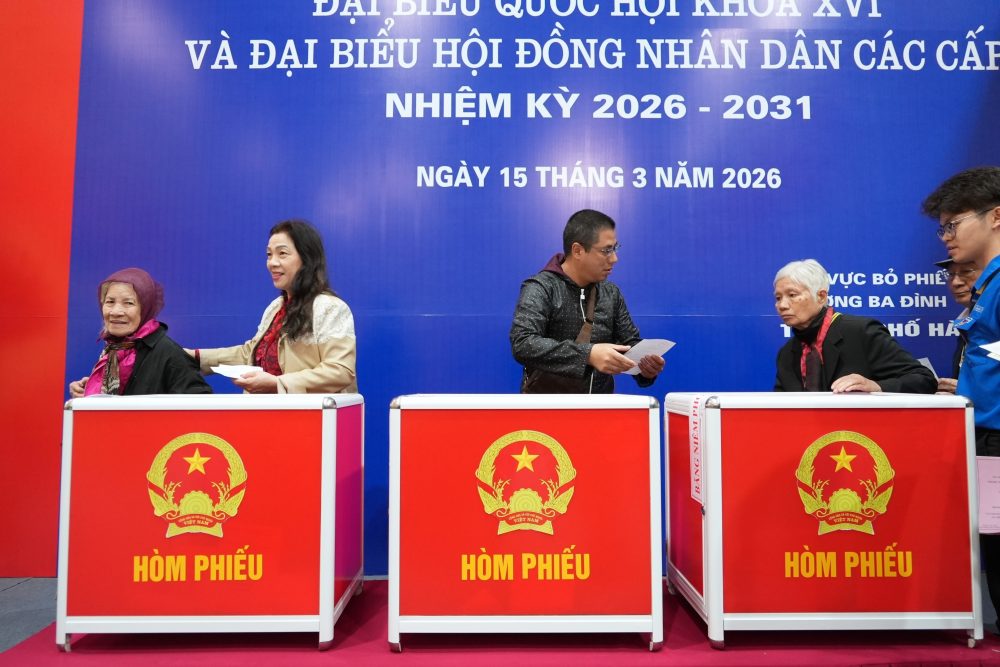

HANOI, Vietnam (AP) — Vietnamese citizens participated in legislative elections Sunday to choose representatives for a new National Assembly, occurring two months following the Communist Party’s decision to keep To Lam in the nation’s highest political position.
Approximately 79 million eligible citizens nationwide had the opportunity to select 500 lawmakers from a pool of 864 candidates for the National Assembly, which serves as a legislative body that typically endorses party decisions. The Communist Party screens and approves all candidates beforehand, guaranteeing the legislature stays in line with party objectives.
Political activities remain under strict Communist Party oversight, with officials maintaining that unified leadership enables the nation to focus on long-range development objectives without political interference.
The newly elected National Assembly will likely focus on carrying out policy initiatives established during the recent congress, emphasizing continued economic expansion and maintaining political order.
These elections occurred after the Communist Party’s national congress in January, a significant political gathering conducted every five years to determine leadership positions and establish policy directions. During this congress, Lam secured reelection as general secretary, which represents the highest authority within the political framework.
“We have the people’s support in this election,” Lam stated following his vote in Hanoi, characterizing the election as a national celebration where citizens select representatives to oversee development and protect the nation’s sovereignty and stability.
The Vietnamese economy has experienced significant expansion during the previous decade, fueled by export manufacturing, international investment, and its increasing importance in worldwide supply networks. The nation has established itself as an alternative manufacturing destination as businesses seek options beyond China, drawing major electronics and clothing producers.
Officials have established an aggressive goal of achieving 10% or greater yearly economic expansion during the upcoming five years, positioning private enterprise as central to its development approach in a significant change for the communist nation. Government planners are now adjusting the economy to advance toward more valuable industries, updated manufacturing processes, and expanded implementation of science, technology, and digital innovations.
Vietnamese officials also confront difficulties as the country’s export-focused economy deals with uncertainty from increasing trade conflicts, including tariffs implemented by U.S. President Donald Trump.
Participation rates in Vietnamese elections typically remain elevated, frequently surpassing 90%, with voting locations established in urban areas, countryside communities, and isolated regions to promote citizen involvement.
“As a voter in this election, I believe I will be able to choose candidates with morals, dedication and competence to serve the country, bringing development and prosperity to our country and our people,” stated retired official Doan Thi Bich.
The newly elected National Assembly will likely hold its initial session in April to officially confirm important government positions and start executing the policy framework established during the party congress.