
A federal prosecutor in Texas stepped forward Thursday evening with fresh details about the circumstances leading up to the fatal shooting of a Mexican national by an immigration officer earlier this month — and those details appear to conflict with the government’s initial account of what happened.
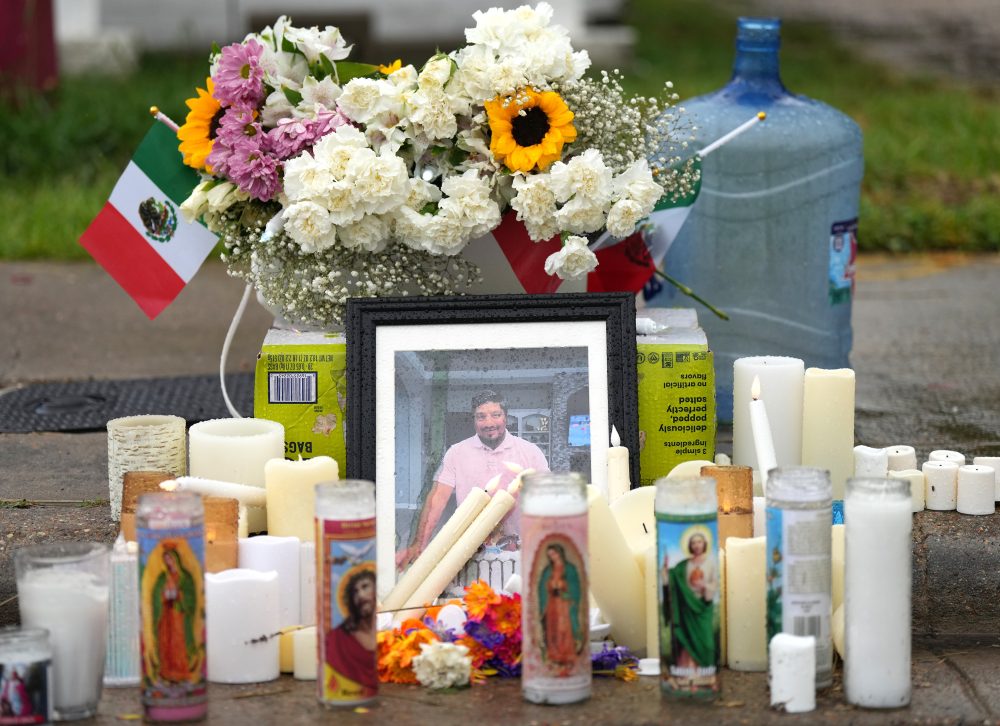
Lorenzo Salgado Araujo, 52, was shot and killed by a U.S. Immigration and Customs Enforcement officer on July 7 while he was on his way to a construction job site in Houston with three coworkers, including his own brother. The shooting ignited protests across the city, with Salgado Araujo’s family demanding answers. They describe him as a dedicated father who had been living in the United States for 35 years and was close to securing legal status.
The incident occurred just days before two other men in Florida and Maine died during immigration enforcement operations under President Donald Trump’s crackdown on undocumented immigration, drawing increased attention to the tactics used by the Department of Homeland Security.
Aaron Reitz, the U.S. attorney for the Southern District of Texas, revealed Thursday for the first time that ICE officers had actually been looking for two Guatemalan men who were potentially facing deportation. Those men were reportedly driving a van similar to the one Salgado Araujo was in when he was killed. An earlier statement from DHS, released the same day as the shooting, had indicated that Salgado Araujo himself was the target of the immigration operation and was in the country without legal authorization.
Reitz stated that the officers believed Salgado Araujo and his passengers matched the description of the Guatemalan men they were attempting to locate.
According to Reitz, four officers in two separate law enforcement vehicles first tried to pull over Salgado Araujo’s van using their emergency lights. Salgado Araujo responded by making a U-turn and driving over a median to avoid being stopped.
Later that same morning, officers encountered the van a second time and moved to surround it. Two of the four agents exited their vehicles and ordered Salgado Araujo to put the van in park. Just moments before the fatal shot was fired, one of the agents was described as being “partially inside the van or immediately next to it” when Salgado Araujo attempted to reverse and then move forward again, Reitz said.
The Department of Homeland Security’s original statement accused Salgado Araujo of using his vehicle as a weapon, saying he rammed it into a law enforcement vehicle and that an officer fired in self-defense. However, the new statement from the U.S. attorney’s office made no mention of any collision between the van and a law enforcement vehicle, and did not explicitly state that the officer believed his life was in danger. No injuries among the officers have been reported.
The latest statement also did not identify the officer who fired the fatal shot, nor did it clarify whether that officer was the same person who was standing beside or partially inside the van at the time.
Reitz added that officers reported seeing “several small bags of a white, crystal-like substance inside the van” in plain view, and that the FBI later carried out a search warrant to investigate whether the substance was illegal. Salgado Araujo’s brother, who was present in the van during the shooting, has remained in ICE custody since the incident. His attorney has said the white substance was actually a salt mixture the men used as electrolytes to stay hydrated while performing strenuous outdoor labor in the intense Texas heat.
Unlike other high-profile deaths involving federal immigration officers, very few photos or videos from the scene of the Houston shooting have surfaced on social media.