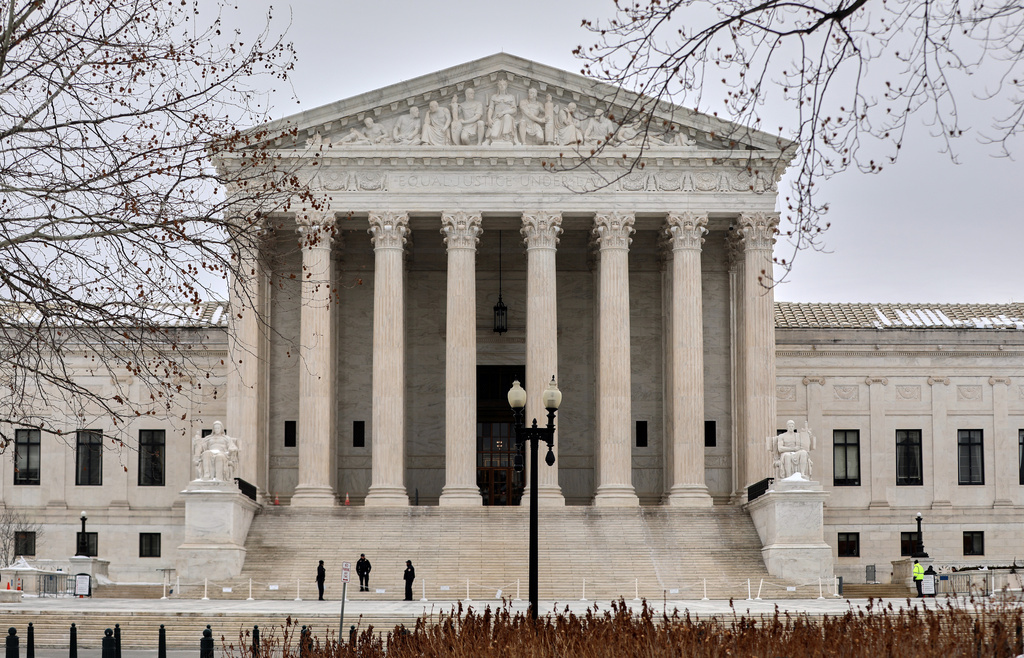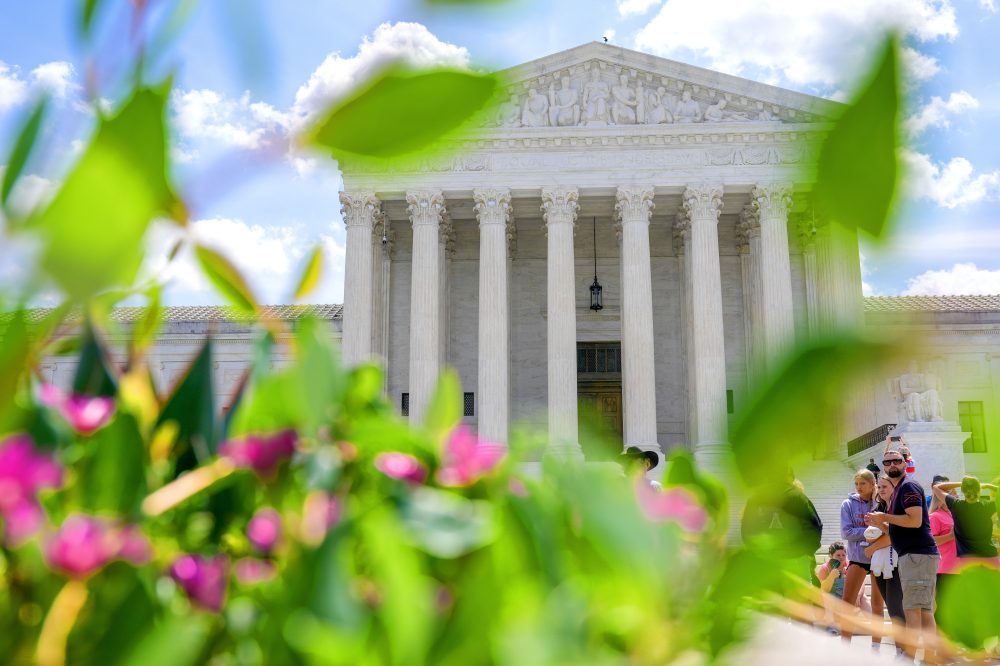

WASHINGTON — The Trump administration has taken its fight over mail-in voting to the nation’s highest court, filing an emergency appeal Monday asking the Supreme Court to let a presidential executive order take effect while legal challenges continue.
The appeal follows a ruling by a federal appeals court that kept in place a lower court order blocking the president’s directive in nearly half the country ahead of November’s midterm elections.
The Justice Department is asking the Supreme Court to allow federal agencies to begin carrying out the changes outlined in the order while the lawsuits work their way through the courts.
The move comes shortly after President Donald Trump delivered a primetime televised address in which he continued his long-running effort to cast doubt on the integrity of U.S. elections. The mail-in voting dispute is expected to be one of several election-related legal battles to reach the Supreme Court before the high-stakes November contest.
Trump’s March executive order directed the government to build a “state citizenship list” of voters who are eligible to cast ballots, and instructed the U.S. Postal Service to deliver mail ballots only to individuals appearing on that list. The order also calls on U.S. Citizenship and Immigration Services and the Social Security Administration’s commissioner to help construct that federal voter list.
Democratic officials from 23 states and the District of Columbia filed lawsuits challenging the order, arguing that the U.S. Constitution places the authority to set election rules with states and Congress — not the president. Their legal teams have warned the proposed changes could be exploited and lead to widespread confusion.
A federal judge in Massachusetts blocked the order from taking effect in the states that sued, and a panel of the 1st U.S. Circuit Court of Appeals left that block in place over the weekend.
In the appeal to the Supreme Court, the administration contends that Trump’s order merely sets out “general policy guidance” and does not directly control how states conduct their elections. Solicitor General D. John Sauer called the lower court’s ruling “indefensible” and asked the justices to freeze it.
“And the injunction is especially indefensible because the agencies are still deliberating over how (if at all) to implement the Order, yet the district court preemptively decided that whatever the agencies may choose to do will necessarily be unlawful,” Sauer wrote in the filing.
Sauer pressed the court to act quickly, warning that any new election policies would need to be in place by as early as August to have any practical impact on the November elections. A response to the appeal is due August 3.
Trump has promoted the changes as a way to prevent non-citizens from casting ballots. However, noncitizen voting has been documented as extremely rare, and it is a felony offense that can carry the penalty of deportation.
U.S. District Court Judge Indira Talwani in Boston, who was nominated to the bench by Democratic President Barack Obama, agreed in June to halt the order’s implementation ahead of the November 3 elections.