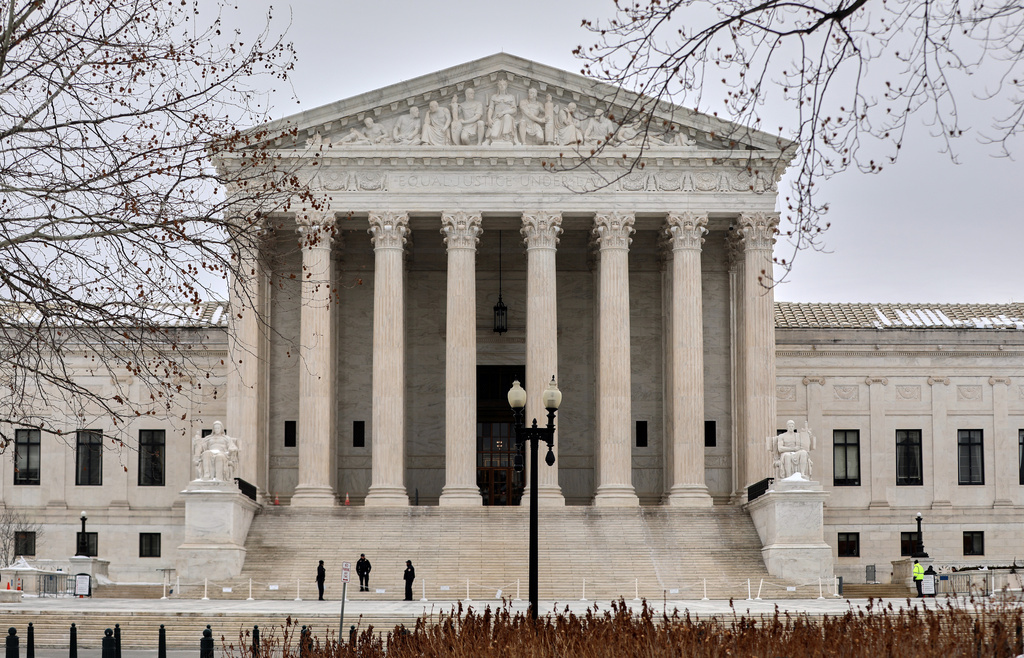

The Trump administration is calling on the U.S. Supreme Court to lift roadblocks that have prevented a presidential executive order from taking effect — one that would significantly reshape how mail-in voting works ahead of the November midterm elections. Specifically, the Justice Department is asking the nation’s highest court to put lower-court rulings on hold so the policy can be implemented while ongoing lawsuits work their way through the legal system.
At the core of the executive order, which was issued in March, is the creation of a so-called “state citizenship list” — a federally maintained roster of voters deemed eligible to cast ballots. Under the plan, U.S. Citizenship and Immigration Services and the Social Security Administration would jointly compile that list, and the U.S. Postal Service would then be restricted to delivering mail ballots only to individuals whose names appear on it. The administration frames this as a security-first approach aimed at reducing opportunities for fraud, minimizing confusion, and drawing a sharper line between those legally allowed to vote and everyone else.
Supporters of the president argue that elections form the very backbone of self-governance. In their view, a ballot that isn’t secure, isn’t reliably delivered, or isn’t limited to eligible citizens casts doubt over every election outcome. The administration maintains its intent is not to disadvantage lawful voters, but rather to make certain that ballots only reach those who have a legal right to them.
While noncitizen voting is acknowledged to be rare, backers of the order contend that rare does not mean impossible — and that public confidence in elections cannot withstand even the appearance of uncertainty.
The executive order also calls for technical safeguards, including the use of secure envelopes fitted with unique barcodes to allow ballot tracking. These measures, supporters say, would help prevent ballots from being lost, mishandled, or tampered with. The order also raises the possibility of withholding federal funding from states and localities that refuse to comply, which the administration characterizes as a way to encourage consistent standards nationwide.
Opposition to the plan has been fierce. Democratic officials representing 23 states and the District of Columbia have gone to court, arguing that the U.S. Constitution places authority over election rules with states and Congress — not with a president acting unilaterally through an executive order. Their legal teams warn the proposal is prone to abuse and could trigger widespread chaos.
The courts have already weighed in. A federal judge in Massachusetts halted implementation of the order for the states that brought the lawsuit, and a split panel of the 1st U.S. Circuit Court of Appeals declined to reverse that decision.
Now the administration is pressing the Supreme Court to intervene. In its filing, the administration contends the lower-court injunction was premature, arguing that courts stepped in too early while federal agencies were still working out the details of how to put the policy into practice. The Solicitor General has urged the justices to act without delay, noting that election-related changes need to be in place well before voting actually begins — not after the timeline has already become urgent.
This legal push comes on the heels of a primetime address in which President Trump renewed his longstanding questions about the integrity of U.S. elections. Legal observers note that additional voting-related court battles may be on the horizon before the midterms, and whatever the Supreme Court decides could have a direct impact on what voters experience at the ballot box and what election officials are permitted to do.
The broader conflict comes down to a fundamental disagreement: conservatives are pushing for stronger citizenship verification, standardized ballot delivery, and greater accountability, while Democrats are emphasizing constitutional boundaries, states’ rights, and concerns about sweeping changes being imposed from the federal level. A ruling from the Supreme Court is expected soon and will determine whether the administration can press ahead or whether the lower-court blocks will remain in effect.