
Six significant criminal cases are scheduled for pivotal court appearances this week, and at least four of them involve well-known celebrities — either as defendants or victims.
Singer D4vd, whose legal name is David Burke, faces a preliminary hearing in Los Angeles on Monday. Prosecutors allege Burke killed a 14-year-old girl after she threatened to expose their sexual relationship. Burke has entered a not guilty plea, and his legal team says they will mount a vigorous defense. The indie-pop artist rose to fame with his 2022 breakout track “Romantic Homicide,” and several of his songs have surpassed one billion plays on Spotify. Monday’s hearing could determine whether enough evidence exists to send the case to trial.
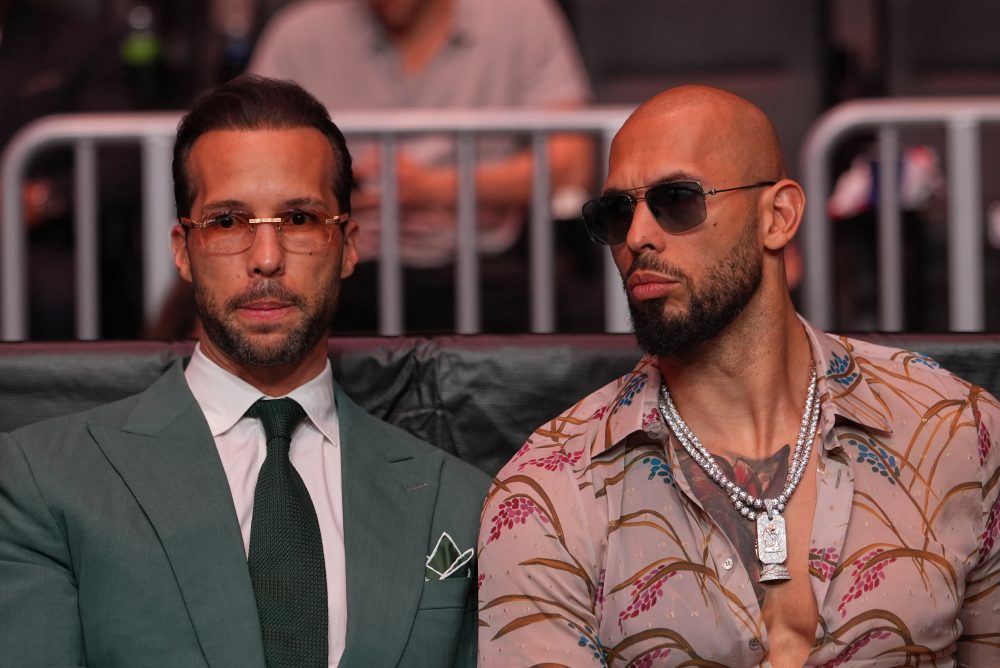
Also on Monday, social media personalities Andrew and Tristan Tate appeared before U.S. Magistrate Judge Lauren Louis in Miami, where a detention hearing was set for August 13. That hearing will decide whether the brothers remain jailed or go free during what could be a months-long extradition process. The Tates, who hold dual U.S. and U.K. citizenship and are former professional kickboxers, face rape and sex trafficking charges in the United Kingdom. Known for promoting wealth, male dominance, and misogyny across their social media platforms, the brothers have amassed millions of followers and have been outspoken supporters of U.S. President Donald Trump.
In Buffalo, New York, the federal terrorism trial of Hadi Matar continues this week. Matar was previously convicted on a state-level attempted murder charge for a 2022 attack on author Salman Rushdie at a cultural institution where Rushdie was preparing to speak about dangers facing writers and artists. Rushdie took the stand against Matar last week. Matar’s attorneys have indicated their client may testify in his own defense.
In Plymouth, Massachusetts, the murder trial of Lindsay Clancy is underway. Clancy is accused of strangling her three children — ages 8 months, 3 years, and 5 years — at her home on January 24, 2023. Her defense team argues she was suffering from postpartum psychosis, a rare mental condition tied to the hormonal changes, sleep deprivation, and stress that can follow childbirth, and that she had sought help before the deaths. Prosecutors contend the killings were carefully premeditated. A murder conviction could mean life in prison without parole, while a finding of no criminal responsibility would result in commitment to a state mental health facility. The trial is expected to run for several weeks.
In Winder, Georgia, 16-year-old Colt Gray is set to be sentenced after pleading guilty on Friday to 55 counts, including murder, stemming from a September 4, 2024, shooting at a high school north of Atlanta. The attack claimed the lives of two students and two teachers. A judge must now determine whether Gray will have any possibility of parole. A forensic psychologist who evaluated Gray at his attorney’s request testified that the teen had a chaotic and isolated upbringing. Gray’s father, Colin Gray, was separately convicted in March on charges including second-degree murder and involuntary manslaughter after prosecutors said he provided his son with the assault-style rifle used in the attack.
On Tuesday in Las Vegas, attorneys for Duane “Keffe D” Davis are scheduled to ask a judge to throw out a 2008 police interview with their client. Davis is accused of orchestrating the 1996 murder of rap legend Tupac Shakur and is set to stand trial in August. Shakur’s killing has long been considered one of the most notorious unsolved crimes in U.S. history. The case had gone cold for years until Davis began making public statements about it — including in a co-written book in which he claimed he supplied the weapon used to shoot Shakur.