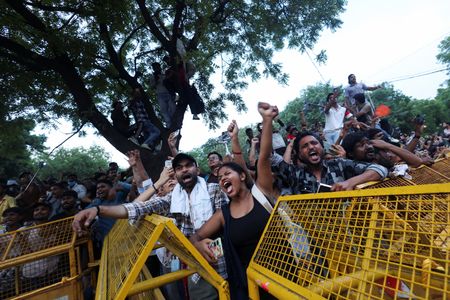

NEW DELHI — India’s federal government introduced legislation in parliament on Monday aimed at reforming the laws that govern public examinations. The move came just days after a youth protest movement known as the “cockroach” movement pressured Education Minister Dharmendra Pradhan into stepping down.
The following is a breakdown of how the movement developed into the most significant youth-led challenge Prime Minister Narendra Modi has encountered since he first took office in 2014.
May 3
Roughly 2 million students sat for the National Eligibility cum Entrance Test, known as NEET, which determines admission to undergraduate medical programs.
May 12
The federal National Testing Agency canceled the exam following accusations that test questions had been leaked in advance. A makeup exam was later held on June 21.
June 6
Abhijeet Dipke, the founder of the Cockroach Janta Party (CJP) movement, organized a street demonstration in New Delhi calling for Pradhan’s removal from office. He went on to hold additional protests in other regions of the country.
June 20
The CJP movement established a sit-in at Jantar Mantar observatory in the nation’s capital — the officially designated location for public demonstrations in Delhi — continuing to demand Pradhan’s resignation.
June 28
Activist Sonam Wangchuk joined the cause by beginning a hunger strike at the protest site.
July 18
After Wangchuk’s health deteriorated significantly, authorities took him to a hospital against his will.
July 19
The forced removal of Wangchuk from the protest site drew larger crowds, energizing the demonstration.
July 20
Tens of thousands of demonstrators attempted to march toward parliament and were met with tear gas and baton charges by police, with some clashes breaking out. CJP leaders sat down with ministers from Modi’s government, who asked for time to consult internally on the protesters’ demands.
July 21
Modi urged members of his ruling alliance to stand together in support of strict measures to address exam leaks, including punishment for those responsible and the creation of a more secure testing system. Meanwhile, opposition leaders led by Rahul Gandhi staged their own sit-in outside the gates of Modi’s official residence, calling for Pradhan’s resignation. Police briefly detained the opposition leaders before releasing them.
July 22
Opposition members of parliament disrupted legislative proceedings in solidarity with the student protesters, as demonstrations spread to other cities across the country, including the financial hub of Mumbai.
July 23
In his first direct public comments on the protests — posted on the social media platform X — Modi announced plans to establish special courts to prosecute individuals involved in leaking exam papers. The protesters rejected the proposal.
July 24
After 26 days, Wangchuk ended his hunger strike. Movement leaders held a second round of discussions with government officials, who asked for time until the following afternoon to respond to the central demand for Pradhan’s resignation.
July 25
Pradhan submitted his resignation, pointing to the ongoing situation at protest sites around the country and expressing a desire to prevent what he called “anti-national forces” from exploiting the unrest.
July 26
Modi announced the creation of a task force, led by technology entrepreneur Nandan Nilekani, to completely restructure India’s examination system.
July 27
The government formally introduced a bill in parliament proposing amendments to the laws governing public exams, including stricter penalties such as longer prison sentences and larger fines for those found guilty of misconduct.