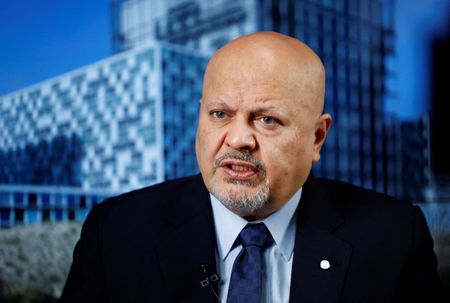

Member states of the International Criminal Court are preparing to cast votes Friday on whether to remove the court’s chief prosecutor, Karim Khan, who faces allegations of sexual misconduct — a situation that observers say has seriously damaged the tribunal’s standing on the world stage.
Khan, 56, firmly denies any wrongdoing. The timing of the vote is notable: it comes just one week after Washington announced a renewed push to dismantle the ICC, which the U.S. government has described as a threat to American sovereignty.
Mark Ellis, executive director of the International Bar Association and a longtime observer of the ICC, spoke to the gravity of the situation. “The court is already in a precarious state,” he said. He added that “the Khan situation is a separate but very significant part of the overall perception of the court’s credibility.”
The United States has stated that no diplomatic options are off the table in its campaign against the court, which has already resulted in sanctions being imposed on 11 of the ICC’s top officials.
For Khan to be removed from his position, at least 63 of the court’s 125 member states — an absolute majority — must vote in favor during a secret ballot. That vote is scheduled to take place at approximately 3 p.m. Eastern time at a meeting held at United Nations headquarters in New York.
The woman accusing Khan, a junior ICC staff member identified publicly only by her first name, Sarah, spoke out for the first time last week in a CNN interview. She described what she says was a non-consensual sexual relationship with the prosecutor. “There is no way for something to be consensual when you have such a power disparity,” she told CNN.
Attorneys representing Khan pushed back strongly, telling Reuters that he denied “any sexual relationship of any kind” with the accuser. They characterized the process leading to Friday’s vote as unlawful, procedurally unfair, and lacking evidentiary support. They also pointed to a panel of independent judges that found no evidence sufficient to establish the allegations beyond a reasonable doubt, following an investigation by United Nations investigators.
Regardless of the outcome, the vote is unlikely to resolve the deep divisions within the court. If member states choose to remove Khan, some will view it as politically motivated — particularly given that Khan had pursued arrest warrants for senior Israeli officials over alleged war crimes in Gaza. Israel, which is not a member of the court, has rejected those warrants as baseless.
A vote to remove Khan would also trigger an election for a new prosecutor, a process not expected to conclude until sometime next year. On the other hand, if Khan keeps his position, his authority would be considerably weakened and would provide additional ammunition to those seeking to undermine the court’s legitimacy.
The ICC was founded in 2002 to prosecute war crimes, genocide, and crimes against humanity. It only steps in when one of its 125 member states is unable or unwilling to pursue such prosecutions on its own. The United States has never joined the court, though the ICC’s founding statute does allow it to prosecute atrocity crimes committed on member-state territory by citizens of non-member nations.
A State Department official, speaking anonymously last week, said Washington is weighing diplomatic pressure on other countries to withdraw their membership from the court.
The European Union has reaffirmed its backing of the ICC and stated that threats against the court or its officials are unacceptable, though the EU and most member states have yet to take concrete public action to protect the institution.
The International Federation for Human Rights, a human rights organization working with victims in cases before the ICC, described the latest U.S. campaign as the most serious assault yet on the world’s only permanent international criminal court. “States created the ICC together; they now have the opportunity — and the responsibility — to defend it together,” said Secretary General Drissa Traore.