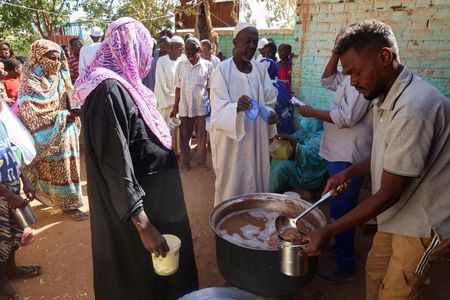

A devastating hunger crisis continues to worsen across Sudan, where millions of residents are now eating just one meal each day, according to a new study released Monday by several international humanitarian organizations.
The African nation’s brutal civil war between government forces and the paramilitary Rapid Support Forces will mark its third anniversary this Wednesday, creating massive displacement and severe food shortages throughout the region.
Five major relief organizations – Action Against Hunger, CARE International, International Rescue Committee, Mercy Corps, and the Norwegian Refugee Council – collaborated on the alarming assessment.
“In the two areas worst hit by the conflict – North Darfur and South Kordofan – millions of families can only access one meal a day,” their research documented.
The situation has become so dire that families frequently go without food for multiple days at a time, the study noted. Desperate residents have turned to consuming leaves and livestock feed just to stay alive.
Sudan’s military-backed government continues to reject claims that famine conditions exist, while the opposing RSF forces deny causing starvation in territories they control.
Current statistics show that nearly 62% of Sudan’s entire population – approximately 28.9 million individuals – face severe food insecurity, based on humanitarian planning documents for 2026.
The United Nations has documented extensive war crimes and ethnic violence throughout the conflict. Last November, international food security experts officially confirmed famine conditions in the cities of al-Fashir and Kadugli for the first time.
Additional areas reached famine-level malnutrition rates by February, when UN-supported analysis found that Um Baru and Kernoi had crossed critical thresholds. In Um Baru specifically, severe malnutrition among children under five years old reached nearly twice the famine benchmark.
The humanitarian organizations based their findings on direct interviews with local farmers, market vendors, and aid workers operating inside Sudan. Their research shows how the ongoing warfare pushes communities toward starvation through agricultural disruption and deliberate use of hunger as a military tactic, including intentional attacks on farms and marketplaces.
Community food programs struggle to meet growing demand while major international donors have reduced funding, severely limiting relief organizations’ capacity to provide assistance.
Women and girls face particularly severe risks, as they encounter high rates of sexual violence and harassment when attempting to tend crops, shop for food, or gather water. Female-led households experience food insecurity at three times the rate of male-headed families, the report found.