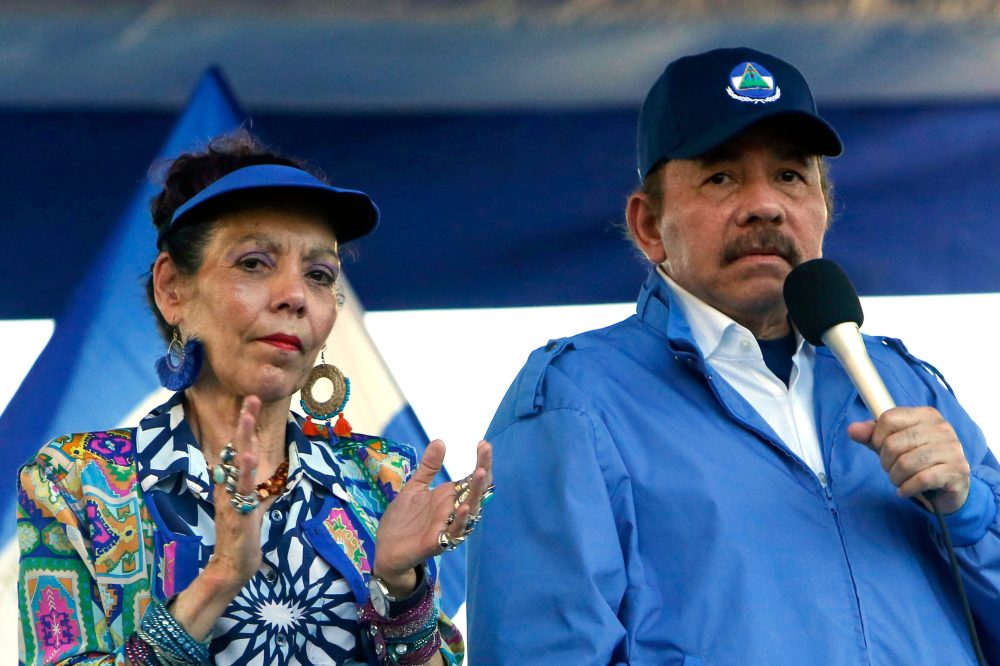

MEXICO CITY — Nicaraguan President Daniel Ortega made a stunning declaration over the weekend, announcing that his country will not be holding any elections in the foreseeable future. The statement signals his determination to extend a grip on power that has lasted nearly two decades and extinguishes any hope the opposition had of forcing a democratic vote.
The announcement essentially cancels elections that had been set for November 2027 — elections that were already pushed back after the government-controlled Congress voted in January 2025 to add a year to the five-year presidential term.
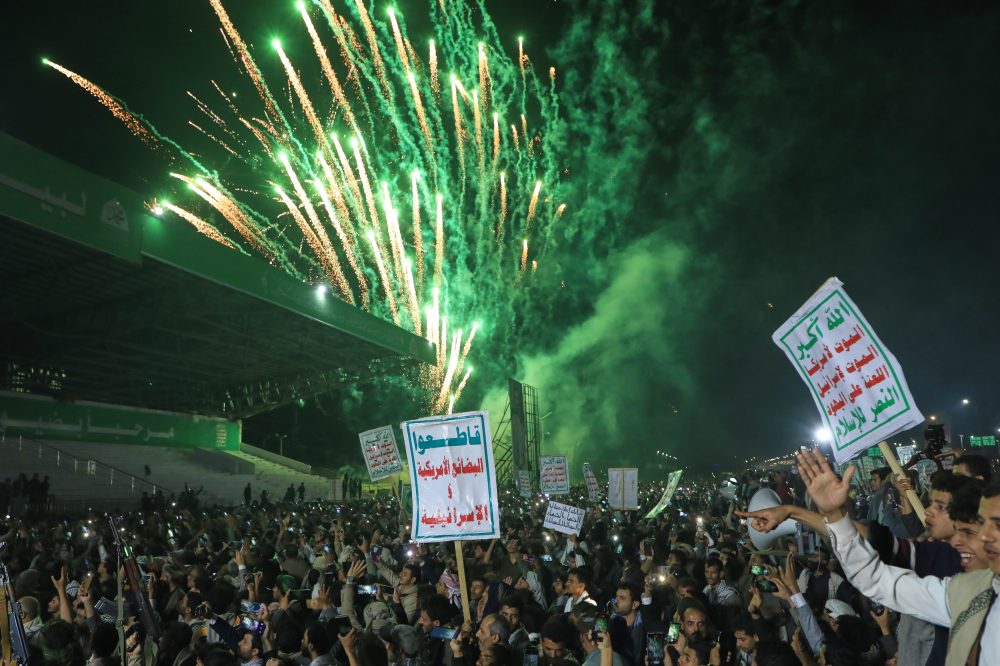
Ortega made his remarks Sunday during celebrations marking the anniversary of the Sandinista Revolution, the 1979 uprising that overthrew the Somoza dictatorship and first put Ortega in power. After returning to the presidency in 2007, he has since rewritten the country’s constitution, dismantled political opposition, and tightened his control over nearly every branch of Nicaragua’s government.
Ortega and his wife and co-President Rosario Murillo have maintained their hold on power since 2018, when mass protests were met with a brutal government crackdown that left hundreds dead.
In the 2021 election — widely condemned by the international community as illegitimate — Ortega declared himself the winner after imprisoning every viable opponent who could have challenged him. The United States does not recognize his presidency.
Speaking in a speech directed largely at his longtime rival, the United States, Ortega was blunt about the future. “There won’t be anymore elections,” he said. “Parties put in place by the Yankees, put in place by the Somoza regime, coming back to power — that story is over.” He repeated the word “never” three times for emphasis.
Opponents and human rights organizations say Sunday’s announcement represents a serious escalation in Ortega’s authoritarian rule.
Juan Sebastián Chamorro, one of the 2021 presidential candidates who was imprisoned and later released to the United States in 2023 along with more than 200 other political prisoners, said the declaration exposes Ortega’s long-term plan to place all power in the hands of the Sandinista party — drawing comparisons to one-party states like China and Cuba.
Tiziano Breda, a senior Latin America analyst at the independent conflict monitor ACLED, said the move reflects the regime’s deep fear of any political opening. “Ortega and Murillo are evidently afraid at the idea that the slightest political opening could create the conditions for dissent to manifest and threaten their grip on power,” he said. “Instead of staging a rigged election, they have opted to eliminate electoral competition altogether.”
Danny Ramírez Ayérdiz, a Nicaraguan attorney and founder of the Interamerican Center for Legal Assistance in Human Rights — an organization based in Argentina that documents abuses by the Ortega-Murillo government — said the statement “reveals the face of a dictatorship that, without any shame, has entrenched itself in power.” He warned it also signals “a potentially higher level of repression against people who demand the removal of the government or the holding of elections.”
According to the Mechanism for Recognition of Political Prisoners group, which monitors such cases, at least 46 people are currently imprisoned in Nicaragua for political reasons. The Nicaraguan government denies holding political prisoners.
Following a U.S. military operation in January that resulted in the capture of Venezuela’s then-President Nicolás Maduro, Nicaragua’s government announced plans to free additional prisoners — an apparent move to ease international pressure. However, there has been little follow-through or transparency on those releases, and at least one imprisoned activist has died in the interim.
In recent years, the government has released hundreds of activists, religious figures, and politicians — including several 2021 presidential candidates — transferring them to the U.S. and Guatemala while stripping many of their Nicaraguan citizenship and assets. Those who were freed reported being held in isolation and subjected to both physical and psychological abuse.
Since 2018, more than 5,000 organizations — many of them religious — have been shut down by the government, and thousands of Nicaraguans have been forced to flee the country. Earlier this month, the Ortega-Murillo government revoked the law licenses of a large number of attorneys in what United Nations experts described as a “purge of the legal profession.”