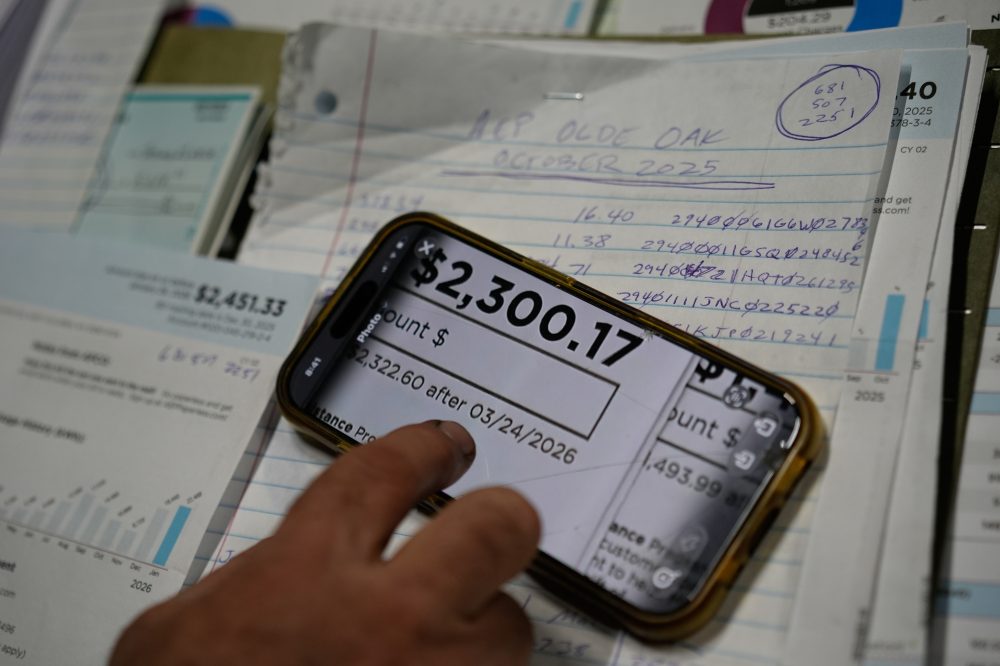

The surge in artificial intelligence technology is sparking political battles across multiple states as utility companies report soaring profits while consumers face mounting electricity costs, leaving cash-strapped families caught in what critics call a dysfunctional system.
Government leaders and legislators in at least six states — Arizona, Indiana, Maryland, New Jersey, New York and Pennsylvania — are taking unprecedented steps to prevent proposed utility rate hikes. Some are demanding utilities completely overhaul how they fund major infrastructure improvements.
This campaign unfolds during a midterm election cycle where affordability has become the central message for Democrats trying to reduce Republicans’ grip on Washington.
Arizona Attorney General Kris Mayes, a Democrat running for reelection this year, is fighting two utility rate hike proposals before the state’s utility regulatory board.
“I felt like it’s never been more important to stand up against the blatant corporate greed of our monopoly utilities in Arizona,” Mayes said in an interview.
The massive energy requirements of AI data centers have pushed electricity costs higher in certain areas and triggered a profitable construction surge in the energy industry.
Consumer advocates have historically attempted to question utility investment returns before regulatory bodies. However, the current situation represents something different, these advocates note.
“We’ve entered into this era of expensive energy and (demand) growth, and we’re seeing utility profits at record highs and rising utility bills,” said Matt Kasper of the Energy and Policy Institute, which pushes utilities to keep rates low and use renewable energy sources.
Utilities have traditionally been considered a safe investment option, offering steady income and predictable consumer demand. Due to this reduced risk, utility sector investment returns typically fall below other industries, according to analysts.
Nevertheless, utilities — many owned by multibillion-dollar, for-profit parent corporations — have experienced particularly strong stock performance during the data center boom.
While regulatory investment returns aren’t the only factor driving consumer bill increases, researchers indicate they play a significant role. The Energy and Policy Institute released a March report showing profits for 110 for-profit utilities climbed from just under $39 billion in 2021 to over $52 billion in 2024.
Mark Ellis, a former utility executive-turned-consumer advocate, estimated approximately 10% of typical customer bills represents what he termed a for-profit utility’s “excess profit,” beyond what might be deemed reasonable under established Supreme Court precedent.
Rather than regulators establishing returns above market requirements, utilities should seek the lowest-cost investor funding, similar to shopping for the best loan interest rate, Ellis suggested.
Paul Ferraro, an economics professor at Johns Hopkins University, characterized targeting utility investment returns as political rather than economic action.
“That’s an action that’s aiming to address the deep social disagreements we have about who should benefit from essential infrastructure,” Ferraro said. “But it’s not going to address the key challenges that the electricity sector is facing.”
These challenges include investments in modernization, expansion, renewable energies and distributed power sources, Ferraro explained.
Travis Miller, an energy and utilities analyst for Morningstar, noted utility executives are highlighting cost-cutting efforts and protecting residential customers from data center electricity supply costs during earnings calls.
“Affordability is probably the number one issue that executives and investors are thinking about right now in the utility sector,” Miller said.
Without affordable current rates, utilities cannot secure necessary rate increases to boost earnings and investor dividends, Miller explained.
Utilities reference federal data indicating home electricity bills as a percentage of household income have decreased over recent decades. They defend regulatory-approved investment returns as essential for raising funds needed to properly maintain electrical grids and ensure reliable service for millions.
They also caution that investors will redirect their money to utilities in other states offering better returns.
Critics dismiss this as fearmongering.
Earlier this month, the New Jersey Board of Public Utilities initiated what its president, Christine Guhl Sadovy, described as one of the most significant regulatory reviews in a generation, examining how utilities “should earn revenue in a modern energy system.”
Recently, Pennsylvania Gov. Josh Shapiro pressured PECO, the Philadelphia-area utility subsidiary of Exelon Corp., to abandon a 12.5% rate increase, equivalent to $20 monthly for average residential customers. Shapiro, a Democrat seeking reelection this year, subsequently sent a letter to utility executives, criticizing utility profits and declaring the “20th century utility model is broken.”
“We can no longer simply prioritize corporate profitability to drive infrastructure development,” Shapiro wrote.
One analyst dubbed it “Quaker State Sticker Shock” in an investor note, and Pennsylvania-based utility company stock prices underperformed competitors in subsequent days.
Exelon — the Chicago-based parent of Commonwealth Edison, PECO, Baltimore Gas and Electric and several other utilities — stressed its recognition of affordability concerns.
Calvin Butler, Exelon’s president and CEO, informed analysts during the May 6 first-quarter earnings call that the company remained committed to justifying expenditures and minimizing energy bills. The decision to withdraw the rate increase request followed discussions with “stakeholders” who said, “Hey, if you could partner with us to address the affordability issue and lean in, timing is not the best right now,” Butler explained.
In Indiana, Republican Gov. Mike Braun selected new utility commissioners tasked with confronting rate increases.
Their initial major challenge involves AES Indiana’s request for a 10.1% increase, representing $193 million annually from ratepayers, according to Ben Inskeep, program director for the Indianapolis-based consumer advocate Citizens Action Coalition.
As part of this request, AES Indiana — whose parent company is being acquired privately in a $33.4 billion deal led by private investment giant BlackRock — requested a 10.7% return on its investment.
Inskeep calculated an 8% return — instead of 10.7% — would reduce the proposed rate increase by nearly half.
In Arizona, Mayes is contesting two proposed 14% increases that she believes could be substantially lowered if companies received only the cost to maintain reliable service.
“It’s becoming unbearable for the people in Arizona,” Mayes said. “And I think we have to fight back.”