
SAO PAULO (AP) — The United States State Department revealed Thursday its decision to classify two major Brazilian criminal organizations as foreign terrorist groups, a designation that President Luiz Inácio Lula da Silva has consistently characterized as meddling designed to benefit his political opponent, Sen. Flávio Bolsonaro, before October’s presidential race.
Prior to the elections, allies of former President Jair Bolsonaro and supporters of his son’s presidential campaign have pushed for this classification of the two organizations — First Command of the Capital, or PCC, and Red Command, or CV — while criticizing Lula for inadequately confronting these criminal networks.
Experts estimate that both organizations together likely contain more than 50,000 members, and note that most of their international ties are with Europe rather than North America.
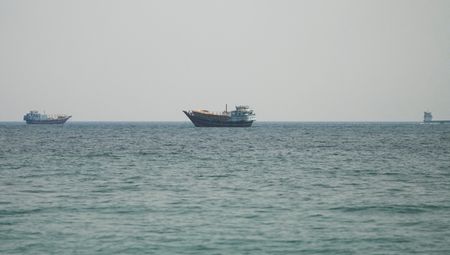
Classifying Latin American criminal cartels as foreign terrorist groups represents a tactic employed by Trump’s administration as it shifts toward military operations and other forceful measures to address drug trafficking throughout the Western Hemisphere, including conducting fatal boat attacks against those it terms “narcoterrorists” in Caribbean waters and the eastern Pacific Ocean.
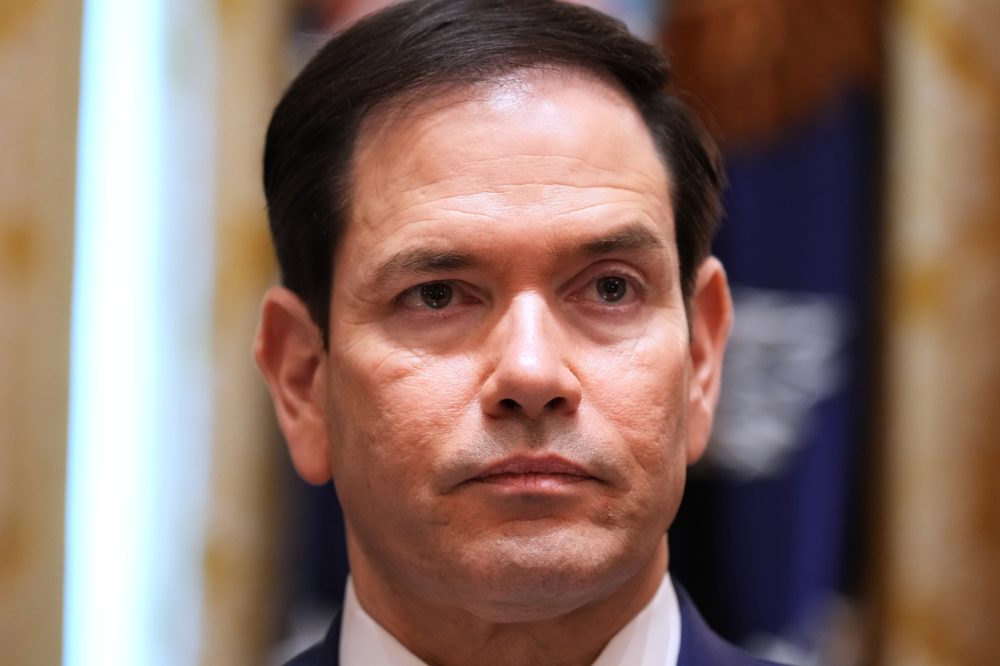
“CV and PCC are two of the most violent criminal organizations in Brazil. Together, they command thousands of members and have orchestrated brutal attacks against Brazilian police officers, public officials, and civilians,” U.S. Secretary of State Marco Rubio stated. “Their influence and illicit networks extend far beyond Brazil’s borders, across our region and into our country.”
“Today’s action taken by the State Department further demonstrates the Trump Administration’s unwavering commitment to dismantling cartels and criminal organizations in our region and ensuring the safety of the American people,” he continued. The classification becomes effective June 5. Until that date, both organizations will be listed as specially designated global terrorists.
Lula, who is campaigning for reelection while attempting to strengthen his anti-crime reputation, has publicly rejected labeling criminals as terrorists, while Bolsonaro’s congressional allies have openly encouraged Trump to take stronger action against the gangs.
Also Thursday, Brazilian prosecutors initiated a large-scale operation to break up fraud, money laundering and tax evasion schemes, representing the newest phase of an investigation focused on criminal gangs including the PCC and CV.
Lula’s special adviser for foreign affairs and former foreign minister Celso Amorim became the first official to publicly respond to Rubio’s announcement.
“Public security is a key topic for social economic development. Organized crime is an evil that must be fought. International cooperation is welcome, especially in matters of money laundering and arms trade. (But) pretext for intervention is unacceptable,” Amorim stated.
Public security is expected to become a divisive issue in Brazil’s presidential elections, when Sen. Flávio Bolsonaro, chosen as the former president’s successor, competes against Lula. The 71-year-old Jair Bolsonaro is ineligible to run due to serving his 27-year prison term for orchestrating a coup attempt.
Experts have noted that neither Jair Bolsonaro nor Lula achieved significant success in combating the two criminal organizations, though Brazil’s federal police and prosecutors have executed multiple raids targeting them in recent years. Authorities achieved a significant victory against the PCC in August by destroying portions of its money laundering operation that involved gas stations, perfume shops and even a financial services company located on one of Sao Paulo’s major streets.
Brazil’s federal police reported that their operation, called Hidden Carbon, discovered companies connected to the PCC had laundered at least 6 billion reals ($1.1 billion) in recent years.
Political analyst Thomas Traumann describes Rubio’s action as “the Trump administration trying to meddle in the election after a request by Flávio Bolsonaro during his trip to Washington.”
“Flávio Bolsonaro’s campaign was hit by his problematic businesses with a corrupted banker, he came to the Trump administration to ask for some help and he got this one,” Traumann explained. “Lula’s best moment in the polls was after Trump imposed tariffs against Brazil and he revived a narrative on national sovereignty. It is likely he will do it again.”
Brazil’s president did not respond to a request for comment from The Associated Press. Sen. Bolsonaro has not yet commented on the decision.